


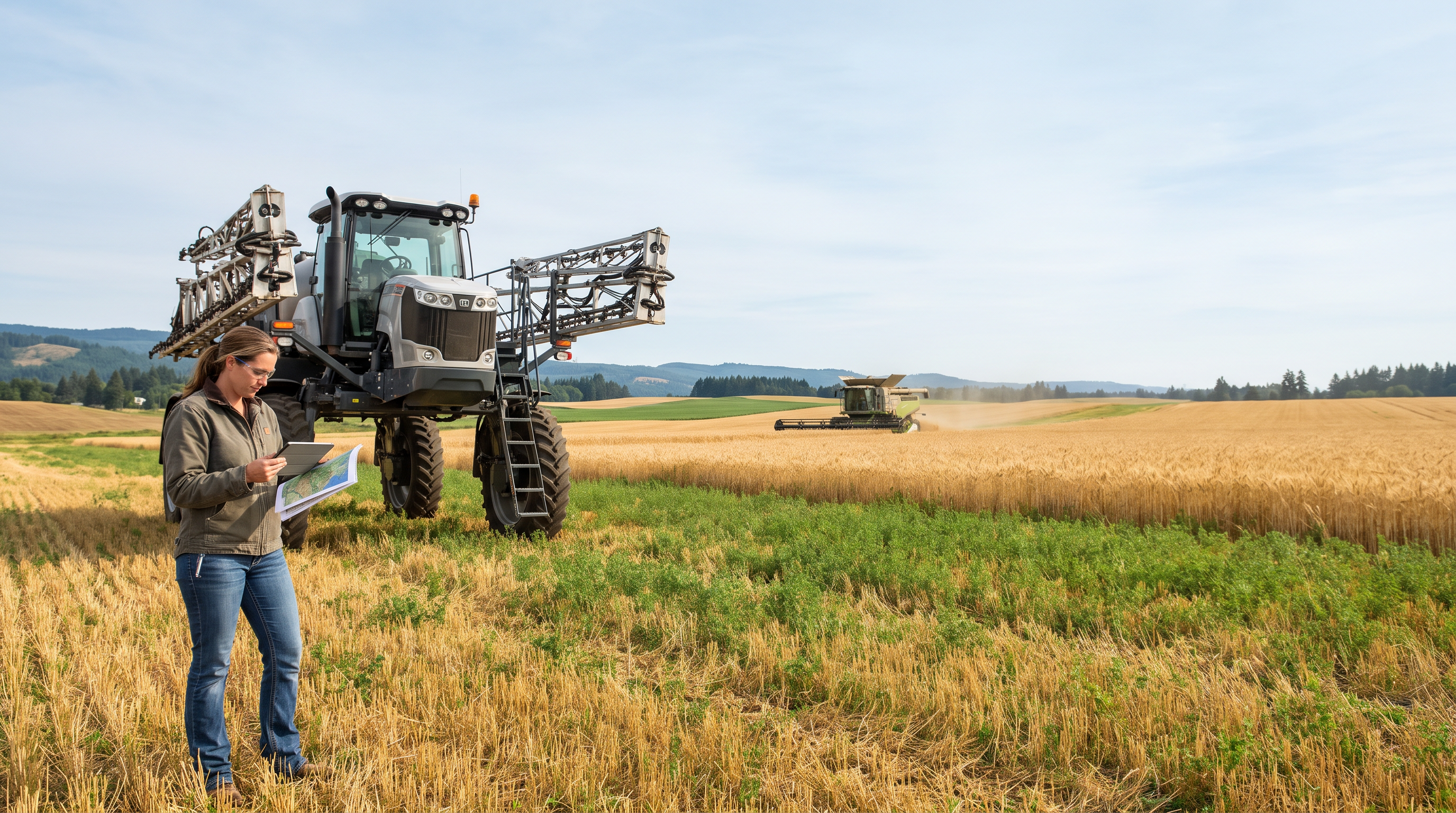

Custom farming can put a crew, a sprayer, a combine and a contract in a different field every day. That mobility creates opportunity, but it also means the insurance conversation has to follow the actual work. A useful review starts with the full scope: what you do for others, who directs the job, what equipment travels, what products are handled, where the crew works and what the contract requires.
The practical starting point
An insurance certificate is not a substitute for a policy-and-contract review
Customers may request a certificate, a limit or additional-insured status. Those requests matter, but they do not by themselves decide whether a policy covers a loss. The contract, the issued forms and endorsements, the service performed, regulatory requirements and the facts of the event all matter. Review them before a bid becomes a job schedule.
Why custom farming creates a different insurance picture
A family farm often works primarily on land it owns or leases. A custom operator may plant, spray, bale, harvest, haul or advise on another party’s property. That changes who may be named in a contract, how equipment moves, where workers go and what third-party allegations could follow an incident. A broad farm and ranch insurance review is a useful foundation, but a custom operation should make sure its policy discussion also reflects the for-hire services it performs.
The work can vary rapidly. One week may involve tillage and planting. The next may involve chemical application, harvest support, field repairs, pickup-and-trailer travel, rented equipment or a customer’s crop that must be handled on a narrow weather window. A contractor insurance discussion can help organize the differences between farm ownership, service work for others, written job scopes and mobile equipment exposure.
Map the actual job before discussing a form
Four operating zones that can change the insurance questions
These are business-review prompts, not a substitute for contract, legal, pesticide, safety or policy advice.
The contract
Identify the exact services, site, equipment, operator, customer, start and end point, insurance requirements, indemnity language and any additional-insured request before the crew rolls.
The field and crop
Map treatment areas, adjoining crops, organic or sensitive acreage, water, pollinators, residences, weather limits, entry restrictions and harvest timing. These are operating facts—not automatic coverage terms.
The machinery
List owned, leased, borrowed and rented tractors, sprayers, combines, headers, trailers, tanks, pumps, GPS systems and attachments, along with where each unit travels and is stored.
The road and crew
Separate field operations from road travel. Record who drives, what is hauled, where the equipment is garaged, crew responsibilities, seasonal hiring, lodging and emergency contacts.
Crop spraying and chemical drift require a precise conversation
Chemical application can lead to questions far beyond the spraying machine. Oregon’s Department of Agriculture explains that drift can damage crops, create illegal residues on non-target crops, affect pollinators, contaminate surface water and affect human health. It describes drift as pesticide movement through the air from the intended site to a non- or off-target site, with factors including equipment design, particle size and weather conditions.[1] EPA likewise notes that pesticide spray drift can affect people, the environment, nearby crops and water.[7]
Insurance should not be described as a blanket answer to that exposure. A policy may contain pollution, pesticide, herbicide, professional-services, property-damage, completed-operations, contractual-liability or other provisions that must be read together. A general liability insurance review is important, but it should include direct questions about the actual products, application method, third-party property, sensitive crops, water, storage, mixing, loading, disposal, hired applicators and any work done off the operator’s own land.
Documentation is equally practical. Before work begins, operators and customers may need to align field maps, crop information, product labels, application instructions, timing, weather decision-making, sensitive areas, adjacent operations, access, records and emergency contacts. Those steps can support safer operations and a more accurate response if someone later raises a question. They do not guarantee a result or determine coverage.
Licensing and records are business requirements—not coverage promises
Oregon’s licensing framework illustrates why custom spraying needs a separate operational review. ODA says commercial pesticide applicators may apply or supervise pesticide application on another person’s property only under the relevant license categories and while employed by a licensed commercial pesticide operator. ODA describes a commercial pesticide operator license as the business license for applying pesticides to others’ property, including bidding and advertising for that work. It also says license applicants must provide a certificate of insurance or a policy copy.[2]
That insurance documentation requirement does not tell an operator which claim scenarios are insured. The insurance certificate is not the policy, and the policy is not a substitute for the correct license, records, training or label compliance. California operators have another reminder of the importance of records: the California Department of Pesticide Regulation’s study guide describes agricultural pesticide-use records and reporting that can include application dates, location, crop/site, acreage, pesticide information, application timing, operator identification and supervising personnel.[4] Requirements vary by state, county, activity and product, so confirm current obligations with the relevant authority.
Adding crop-spraying work or taking on a new contract?
Bring the service description, current policy declarations, equipment schedule and customer contract to a policy-specific insurance review before the work starts.
Request a custom farming insurance reviewEquipment, combines and mobile machinery are only part of the exposure
A sprayer, tractor, combine or header may be the most visible asset at a job, but the exposure follows its whole life cycle. Consider owned and leased machinery, rented units, borrowed attachments, electronics, guidance systems, parts, tools, trailers, field repairs, storage, transport and the customer’s site. Breakdowns can create repair costs and schedule pressure. A collision, fire, theft, overturn, hydraulic failure or damaged attachment can raise its own coverage questions, depending on the forms, valuation, deductible, endorsements, location and cause of loss.
Harvest equipment creates operating hazards as well. OSHA advises that harvesting equipment should be inspected and operators should review safe procedures before operation. It highlights changed vehicle balance, rollover exposure, safe hitching, PTO entanglement hazards and the need for training and intact shielding.[5] That makes a strong equipment schedule, maintenance practice and incident plan valuable business tools. It also helps an agency ask clearer questions about the equipment—not promise that every repair, delay or loss will be covered.
When a key machine is down at the height of planting or harvest, the loss may be more than a repair bill. Discuss rental options, replacement timing, service agreements, extra expense, contractual deadlines, rented machinery and business-income concerns before an emergency. The related farm irrigation, pumps and equipment-breakdown guide offers another useful framework for documenting essential equipment and continuity questions.
Crews, pesticide handlers and harvest workers bring a separate layer of responsibility
Custom operations may rely on year-round employees, seasonal crews, family members, subcontractors, mechanics, haulers and customer personnel. The Employee Protection Standard is relevant to pesticide handlers and agricultural workers. EPA explains that the standard addresses training, application and hazard information, decontamination supplies, emergency assistance, restricted-entry intervals, notifications, equipment safety and label-required personal protective equipment.[3]
EPA also explains that an Application Exclusion Zone surrounds outdoor application equipment while pesticides are applied. It can extend outside the agricultural establishment, and handlers must pause an application if workers or other people are within the applicable zone.[3] Oregon OSHA provides agriculture-specific materials on the Worker Protection Standard, application exclusion zones, pesticide PPE, hazardous agricultural chemicals and respiratory protection.[6] Those are safety and compliance subjects. From the insurance side, they also make accurate payroll, role, training and labor information important to a workers’ compensation insurance conversation.
Do not blur employees and subcontractors together because they work near the same equipment. The contract, payroll, supervision, tools, employment law, insurance forms and facts of the relationship all matter. If a customer requires a certificate from a subcontractor, retain it with the job file and ask what the contract actually requires of each party.
Field work and road travel should be reviewed separately
Custom operators routinely move machines, chemical products, crews, tools and supplies between locations. A truck and trailer that looks like a routine farm asset may have different use, ownership, driver, garaging, travel-radius and cargo questions when it is part of a for-hire operation. A commercial auto insurance review should identify every road-going unit, employee driver, rented vehicle, trailer, hired vehicle and non-owned auto exposure associated with the business.
OSHA’s agricultural guidance identifies farm-vehicle safety, proper hitching, slow-moving-vehicle emblems, storage, rollover safeguards and roadway precautions as practical controls.[5] These steps cannot establish insurance coverage, but they are useful prompts for an operator’s vehicle file. If a machine, crew or shipment crosses state lines, the review should also address where the work occurs and which regulators, contracts and policy territories apply.
Customer contracts can change the question before any equipment moves
A contract can define the work, the customer’s field information, who selects a product, who controls timing, what happens if conditions change, what equipment is supplied, whether someone is an additional insured, what certificates are required, how indemnity is written and how claims are reported. The details can differ between a custom-harvest agreement, a spraying agreement, a short-term equipment rental and an ongoing farm-management arrangement.
Share contracts before signing them. An insurance agent can identify policy questions. An attorney can advise on the contract itself. A producer, crop adviser or regulator can address the operational and legal requirements of the work. No one should assume that a broad phrase such as “fully insured” resolves those separate questions. The farm-to-table sector faces similar contract, property, product and continuity conversations, as explored in this farm-to-table business insurance guide.
Bring evidence, not assumptions
Eight items for a custom farming insurance file
This working file can make contract, safety and policy discussions more specific. It is not a compliance checklist or coverage guarantee.
Signed customer contracts, bids, scopes of work, change orders, certificates of insurance, additional-insured wording and any indemnity or hold-harmless provisions.
A current service inventory: custom tillage, planting, fertilizing, ground or aerial spraying, pest-control advice, combining, baling, hauling, storage, delivery and other work performed for others.
A complete equipment schedule with replacement values, serial numbers, trailers, sprayer booms, tanks, pumps, guidance systems, combines, headers, attachments, rented equipment and equipment held at a customer location.
Pesticide license details, operator information, required categories, product labels, application records, field maps, weather documentation, treatment timing, emergency contacts and applicable worker-protection information.
A vehicle and travel file covering every truck, trailer, service vehicle, pickup, road use, garaging location, driver, delivery radius, hired/borrowed auto exposure and interstate work.
Crew records: employee and subcontractor roles, training, personal protective equipment procedures, workers’ compensation information, heat and field-safety plans, and who supervises each activity.
Property details for shops, chemical storage, fuel, repair tools, parts, portable technology, records, fire prevention, security and a practical repair or replacement plan when a key unit is disabled.
A written incident plan for injury, suspected drift, equipment collision, property damage, spill, product complaint or missed deadline—covering safety steps, notices, documents, photos and policy reporting instructions.
Protect the relationship as carefully as the machinery
Custom farming is built on trust. The operator may be invited onto a customer’s land during a narrow planting, spraying or harvest window. The customer may rely on that operator’s machine, crew and schedule. That is why the clearest insurance conversations start before the urgent day: describe the service honestly, list the equipment, keep contracts together, share the policy requirements, document changes and identify who should be called when something goes wrong.
For operations that also move livestock, feed or equipment between farms, the custody and handoff questions can become another layer. This livestock transit, auction and leased-pasture guide explains why property, transport and responsibility need to be described at every transfer point.
Need to organize a new custom-farming contract?
Gerald Ross Agency can help you identify the insurance questions raised by your actual services, equipment, crew, travel and customer requirements—so you can take the right forms and contracts to the appropriate professionals.
Talk through your operationFrequently asked questions
Does general liability automatically cover crop-spraying or chemical-drift claims?
Do not assume it does. General-liability forms, pollution exclusions, pesticide or herbicide endorsements, professional-services wording, damage-to-property terms, contractual assumptions, completed-operations provisions and state requirements can materially change the result. The issued policy and the facts of the application determine whether any claim is covered.
What insurance should a custom harvesting contractor review?
The discussion commonly includes general liability, commercial auto, equipment or property protection, workers’ compensation, hired or borrowed equipment, umbrella limits, business income and contract requirements. The right combination depends on the contractor’s equipment, crew, travel, services, customer agreements and policy forms.
Who is responsible if a spraying contractor damages a neighboring crop?
Responsibility is fact-specific. The contract, application records, label instructions, weather, equipment, operator actions, property-owner directions, crop conditions, state law and the cause and amount of damage can all matter. A contract certificate or a verbal understanding does not decide legal responsibility or establish insurance coverage.
Why should a custom farming business share its contracts with its insurance agent?
Contracts can assign indemnity obligations, require additional insured status, set insurance limits, define equipment responsibility, require waivers, and allocate responsibility for crop, chemical, transport or labor issues. Reviewing the actual contract helps identify questions before work begins; it does not replace legal advice or change the policy.
Do pesticide licenses or certificates of insurance prove a loss is covered?
No. A license and certificate address different issues. Licensing governs who may perform regulated work. A certificate is only evidence of certain insurance at a point in time and is subject to the actual policy. Neither document changes exclusions, endorsements, limits, deductibles, conditions or the facts of a claim.
Sources and further reading
Government and workplace-safety resources informed this article. Licensing, pesticide, worker-protection and recordkeeping obligations change and can depend on the state, county, product, crop, service and worksite. The sources below do not determine an individual contract, policy, claim result, licensing obligation or coverage availability.
- [1] Oregon Department of Agriculture: Pesticide Drift
- [2] Oregon Department of Agriculture: Pesticide License Requirements
- [3] U.S. Environmental Protection Agency: Agricultural Worker Protection Standard
- [4] California Department of Pesticide Regulation: Pesticide Laws and Regulations Study Guide
- [5] Occupational Safety and Health Administration: Agricultural Operations: Hazards and Controls
- [6] Oregon Occupational Safety and Health: Agriculture
- [7] U.S. Environmental Protection Agency: Introduction to Pesticide Drift
Make the insurance conversation match the work your operation performs for others
Bring your contract, equipment schedule, service list and current policy declarations to Gerald Ross Agency for a practical, policy-specific review before the next season or new customer engagement.
Request a custom farming quoteImportant: General educational information only; not legal, pesticide, licensing, safety, employment, environmental, transportation or insurance-coverage advice. Nothing here promises coverage, availability, eligibility, acceptance or claim payment. The issued policy, forms, endorsements, exclusions, limits, deductibles, named insureds, listed equipment, product and service details, contracts, licensing, applicable law, state requirements, underwriting, weather, records, operator actions and loss facts determine outcomes. A certificate, proposal, contract, policy declaration, label, map, record, regulator summary or this article does not create coverage. Confirm current requirements with the appropriate authorities and discuss the actual issued policy with a licensed insurance producer.


