


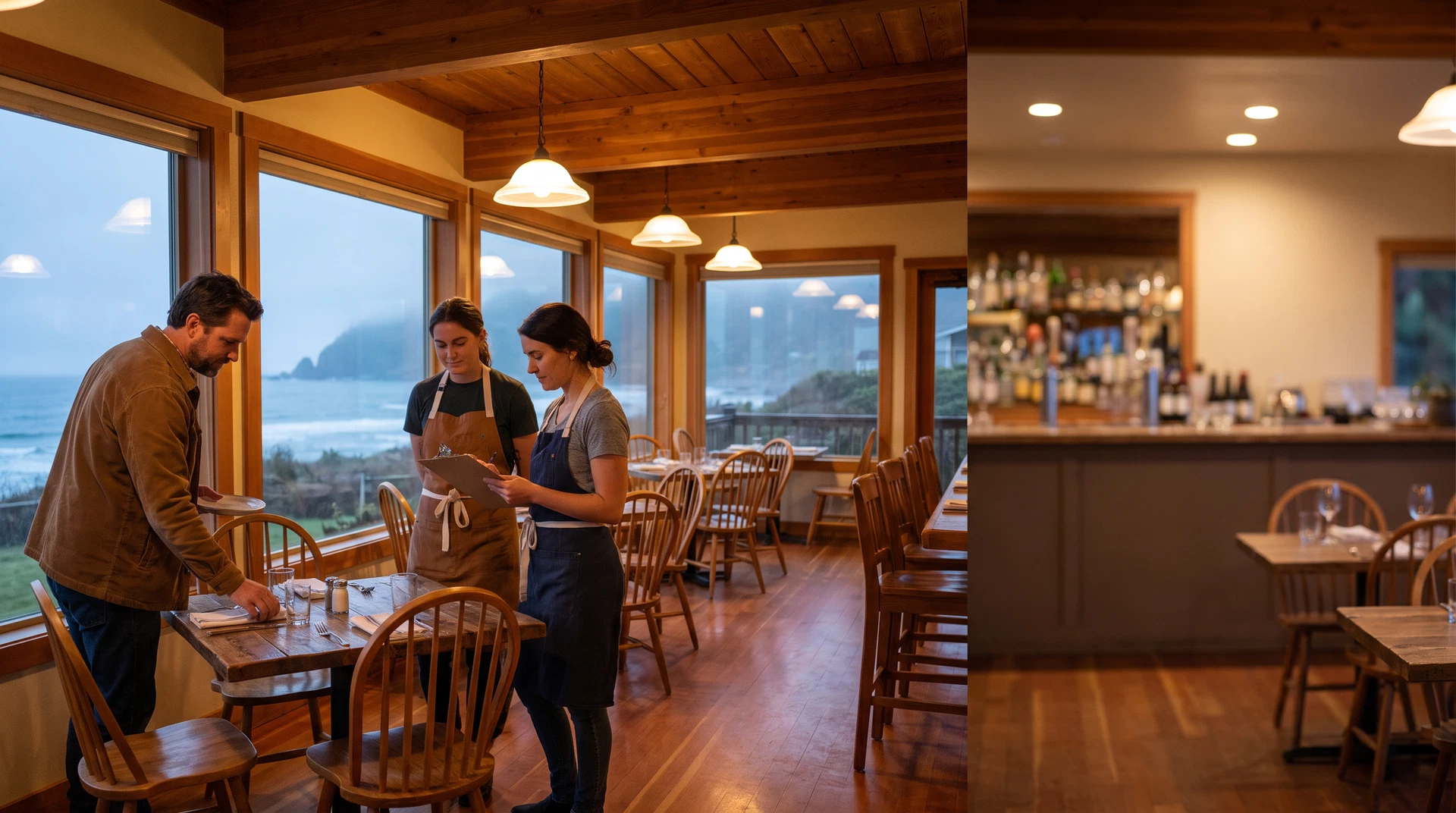

Running a restaurant or bar on the Oregon Coast — or anywhere in Oregon and Northern California — has always been challenging. But in 2026, the insurance landscape for hospitality businesses has become a genuine crisis. Liquor liability premiums have doubled, tripled, or in some cases increased tenfold in just two years. Carriers are exiting the market. Jury awards in Dram Shop lawsuits are reaching levels that would have seemed unimaginable a decade ago. According to a 2026 analysis by CRC Group, one South Carolina restaurant group reported an 86% increase in insurance rates, while a single bar saw its annual premium jump from $8,000 to $54,000 in two years. This guide explains every coverage Oregon and Northern California restaurant and bar owners need — and how Gerald Ross Agency's hospitality insurance specialists can help you navigate this difficult market.
The Liquor Liability Crisis Is Real — and It Is Hitting Oregon Now
Drunk driving is responsible for approximately 1 in 3 US traffic fatalities. Oregon's Dram Shop law (ORS 471.565) holds your establishment liable when a visibly intoxicated person you served causes injury or death. With jury awards rising and carriers withdrawing from the market, businesses that cannot find or afford liquor liability coverage are being forced to close. Do not wait until renewal to address this.
Oregon's Dram Shop Law: What Every Restaurant and Bar Owner Must Know
Oregon Revised Statute 471.565 establishes what is commonly known as Dram Shop liability. Under this law, a licensed establishment — restaurant, bar, brewery, winery, or venue — can be held legally responsible for damages caused by a visibly intoxicated person they served. If a customer leaves your establishment intoxicated, causes a car accident, and kills or seriously injures someone, your business can be named as a defendant in the resulting lawsuit.
Oregon is one of 43 states plus the District of Columbia that maintains active Dram Shop laws. The legal standard in Oregon focuses on whether the person was "visibly intoxicated" at the time of service — meaning your staff's training and documentation practices are critical evidence in any lawsuit. Establishments that can demonstrate proper OLCC training, documented refusals of service, and consistent ID checking are in a significantly stronger legal and insurance position.
California takes a somewhat different approach under Business and Professions Code Section 25602. California generally limits Dram Shop liability except in two critical situations: serving alcohol to minors, and serving an obviously intoxicated person who subsequently injures a third party. For Northern California establishments — particularly those in Humboldt, Del Norte, Siskiyou, and Trinity counties that Gerald Ross Agency serves — understanding the California standard is equally important.
Why Liquor Liability Premiums Are Skyrocketing in 2026
The liquor liability market hardening of 2024–2026 has multiple causes that are unlikely to reverse quickly. Social inflation — the tendency of juries to award larger and larger verdicts against businesses — has driven up the cost of claims dramatically. Post-pandemic court backlogs are clearing, releasing a wave of deferred lawsuits into the system simultaneously. And the economic pressure on bars and restaurants to maximize alcohol revenue percentages has made underwriters increasingly nervous about the risk profile of the hospitality sector.
| Establishment Type | Alcohol Revenue % | Typical 2024 Premium | Typical 2026 Premium |
|---|---|---|---|
| Family Restaurant (beer/wine only) | Under 20% | $2,500–$5,000 | $4,000–$9,000 |
| Full-Service Restaurant | 20–35% | $5,000–$12,000 | $8,000–$20,000 |
| Bar / Tavern | 50–70% | $8,000–$20,000 | $20,000–$55,000 |
| Nightclub / Late-Night Venue | 70–90% | $15,000–$40,000 | $40,000–$100,000+ |
| Brewery / Taproom | 60–80% | $6,000–$15,000 | $15,000–$40,000 |
| Winery / Tasting Room | 40–60% | $4,000–$10,000 | $8,000–$22,000 |
Premium estimates based on Oregon/NorCal market data, clean loss history, standard hours. Actual premiums vary by carrier, location, and risk profile.
The most challenging segment is establishments with alcohol revenue percentages above 50%. Many standard carriers have stopped writing this business entirely. Even accounts with zero claims history are seeing premiums of $25,000–$50,000 annually. This is not a temporary market blip — it reflects a fundamental reassessment of hospitality risk by the insurance industry. Working with an independent agency like Gerald Ross Agency, which has access to specialty hospitality markets that standard agents cannot reach, is more important than ever.
Hospitality Insurance Specialists Since 1935
Get a Restaurant & Bar Insurance Quote Today
We work with specialty hospitality markets that standard agents cannot access. Our licensed agents compare 50+ carriers to find the right coverage for your restaurant, bar, brewery, or venue — even in today's difficult market.
The Complete Insurance Package for Oregon Restaurants and Bars
Liquor liability is the most urgent coverage issue facing hospitality businesses in 2026, but it is far from the only one. A complete restaurant and bar insurance program covers multiple risk categories — each of which can independently generate a claim large enough to close your business. Here is every coverage your establishment needs and why.
Liquor Liability
Covers your legal defense and any judgment arising from Dram Shop claims — when a customer you served causes injury or death to a third party. Available as a standalone policy or BOP endorsement. Limits of $1M–$5M recommended.
General Liability
Covers slip-and-fall accidents, food poisoning claims, customer property damage, and bodily injury on your premises. Standard limits of $1M per occurrence / $2M aggregate. Required by most commercial leases.
Commercial Property
Covers your building (if owned), kitchen equipment, bar fixtures, furniture, inventory, and outdoor seating. Oregon Coast establishments need wind, water intrusion, and coastal storm coverage. Replacement cost coverage is strongly recommended.
Business Interruption
Replaces lost revenue when a covered event — fire, flood, storm damage, equipment failure — forces you to close temporarily. For seasonal Oregon Coast restaurants, a single summer closure can be financially catastrophic without business income coverage.
Workers' Compensation
Required by Oregon law for any employee — full-time, part-time, or seasonal. Restaurants and bars have some of the highest workers' comp claim rates of any industry: kitchen burns, knife injuries, slips on wet floors, and back injuries from heavy lifting are all common.
Assault & Battery Coverage
Standard GL policies typically exclude claims from physical altercations. For bars and nightclubs, this is a critical gap. A&B coverage pays for bodily injury claims arising from fights or altercations on your premises — one of the most common bar insurance claims.
Employment Practices Liability (EPLI)
Restaurants and bars have among the highest EPLI claim rates of any industry — harassment, wrongful termination, wage disputes, and discrimination claims are common in high-turnover hospitality environments. EPLI covers your legal defense and any settlement.
Food Contamination & Spoilage
Covers the cost of discarding contaminated food inventory after a power outage, refrigeration failure, or food safety incident. Also covers the business income loss and cleanup costs associated with a health department closure due to contamination.
Two additional coverages deserve special mention for Oregon and Northern California hospitality businesses. Cyber liability insurance is increasingly critical as POS systems, online reservation platforms, and customer loyalty programs create significant data breach exposure. Oregon's data breach notification law (ORS 646A.604) requires prompt notification of affected customers, and the associated legal and remediation costs can be substantial. Commercial umbrella insurance extends all your underlying liability limits — general liability, liquor liability, and employer's liability — providing an additional $1M–$5M layer of protection against catastrophic claims.
For establishments that operate delivery services or catering vehicles, commercial auto insurance is also required — personal auto policies explicitly exclude vehicles used for business purposes.
Oregon Coast and Northern California Hospitality Risks: What Makes This Market Unique
Restaurant and bar owners on the Oregon Coast and in Northern California face a combination of risks that differs significantly from inland markets. Understanding these regional factors is essential for building an insurance program that actually protects your business.
Seasonal Revenue Concentration
Many Oregon Coast restaurants generate 60–70% of their annual revenue during the summer tourist season. A single summer closure — from a kitchen fire, storm damage, or health department action — can be financially catastrophic. Business interruption coverage must be sized to reflect peak-season revenue, not annual averages.
Coastal Storm and Wind Damage
Oregon Coast commercial properties face elevated exposure to winter storms, high winds, and water intrusion. Outdoor dining areas, deck structures, signage, and HVAC equipment are particularly vulnerable. Commercial property policies for coastal establishments should include wind and water coverage with appropriate limits.
Wildfire Smoke and Air Quality Closures
Southern Oregon and Northern California restaurants face increasing wildfire smoke events that can force temporary closures or dramatically reduce outdoor dining revenue. Business interruption coverage for smoke-related closures varies significantly by carrier — this is a critical policy review point for establishments in Medford, Ashland, Grants Pass, and the NorCal interior.
Tourism-Driven Late-Night Operations
Coastal tourist destinations often support late-night bar operations that carry significantly higher liquor liability risk. Establishments open past midnight with high alcohol revenue percentages face the steepest insurance challenges. Carriers scrutinize hours of operation, security staffing, and incident history for late-night venues.
Craft Beverage Industry Growth
Oregon and Northern California have seen explosive growth in craft breweries, wineries, and distilleries — many of which operate taprooms and tasting rooms with significant on-premises consumption. These establishments need specialized hospitality coverage that addresses both manufacturing and retail liability exposures simultaneously.
Event and Festival Exposure
Oregon Coast communities host numerous festivals, wine events, and outdoor concerts where restaurants and bars provide food and beverage service. Event-specific liquor liability coverage — separate from your standard policy — is often required by event organizers and provides critical protection for off-premises service.
How Gerald Ross Agency Helps Restaurants and Bars Get Covered
In a hardening market where many carriers are declining hospitality risks outright, the difference between getting coverage and not getting coverage often comes down to how your risk is presented to underwriters. Gerald Ross Agency's approach draws directly on best practices from specialty hospitality insurance markets.
- Access to Specialty Hospitality Markets: As an independent agency, Gerald Ross Agency works with over 50 carriers — including specialty markets that focus exclusively on hospitality risks and are not available through standard agents or direct-to-consumer platforms. When standard carriers decline your application, we have alternative markets to turn to.
- Social Media and Online Presence Review: Underwriters routinely review restaurant and bar social media accounts before binding coverage. Old posts advertising drink specials, photos of visibly intoxicated patrons, or content promoting excessive drinking can trigger declinations or surcharges. We help you identify and address these issues before submitting your application.
- Complete Loss Run Documentation: Carriers want five years of loss run history for every hospitality account. Accounts with gaps in documentation, or with claims that are poorly documented, face automatic surcharges. We help you gather and present your loss history in the most favorable light possible.
- Risk Management Guidance: Documented risk management practices — OLCC server training certifications, ID scanner logs, security staffing records, incident reports — can meaningfully reduce your premiums over time. We help you implement the practices that underwriters reward with better rates.
- Early Renewal Marketing: In today's market, starting the renewal process 60–90 days before expiration is essential. Waiting until 30 days out limits your market options significantly. We begin marketing your account early to ensure you have competitive options — not just a take-it-or-leave-it renewal offer from your current carrier.
- Comprehensive Coverage Review: Many restaurant and bar owners discover coverage gaps only after a claim — an assault and battery exclusion, a liquor liability sublimit, a business interruption waiting period that is too long. We conduct a thorough coverage review to identify and close gaps before they become problems.
Independent Agency — 50+ Carriers
Is Your Restaurant or Bar Properly Covered for 2026?
Don't wait until renewal to find out your liquor liability limits are inadequate or your assault and battery coverage has a gap. Our hospitality insurance specialists will review your current program and identify any issues — at no cost to you.
Restaurant and Bar Risk Management Checklist: 8 Steps to Better Coverage and Lower Premiums
Underwriters reward establishments that take risk management seriously. Implementing the following practices not only reduces your actual liability exposure — it also demonstrates to carriers that you are a preferred risk, which translates directly into better coverage terms and lower premiums.
- 01
OLCC Server Training Certification
Ensure all staff who serve alcohol complete OLCC-approved Alcohol Server Education (ASE) training and maintain current certifications. Document training dates and keep records for at least five years. California equivalent: RBS (Responsible Beverage Service) certification, mandatory since 2022.
- 02
ID Scanner Documentation
Deploy electronic ID scanners at entry points and bar stations. Scanners create a digital record of every ID checked — critical evidence in any lawsuit alleging service to a minor. The documentation value alone justifies the cost.
- 03
Social Media Audit
Review and remove any posts, photos, or content that could be interpreted as promoting excessive drinking, featuring visibly intoxicated patrons, or advertising unlimited drink specials. Underwriters routinely search social media before binding coverage.
- 04
Security Staffing Protocol
Establish and document a written security staffing protocol for peak hours, late-night operations, and special events. Carriers view documented security procedures as a meaningful risk reduction measure, particularly for assault and battery coverage.
- 05
Incident Report System
Implement a formal incident reporting system for any on-premises injury, altercation, or property damage — regardless of severity. Documented incident reports demonstrate proactive risk management and provide critical evidence if a claim develops later.
- 06
Refusal of Service Policy
Create and train staff on a written refusal of service policy for visibly intoxicated patrons. Document every refusal with time, description, and staff member's name. Under Oregon's Dram Shop law, documented refusals are your strongest defense against liability claims.
- 07
Loss Run History Maintenance
Maintain complete, organized loss run records for at least five years. Carriers require this information for every hospitality account. Gaps or inconsistencies in loss run documentation automatically trigger underwriting scrutiny and premium surcharges.
- 08
Annual Coverage Review
Schedule an annual coverage review with your Gerald Ross Agency advisor — not just at renewal time. Business changes (new menu items, expanded hours, outdoor seating additions, event hosting) can create coverage gaps if your policy is not updated to reflect your current operations.
Related Insurance Coverages for Oregon Hospitality Businesses
A comprehensive hospitality insurance program extends beyond the core coverages described above. Depending on your specific operations, the following additional coverages may be relevant to your restaurant or bar.
The foundation of every business insurance program — covers bodily injury, property damage, and personal injury claims arising from your operations.
Required by Oregon law for any employee. Covers medical expenses and lost wages for work-related injuries — kitchen burns, slips, and back injuries are the most common restaurant claims.
Required for any vehicle used for delivery, catering, or business purposes. Personal auto policies explicitly exclude business use.
Covers POS system breaches, customer data theft, and Oregon data breach notification costs. Increasingly critical for any establishment with a digital payment system.
Bundles general liability, commercial property, and business interruption into a single policy at a lower combined cost than purchasing each separately.
Extends all underlying liability limits — GL, liquor liability, and employer's liability — by $1M–$5M. Essential protection against catastrophic jury awards.
Frequently Asked Questions: Restaurant & Bar Insurance in Oregon
Is liquor liability insurance required for Oregon bars and restaurants?+
Oregon does not mandate liquor liability insurance by statute, but the Oregon Liquor and Cannabis Commission (OLCC) strongly recommends it, and most commercial landlords and lenders require it as a lease or loan condition. More importantly, Oregon's Dram Shop law (ORS 471.565) holds establishments liable for serving visibly intoxicated persons — making liquor liability coverage essential for any business with an OLCC license.
How much does liquor liability insurance cost in Oregon in 2026?+
Premiums vary widely based on alcohol revenue percentage, hours of operation, claims history, and location. A small restaurant with under 30% alcohol revenue might pay $4,000–$9,000 per year. A bar with 50–70% alcohol revenue could pay $20,000–$55,000 or more annually. Establishments with prior claims or late-night operations face the steepest increases.
What is Oregon's Dram Shop law and how does it affect my restaurant?+
Oregon Revised Statute 471.565 holds licensed establishments liable for damages caused by a visibly intoxicated person they served. If a customer leaves your bar, causes a drunk driving accident, and injures or kills someone, your establishment can be named in the lawsuit. Jury awards in these cases regularly reach $1 million or more.
Does a BOP cover liquor liability for a restaurant?+
Most standard Business Owners Policies do not include liquor liability — it must be added as an endorsement or purchased as a standalone policy. Some carriers offer hospitality-specific BOPs that include liquor liability, but coverage limits may be lower than a standalone policy. Gerald Ross Agency reviews your specific situation to determine the best approach.
What is assault and battery coverage and why do bars need it?+
Standard general liability policies typically exclude claims arising from physical altercations. For bars and nightclubs, this is a critical gap. Assault and battery coverage pays for bodily injury claims arising from fights or altercations on your premises — one of the most common bar insurance claims. Without it, a single bar fight lawsuit could be entirely uninsured.
How far in advance should I start shopping for restaurant insurance renewal?+
In today's hardening market, 60–90 days before your renewal date is the minimum. Waiting until 30 days out dramatically limits your market options. Gerald Ross Agency begins marketing hospitality accounts early to ensure you have competitive options — not just a take-it-or-leave-it renewal offer.
How can Gerald Ross Agency help my restaurant or bar get affordable insurance?+
As an independent agency with access to 50+ carriers including specialty hospitality markets, we help restaurant and bar owners present their risk in the best possible light — clean social media, complete loss runs, documented risk management practices — to secure the most competitive premiums available. We also provide ongoing risk management guidance to help reduce your premiums over time.
Related Insurance Resources
Commercial Insurance for Oregon Businesses: The Complete 2026 Guide
CommercialWorkers' Compensation Insurance in Oregon: What Employers Must Know
PersonalUmbrella Insurance in Oregon: The Complete Guide to Extra Liability Protection
Oregon & Northern California Hospitality Insurance
Protect Your Restaurant or Bar with the Right Coverage
The 2026 liquor liability market is the most challenging in a generation. Gerald Ross Agency has the specialty market access, hospitality expertise, and independent carrier relationships to find coverage solutions that standard agents cannot. Contact us today for a no-obligation review of your current program.


