


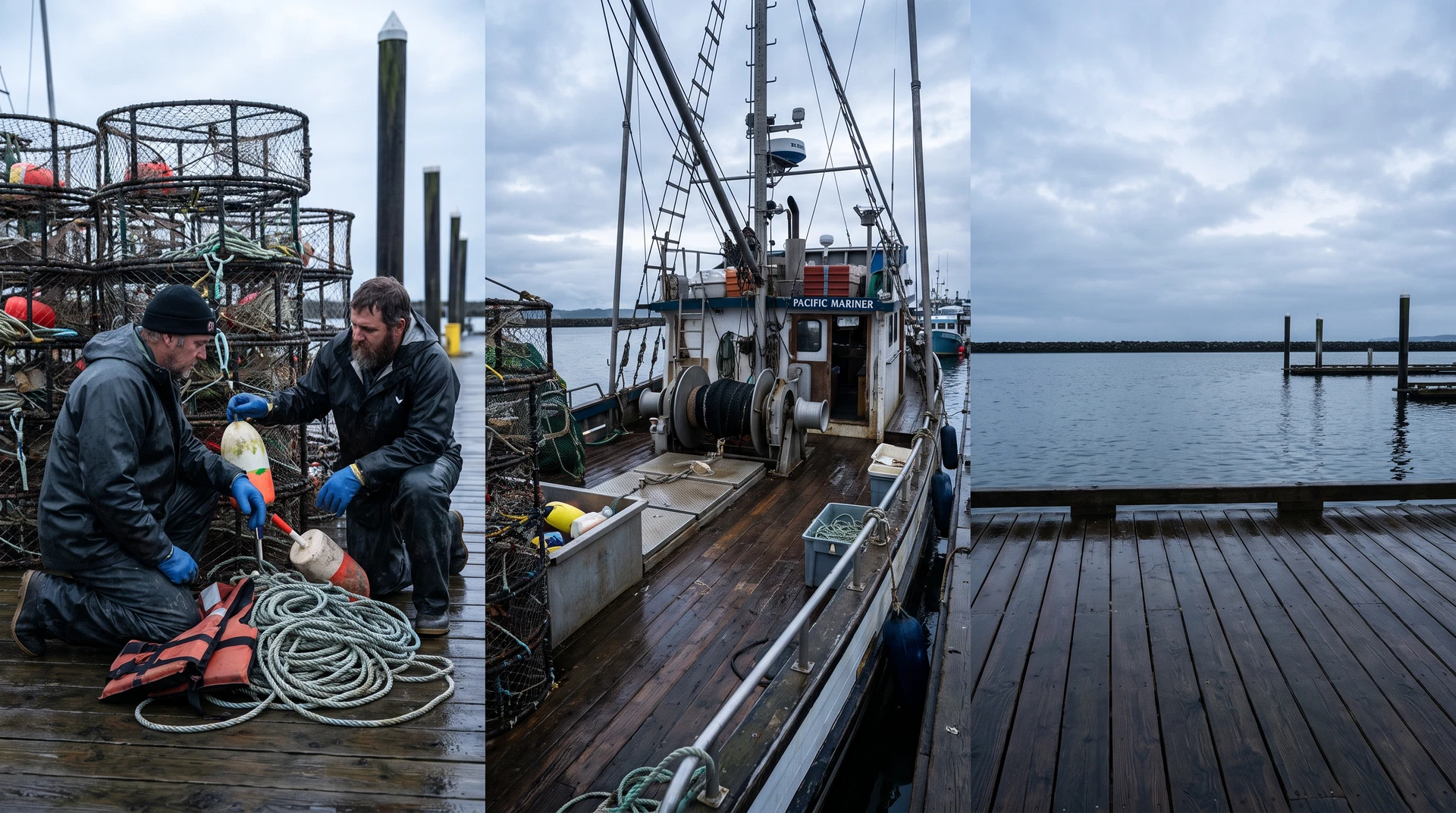

Oregon's commercial fishing industry generated a record $517 million in 2025 — making it one of the most economically vital industries on the Pacific Coast. From the crab boats working the waters off Newport and Coos Bay to the salmon trollers out of Brookings, the seafood processors on the docks, and the marinas and waterfront restaurants that serve the entire ecosystem, the Oregon Coast is home to a complex web of marine and coastal businesses that face risks unlike any other industry. This guide explains exactly what insurance coverages the Oregon fishing and coastal business community needs — and how Gerald Ross Agency, serving Oregon's coast since 1935, helps protect the people and businesses that make this industry work.
Oregon's $517 Million Fishing Industry: The Stakes Are High
Oregon's commercial fishing industry is one of the largest on the West Coast, with major ports at Newport, Coos Bay, Astoria, Brookings, and Gold Beach landing millions of pounds of Dungeness crab, Pacific salmon, albacore tuna, Pacific halibut, black cod (sablefish), shrimp, and groundfish every year. The 2025 record of $517 million in ex-vessel value reflects not just the volume of the catch, but the enormous capital investment Oregon's fishing families have made in their vessels, gear, and equipment.
A single commercial crab boat can represent an investment of $500,000 to $3 million. The gear, permits, and fishing rights associated with a full-time operation can add another $100,000 to $500,000. A catastrophic loss — a vessel fire, a sinking, a crew injury lawsuit, or a contaminated catch — can wipe out a fishing family's entire livelihood in a single event. The right insurance program is not a luxury for Oregon commercial fishing operations. It is the foundation that makes the entire business possible.
Commercial Fishing Vessel Insurance: The Core Coverages
Commercial fishing vessel insurance is a specialized field that requires carriers and agents with deep marine expertise. Unlike recreational boat insurance, commercial fishing coverage must address the unique hazards of working vessels operating in open ocean conditions, often far from shore, with crew aboard. The core components of a commercial fishing insurance program include:
Hull & Machinery (H&M)
Covers physical damage to the vessel itself — the hull, engine, gear, and equipment. This is the equivalent of comprehensive and collision coverage for your boat. Coverage is typically written on an 'agreed value' basis, meaning the full insured value is paid in a total loss without depreciation deductions.
Protection & Indemnity (P&I)
The marine equivalent of general liability insurance. P&I covers bodily injury to third parties, property damage to other vessels or docks, wreck removal costs, and pollution liability. The Port of Newport requires a minimum of $250,000 P&I for all commercial vessels using their facilities.
Jones Act / Crew Coverage
The Jones Act gives injured seamen the right to sue their employer for negligence. This is separate from workers' compensation and provides broader rights to crew members. Jones Act coverage is mandatory for any Oregon commercial fishing operation employing crew members — and the exposure can be enormous.
Pollution Liability
Fuel spills, oil leaks, and bilge water discharge can trigger federal and state environmental liability. The Port of Newport requires $300,000 in Pollution Liability for commercial vessels. Federal law (OPA 90) can impose strict liability for oil spills regardless of fault.
Cargo / Catch Coverage
Covers the value of the fish, crab, or other catch aboard the vessel. A full hold of Dungeness crab can be worth $50,000–$200,000. If the refrigeration fails, the vessel sinks, or the catch is contaminated, cargo coverage pays for the loss.
Fishing Gear & Equipment
Crab pots, trawl nets, longlines, and other fishing gear represent a significant investment — often $50,000–$300,000 for a full-time operation. Gear loss from storms, entanglement, or theft is a common claim that standard hull policies may not fully cover without a specific gear endorsement.
The Jones Act: Oregon Fishing Operators' Most Overlooked Liability
The Jones Act (formally the Merchant Marine Act of 1920, 46 U.S.C. § 30104) is one of the most important — and most misunderstood — laws affecting Oregon commercial fishing operations. Unlike standard workers' compensation, which provides a no-fault benefit to injured workers, the Jones Act gives injured seamen the right to sue their employer directly for negligence. This means a crew member injured on your vessel can pursue a lawsuit for pain and suffering, lost future earnings, and other damages that workers' compensation does not cover.
The Jones Act applies to any "seaman" — defined as a worker who spends a significant portion of their time working on a vessel in navigation. This includes deckhand crew members on Oregon crab boats, salmon trollers, shrimp boats, and trawlers. A single serious Jones Act claim — a back injury, a crush injury from crab pot gear, or a fall on a wet deck — can result in a lawsuit worth $500,000 to $2 million or more.
Jones Act Warning for Oregon Fishing Operators
Standard workers' compensation insurance does NOT satisfy Jones Act obligations. Oregon commercial fishing operators who employ crew members must carry specialized Jones Act / Maritime Employer's Liability coverage. The Port of Newport's International Terminal requires a minimum of $1 million in Maritime Employer's Liability for vessels using their facilities. Operating without proper Jones Act coverage exposes the vessel owner to unlimited personal liability.
Port of Newport Insurance Requirements: What Every Vessel Owner Must Know
The Port of Newport — one of Oregon's busiest commercial fishing ports — requires all vessels and tenants to carry specific insurance coverages and name the Port as an additional insured. These requirements apply to commercial fishing vessels, recreational vessels, charter/guide boats, and marina tenants. Understanding these requirements is essential for any Oregon Coast fishing or marine business.
| Vessel / Tenant Type | Required Coverage | Minimum Limit |
|---|---|---|
| Leases / Tenants | General Liability (each occurrence) | $2,000,000 |
| Leases / Tenants | General Aggregate | $2,000,000 |
| Commercial Vessels | Protection & Indemnity (P&I) | $250,000 |
| Commercial Vessels | Pollution Liability | $300,000 |
| Commercial Vessels | P&I + Pollution Combined | $600,000 |
| Charter / Guide Vessels | GL + P&I Combined | $1,000,000 |
| Charter / Guide Vessels | Pollution Liability | $300,000 |
| International Terminal | Maritime Employer's Liability (Jones Act) | $1,000,000 |
| International Terminal | Marine General Liability | $5,000,000 |
Source: Port of Newport Insurance Certificate Limits. Requirements subject to periodic review.
Get a Commercial Fishing Insurance Quote
Gerald Ross Agency has been insuring Oregon Coast fishing operations since 1935. We work with specialized marine insurers to build coverage programs for commercial fishing vessels, marinas, seafood processors, and coastal businesses. Let us shop the market for you.
Marina Operator Insurance: Protecting Oregon's Harbors and Boatyards
Oregon's marinas — from the large commercial harbors at Newport and Coos Bay to the smaller recreational marinas at Gold Beach, Brookings, and Florence — face a unique set of risks that standard commercial general liability policies are not designed to address. Marina operators need a specialized insurance package that covers the full range of their operations, including:
- Marina Operator's Legal Liability (MOLL): Covers damage to boats and vessels in the marina's care, custody, or control — including vessels stored in dry storage, on lifts, or in the water. This is the marina equivalent of a garage keeper's liability policy.
- Wharfingers Liability: Covers liability arising from the operation of docks, piers, wharves, and waterfront facilities. Slip-and-fall accidents on docks, dock collapse, and damage to vessels from dock equipment are common claims.
- Commercial Property: Covers the marina's buildings, fuel docks, boat lifts, dry storage facilities, and equipment. Coastal marinas face elevated risks from storm surge, wind, and saltwater corrosion.
- Pollution Liability: Fuel spills, bilge water, and hazardous materials are an inherent part of marina operations. Pollution Liability covers cleanup costs and third-party claims arising from environmental contamination.
- Workers' Compensation: Required for all marina employees in Oregon. Dock workers, boat mechanics, and fueling attendants face elevated injury risks from slippery surfaces, heavy equipment, and working around water.
- Commercial Umbrella: Given the high-value vessels in their care and the potential for catastrophic events like dock fires, marina operators should carry a commercial umbrella policy of $5 million or more above their primary coverages.
Seafood Processor & Fish Buyer Insurance in Oregon
Oregon's seafood processing industry — the plants that buy, process, pack, and ship Dungeness crab, salmon, tuna, and groundfish — represents a critical link in the coastal economy. Seafood processors face a unique combination of commercial property, product liability, and marine risks that require a carefully designed insurance program. Key coverages for Oregon seafood processors include:
| Coverage Type | What It Covers | Why It Matters |
|---|---|---|
| Commercial Property | Buildings, processing equipment, cold storage | Processing equipment can cost $500K–$5M to replace |
| Business Interruption | Lost income during a covered shutdown | A processing plant fire can close operations for months |
| Product Liability | Illness, injury from contaminated product | A single recall can cost $1M–$10M in claims |
| Recall Expense | Costs to recall and dispose of contaminated product | FDA recalls can cost $500K+ in logistics alone |
| Marine Cargo | Product in transit to buyers and distributors | Refrigerated transport failures are a common claim |
| Workers' Comp | Injuries to processing plant employees | Processing work has high rates of repetitive stress and cut injuries |
| Commercial Auto | Delivery and transport vehicles | Required by Oregon law for all commercial vehicles |
Other Oregon Coastal Businesses That Need Specialized Insurance
The commercial fishing industry is the anchor of the Oregon Coast economy, but it supports a wide ecosystem of related businesses — each with their own unique insurance needs. Gerald Ross Agency works with all of the following coastal business types:
Fishing Charter & Guide Boats
Charter operators carrying paying passengers need Passenger Vessel Liability, General Liability for shore operations, and USCG-compliant coverage. We specialize in charter boat insurance for Oregon Coast operators.
Waterfront Restaurants & Seafood Markets
Coastal restaurants face liquor liability, food contamination, and premises liability risks unique to their waterfront locations. Our commercial insurance for hospitality businesses addresses all of these exposures.
Boat Repair & Marine Services
Boat yards, marine mechanics, and repair facilities need Garage Keeper's Liability for vessels in their care, plus general liability, workers' comp, and commercial property coverage.
Coastal Retail & Bait Shops
Tackle shops, bait dealers, and marine supply stores need standard commercial insurance plus product liability coverage for fishing gear and supplies sold to commercial operators.
Aquaculture & Oyster Farms
Oregon's growing aquaculture industry — oyster farms, shellfish operations, and fish hatcheries — needs specialized coverage for stock loss, equipment, and the unique liability exposures of working in tidal waters.
Coastal Tour & Whale Watch Operators
Passenger vessel operators offering whale watching, scenic tours, and eco-tours need Passenger Vessel Liability, Jones Act for crew, and General Liability for their shore-based ticketing and operations.
Oregon Coast Marine Insurance Specialists
From Astoria to Brookings, Gerald Ross Agency has been protecting Oregon's fishing families and coastal businesses since 1935. We understand the unique risks of working on and near the Pacific Ocean — and we know the carriers who specialize in marine and coastal business coverage.
Oregon Coast-Specific Risks Every Marine Business Must Address
The Oregon Coast presents a set of environmental and regulatory risks that are unique to this region. Any insurance program for an Oregon marine or coastal business must account for these specific exposures:
- Bar Crossings at Oregon Coastal Inlets: Oregon's coastal river bars — at the Coquille River, Coos Bay, Umpqua River, Siuslaw River, and others — are among the most dangerous in the world. The Columbia River Bar is known as the 'Graveyard of the Pacific.' Bar crossings in heavy weather are a leading cause of vessel losses on the Oregon Coast. Hull and P&I coverage must be written with no bar exclusions for Oregon commercial fishing operations.
- Cascadia Subduction Zone Tsunami Risk: A major Cascadia earthquake could generate a tsunami that reaches Oregon's coastal harbors within 15–30 minutes. Commercial fishing vessels in port, marina facilities, and waterfront processing plants all face potential total loss. Business interruption coverage and flood/tsunami endorsements are critical for coastal businesses in tsunami inundation zones.
- Pacific Storm Season (October–April): Oregon's storm season brings sustained winds of 40–70 mph, waves of 20–40 feet, and extreme conditions that can damage vessels at dock, destroy fishing gear, and disrupt operations for weeks. Hull coverage must include storm damage while at dock, and marina operators need commercial property coverage that specifically addresses wind and wave damage.
- Oregon DFR Licensing & Compliance: The Oregon Department of Fish and Wildlife (ODFW) and the Pacific Fishery Management Council regulate commercial fishing permits, catch limits, and gear restrictions. Violations can result in permit suspension, fines, and loss of fishing rights — all of which can trigger business interruption claims. Regulatory defense coverage is an important addition to any commercial fishing insurance program.
- Fuel Spill Liability Under OPA 90: The Oil Pollution Act of 1990 (OPA 90) imposes strict liability on vessel owners for oil spills — regardless of fault. A fuel spill at a marina or during a vessel sinking can result in federal and state cleanup costs of $100,000 to $1 million or more. Pollution Liability coverage is not optional for Oregon commercial fishing and marina operations.
How Gerald Ross Agency Helps Oregon's Marine & Coastal Businesses
Gerald Ross Agency has been serving Oregon's fishing families and coastal businesses from our offices in Brookings and Gold Beach since 1935. We are not a national call center — we are local agents who understand the Oregon Coast, know the fishing ports, and have relationships with the specialized marine insurers who write commercial fishing, marina, and coastal business coverage.
Our marine insurance specialists work with Lloyd's of London syndicates, domestic marine insurers, and specialty program markets to build coverage programs that fit the specific needs of Oregon fishing operations — from a single crab boat to a multi-vessel fleet with a processing plant and retail operation. We also help coastal businesses with their commercial insurance needs beyond the marine coverages — including workers' compensation, general liability, commercial auto, and business owner's policies.
Oregon Coast Marine Insurance Checklist
Oregon Commercial Fishing Insurance Cost Guide (2026)
Commercial fishing insurance costs vary significantly based on vessel size, fishing grounds, crew size, catch type, and claims history. The following ranges are general estimates for Oregon fishing operations in 2026. Gerald Ross Agency can provide a precise quote based on your specific operation.
| Operation Type | Vessel Size | Est. Annual Premium |
|---|---|---|
| Small crab / salmon boat (owner-operator) | Under 40 ft | $3,000 – $7,000 |
| Mid-size crab / trawl vessel | 40–60 ft | $8,000 – $18,000 |
| Large commercial fishing vessel | 60–100 ft | $18,000 – $40,000 |
| Fishing charter / guide boat | 25–45 ft | $2,500 – $6,000 |
| Marina operator (small) | Under 50 slips | $8,000 – $20,000 |
| Marina operator (large) | 50–200+ slips | $20,000 – $75,000 |
| Seafood processor (small) | Under $2M revenue | $15,000 – $40,000 |
Estimates only. Actual premiums depend on vessel value, fishing grounds, crew size, claims history, and carrier. Contact Gerald Ross Agency for a precise quote.
Frequently Asked Questions: Oregon Commercial Fishing & Marine Insurance
What insurance do commercial fishing vessels need in Oregon?
What is the Jones Act and does it apply to Oregon fishermen?
Do marinas in Oregon need special insurance?
How much does commercial fishing insurance cost in Oregon?
Does a fishing charter business need different insurance than a commercial fishing vessel?
What insurance does a seafood processing plant need in Oregon?
Can Gerald Ross Agency insure my Oregon Coast waterfront business?
Related Insurance Resources
Auto, Motorcycle & Boat Insurance Oregon
Complete guide to vehicle and recreational boat insurance for Oregon residents.
Commercial Insurance for Oregon Businesses
General liability, workers' comp, BOP, and all the coverages Oregon businesses need.
Restaurant & Bar Insurance Oregon
Liquor liability, food contamination, and the full insurance program for hospitality businesses.
Protect Your Oregon Coast Fishing Business
Whether you operate a single crab boat out of Brookings, a charter fleet out of Newport, or a seafood processing plant on Coos Bay, Gerald Ross Agency has the marine insurance expertise to protect your operation. We have been serving Oregon's fishing families since 1935 — and we are ready to go to work for you.
Also serving: Commercial Fishing Insurance Oregon Coast | Marine Insurance Oregon Coast | Marine Cargo Insurance


