


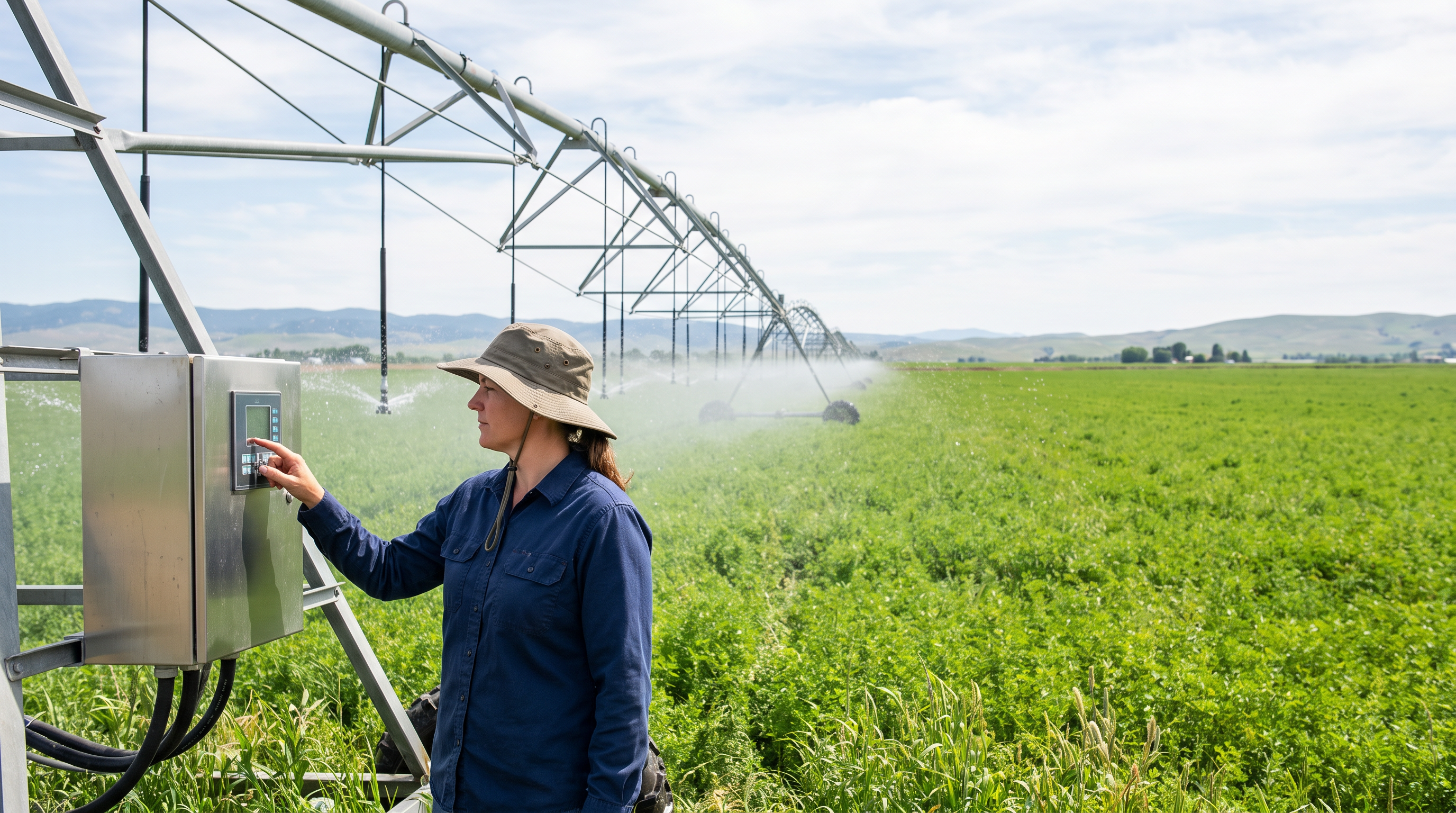

For an irrigated farm, water does not arrive as one simple asset. It moves through a chain of legal authority or delivery arrangements, wells or intakes, pumps, electrical panels, filters, mainlines, pivots, drip tape, valves, telemetry, people and field decisions. During drought, a power problem, pump failure, pipe break, wind event, fire, flood or property loss, the insurance question is not merely “Do we insure the irrigation system?” It is “Does the current program accurately describe every location, water-dependent activity, piece of equipment, contract and interruption that could matter?”
Start with the actual water system
A pivot is one part of a much larger operating chain
A pump can be physically sound while water is unavailable, a field can have a valid delivery arrangement while an electrical control fails, and a property policy can exist while the equipment, location, revenue dependency or contractor relationship is not described as expected. Separate water management from insurance, then connect the operational facts to a policy-specific review.
Map the farm’s water path before discussing a policy
A productive insurance conversation begins with the farm as it actually runs. A farm and ranch insurance program may be an important foundation, but it cannot be evaluated accurately from a single phrase such as “irrigated hay farm” or “orchard.” Identify the legal entity and landowner, each field and location, water source, well or district delivery, intake, storage, pump house, electrical service, mainline, pivots, wheel lines, drip zones, valves, controls and any equipment used away from the premises.
OSU Extension describes irrigation planning as an adaptive process that brings together water sources, system performance, soils, climate, crop needs, delivery measurements, pumping energy, monitoring and maintenance.[1] That same map is useful in a renewal conversation because it creates a reliable record of what the farm owns, leases, manages, relies on and may need to restore. It also helps distinguish a property question from a water-right, supplier, safety, produce-water or crop-management question.
The operating map
Three paths to document before the irrigation season
Use this map to organize operational facts for the appropriate specialists; it does not promise a coverage result.
The water path
Source, permit or right, district delivery, well, intake, pond, storage, filtration, mainline, lateral, field application and runoff controls.
The equipment path
Pump, motor, panel, variable-frequency drive, generator, pivot, wheel line, drip system, valves, sensors, controls, tools and spare parts.
The business path
Crop timing, employees, contractors, field access, produce-water duties, contracts, property values, records, emergency communications and continuity.
Drought, water rights and insurance are different conversations
Oregon’s Water Resources Department says that 2026 drought conditions can bring earlier regulation, dry or underproducing wells, pressure on stored water and some users being regulated back or off.[2] Oregon also explains that water is public and that, subject to exceptions, a permit or license is generally needed to use water from groundwater, lakes or streams. Its prior-appropriation system can make priority dates important in water-short periods.[3] Those are water-law and operational facts—not insurance benefits.
In Northern California, agricultural suppliers and larger systems may also have water-management, measurement or reporting responsibilities. California DWR describes agricultural water-management planning and farm-gate delivery reporting for certain suppliers.[4] A farm should work with its irrigation district, supplier, water-right professional, watermaster, engineer or attorney on those matters. A policy does not grant a water right, alter an allocation, restore a dry well, guarantee a water delivery or replace drought preparation.
The insurance review belongs alongside—not in place of—that planning. Ask what happens if a covered physical event damages a pump, control building, pipeline, pivot or generator. Then ask separate questions about drought and low water: which crops are most dependent, when stress becomes operationally serious, what records support decisions, which expenses continue, what contingency equipment is available and which contracts need notice. The issued forms determine any property or income response; no answer should be assumed from a policy label.
Pumps, panels, pivots and pipelines need their own property discussion
A failed well pump or pivot may be only the visible part of the loss. Water may depend on a motor, starter, relay, contactor, variable-frequency drive, electrical panel, transformer, generator, suction line, filtration, check valve, pressure regulator, telemetry system, sensor, pipe, nozzle and control software. The USDA NRCS irrigation-pumping handbook discusses pump controls, safety features, maintenance and performance tracking, and notes that air leaks, suction conditions, clogs, worn parts and mechanical defects can reduce capacity or pressure.[5]
That is why a farm equipment insurance discussion should go beyond “we have a pump.” Create a schedule with what the farm owns, where it sits, whether it is fixed or mobile, whether it is borrowed or leased, how old it is, its replacement value, serial number, related electrical gear and whether seasonal removal, off-premises work or transport changes its exposure. Also compare the schedule with the declarations, deductibles, valuation provisions, equipment-breakdown language, limitations, exclusions and endorsements actually issued.
For permanent pump houses, storage sheds, control buildings, electrical improvements, pipe inventory, spare parts and other structures or business personal property, a commercial property insurance review can help organize values and locations. The review should include construction, vacancy or seasonal use, improvements, detached structures, cause-of-loss wording and catastrophe deductibles. Flood, earth movement, wildfire, utility interruption, wear, corrosion, gradual deterioration and mechanical or electrical failure may be treated differently across policies and endorsements.
Adding a well, pivot, pump house or remote-control system?
Bring the scope, invoices, system map, serial numbers, installation date, ownership details and replacement estimate to a policy-specific review before the project is put into service.
Request an irrigation equipment reviewElectrical, worker and contractor risk can exist before water reaches the field
Water, metal equipment, electrical controls and long pipe runs create an operational safety conversation. Pacific Power advises farms not to stand irrigation pipe on end near power lines, not to spray water on lines or equipment, and to plan pump locations with repair access in mind.[7] Those practical precautions do not determine an insurance claim, but they are useful prompts for training, emergency procedures and contractor coordination.
Review who operates the system, who can reset a panel, who works around electrical gear, who pulls pumps, and who drives or tows irrigation equipment. A general liability review can help organize premises and third-party injury or property-damage allegations, while the actual policy terms control if and how a specific allegation may be handled. For employees, seasonal workers and crews, separate their actual duties, payroll, travel, equipment use and locations from the insurance labels used in a contract.
When an electrician, well contractor, pump company, pivot installer, excavation contractor, crop consultant or chemical applicator works at the farm, document the scope and handoffs. Ask which party controls the work area, underground utilities, lockout procedures, property in the contractor’s care, equipment being removed, testing, startup and final acceptance. A certificate of insurance can be useful evidence at one moment in time, but it does not change a policy or prove that every obligation in a contract is insured. Have counsel and the relevant agents review indemnity, insurance and additional-insured requirements before relying on them.
Vehicles, mobile equipment and irrigation work beyond the field gate
Some irrigation systems move between fields or are delivered to off-site ground. Trucks may haul pipe, pumps, generators, trailers, chemicals, tools or repair crews. A commercial auto insurance review is separate from a property schedule for a pivot or pump. Discuss titled vehicles, driver list, trailers, hired or non-owned vehicles, business use, radius, loading and unloading, overnight storage, and which party owns the equipment while it is in transit.
For a leased field, shared diversion, borrowed pump or custom farming relationship, place the agreement beside the insurance file. Identify the equipment owner, person responsible for maintenance, authorized operator, access rights, loss allocation, repair authority, water and electric service responsibility, indemnity wording and required certificates. A written agreement is important operational evidence, but it does not amend an insurance policy or make an excluded loss covered.
Produce-water records can create a separate operational exposure
Farms growing covered produce may face water-system obligations that are separate from insurance. FDA explains that agricultural water can include water used for irrigation and crop-protection sprays as well as water used in harvest, packing and holding.[6] Its updated pre-harvest framework calls for systems-based agricultural-water assessments for farms subject to the Produce Safety Rule and considers the source, distribution system, application method, crop, weather, nearby land uses and other hazard factors.[8]
That does not make a food-safety rule a coverage form. It does mean that an irrigation map and maintenance file can serve multiple business purposes. If a produce operation is subject to the requirements, confirm current applicability, assessment timing, testing, corrective actions, treatment and recordkeeping with food-safety professionals and the appropriate regulators. Then give the insurance agent a clear picture of what the farm grows, how water contacts produce, who operates the system and what continuity losses could follow a system shutdown.
Property loss, wildfire, flood and earth movement require specific questions
During drought, water infrastructure can also sit in a landscape with elevated fire concerns. A wildfire preparedness review can help a farm identify pump-house access, cleared equipment areas, electrical-shutoff information, generator fuel, water supply, emergency contacts and records protection. It is risk preparation, not a promise that a policy will respond to fire, smoke, evacuation, water shortage or every interruption.
Farms should also avoid treating a generic property limit as an answer to all water events. Flash flooding, pond overflow, washed-out pipe, mud, collapsed banks, underground water damage, ground movement and earthquake can each raise distinct cause-of-loss, location, exclusion and deductible questions. Use the current declarations and endorsements to ask about commercial flood insurance and commercial earthquake insurance where relevant. Availability and terms vary by location, form and carrier.
Remote controls, telemetry and data deserve a practical review
Modern irrigation can rely on remote start/stop capability, pressure sensors, soil moisture data, cellular or radio telemetry, vendor portals, payment information and connected controls. The value is real, but so are dependencies: password access, vendor support, connectivity, backups, authorized users and the ability to operate manually. A cyber liability discussion should focus on the actual technology, data, payment systems, privacy obligations, outage procedures and policy wording. It does not replace a field-level control plan or guarantee that a physical equipment malfunction is a cyber claim.
Document who has administrative access, what happens if a vendor platform is down, where logs are stored, how long a zone can wait for water, how controllers are backed up and who is authorized to override a system. Those facts help the farm manage an outage and help the agency ask better coverage questions. They are especially important when a farm adds a new telemetry provider, a consultant receives remote access or a contractor controls a system during commissioning.
Liability limits and interruption questions should be reviewed before a loss
One event can create several different allegations or expenses: a visitor injured near a pump house, a contractor’s property damaged during a repair, a vehicle accident while hauling pipe, a water discharge allegation, a crop delay, a failed control, or a field that cannot be serviced on time. A commercial umbrella insurance review may be relevant to liability limits above underlying policies, but it is not a substitute for correct underlying coverage, scheduled property, water management, legal compliance, equipment maintenance or business-income terms.
Before renewal, identify the revenue and operating dependencies that are most sensitive to irrigation downtime. Which crop stages cannot be delayed? What property must be replaced first? Is a temporary pump available? Can water be moved from another source legally and safely? What must be documented for the district, supplier, lender, food-safety file, landlord, customer or carrier? The best time to compare those facts against a policy is before the heat event, failure or property damage occurs.
Before irrigation season, renewal or a system upgrade
Eight items for the irrigation continuity and insurance file
Bring this record to the appropriate water, engineering, safety, food-safety and insurance conversations.
A current source-and-system map showing water source, right or delivery arrangement, well, intake, storage, pumps, controls, mainlines, laterals, pivots, valves, meters, fields and shutoffs.
Pump, motor, panel, pivot, generator, filtration, pipeline, sensor and telemetry schedules with ownership, installation dates, model and serial numbers, photos and replacement estimates.
Water-right, irrigation-district, supplier, lease, easement, well, storage and delivery documents, plus current contacts for the watermaster, district, landlord, engineer, electrician and pump contractor.
Seasonal inspection, pressure, flow, water-level, repair and maintenance records; service invoices; warranties; contractor scopes; and a record of spare parts kept on hand.
A field-by-field crop calendar that identifies irrigation dependencies, critical dates, stored-water capacity, alternate supply options and the operating impact if a zone cannot be watered.
Electrical and safety information: disconnect locations, lockout procedures, overhead-line hazards, generator instructions, emergency contact list and who is authorized to work on the system.
For produce operations, applicable agricultural-water assessments, inspection or test records, corrective-action documentation, supplier records and food-safety contacts.
Current declarations, endorsements, location and equipment schedules, deductibles, loss history, leases, certificates, contract insurance requirements and any requested additional-insured wording.
Changing how your farm delivers water?
Tell the agency about a new well, pump, pivot, generator, control building, field, leased ground, water-dependent crop, contractor role or remote-control system. We can help organize the questions for the available forms.
Discuss your water-system changesFrequently asked questions
Does farm insurance automatically cover a failed irrigation pump or center pivot?
Not automatically. A failed pump, motor, panel, pivot, pipe, control, well component or irrigation structure can raise separate questions about what is scheduled, the cause of loss, equipment-breakdown wording, wear and tear, electrical damage, water, earth movement, flood, utility interruption, deductibles and endorsements. The issued policy and the actual facts control.
Does insurance replace water that cannot be delivered during a drought or water-right regulation?
Generally, insurance is not a substitute for a water right, allocation, district delivery, well yield or drought plan. Oregon water-right regulation and California water-management requirements are legal and operational matters. Some policies may raise separate business-income, property or equipment questions after a covered physical loss, but no coverage should be assumed for reduced water availability.
What irrigation equipment should a farm document for an insurance review?
Document pumps, motors, variable-frequency drives, panels, pivots, wheel lines, drip systems, pipe, manifolds, wells, filtration, valves, flow meters, generators, telemetry, sensors, control software, trailers, tools, parts and installed improvements. Include ownership, location, serial numbers, replacement estimates, contracts, maintenance records and photographs.
Why does an irrigation contractor's certificate of insurance matter?
A certificate can help identify information reported by the contractor's insurer at a point in time, but it does not amend a policy or establish that every contract requirement is insured. Review the work scope, underground utilities, electrical work, chemical handling, additional-insured wording, limits, indemnity and actual policy requirements with the contractor, their agent and qualified legal counsel.
Do produce farms have special water-system obligations?
Some farms subject to the FDA Produce Safety Rule have agricultural-water assessment, inspection, maintenance, corrective-action and recordkeeping obligations. Applicability depends on the produce, activity, farm and water use. Food-safety compliance is separate from insurance and should be confirmed with qualified food-safety and regulatory professionals.
Sources and further reading
Official state and federal resources, university extension guidance, an irrigation engineering reference and regional electrical-safety materials informed this article. Water law, drought declarations, supplier rules, food-safety obligations, construction standards, underwriting appetite and policy terms can change. The sources below do not determine any insurer’s policy language or claim outcome.
- [1] Oregon State University Extension: Developing an Irrigation Water Management Plan
- [2] Oregon Water Resources Department: Drought
- [3] Oregon Water Resources Department: Water Rights
- [4] California Department of Water Resources: Agricultural Water Use Efficiency
- [5] USDA Natural Resources Conservation Service: National Engineering Handbook: Irrigation Pumping Plants
- [6] U.S. Food and Drug Administration: Requirements for Harvest and Post-Harvest Agricultural Water
- [7] Pacific Power: Farms and Ranches Electrical Safety
- [8] U.S. Food and Drug Administration: FSMA Final Rule on Pre-Harvest Agricultural Water
Make the policy description match the water system the farm relies on
Bring the water map, equipment schedule, contracts, maintenance records, continuity plan and current declarations to Gerald Ross Agency for a practical, policy-specific conversation.
Request a farm and ranch quoteImportant: General educational information only; not legal, engineering, water-right, agricultural, food-safety, employment, safety or insurance-coverage advice. Nothing here promises coverage, availability or payment. Coverage, eligibility, premiums, limits, exclusions, deductibles, named insureds, locations, scheduled equipment, values, policy terms, contracts, maintenance, water source, regulatory requirements, underwriting and claim facts determine outcomes. A water right, water allocation, delivery agreement, permit, system map, food-safety record, certificate, contract, maintenance plan or inventory does not create insurance. Confirm current requirements with the appropriate agencies and qualified advisers, and discuss the actual issued policy with a licensed insurance producer.


