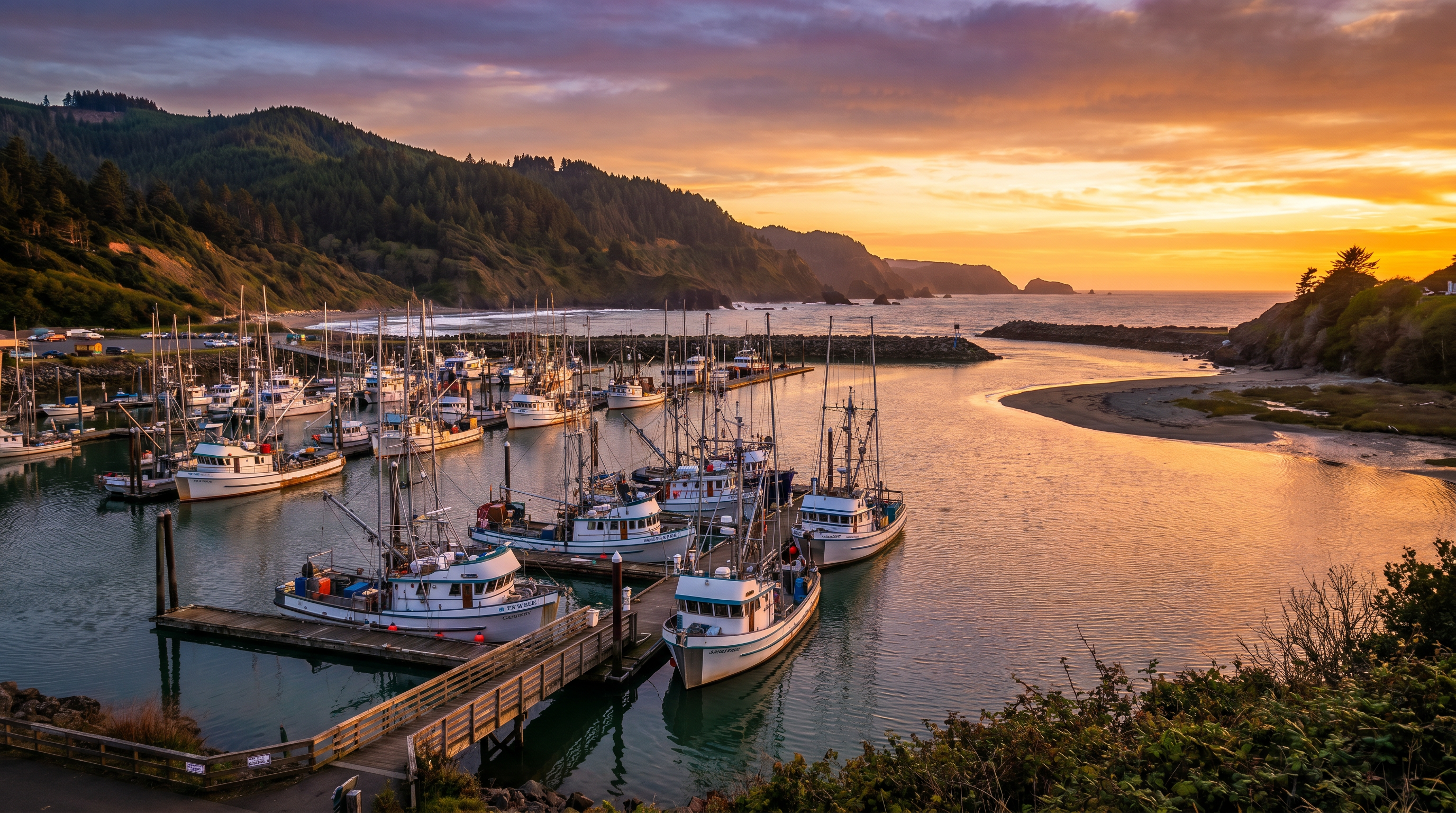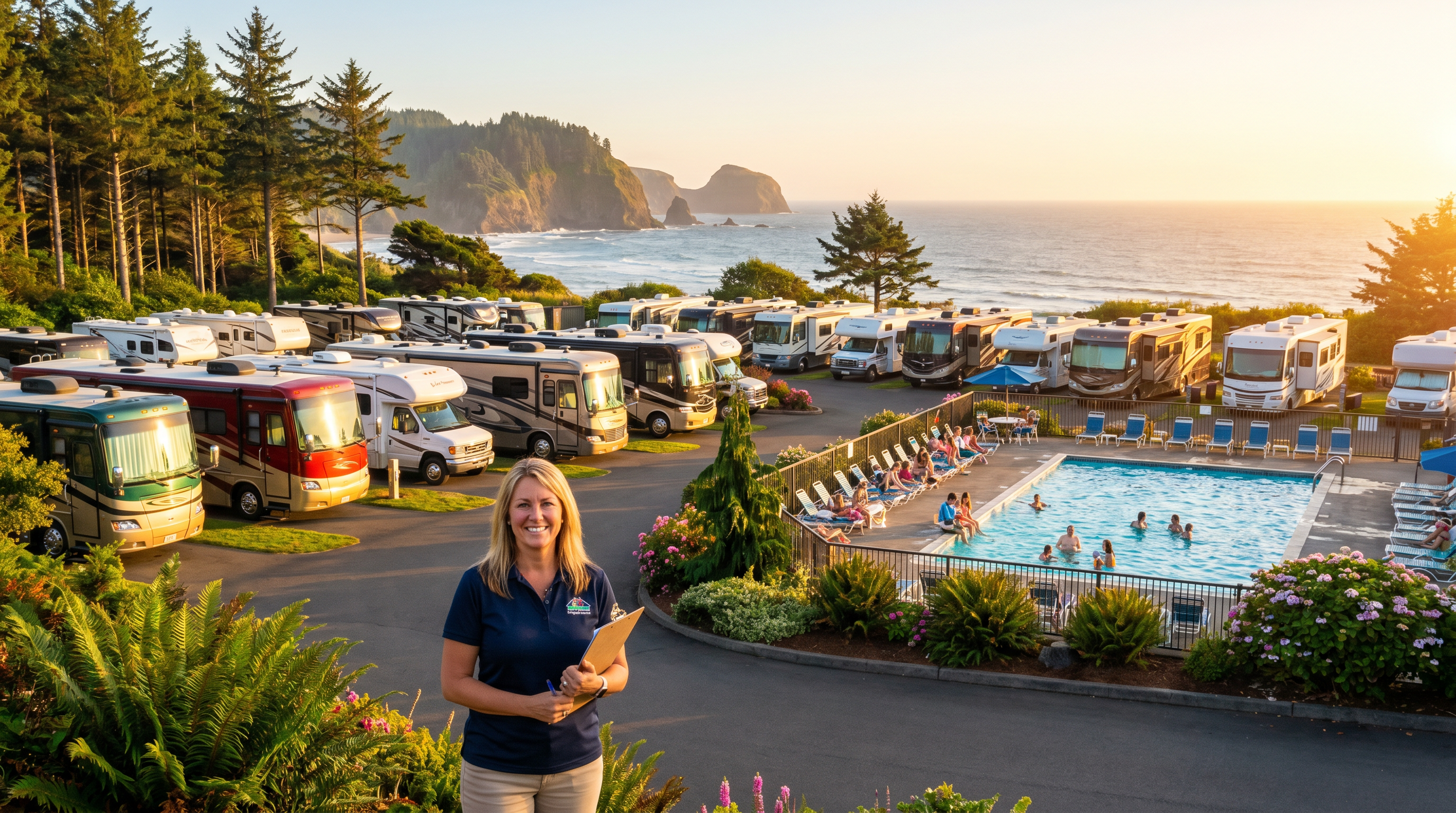

Oregon's RV parks and campgrounds recorded over 56 million visitor nights in 2024, making outdoor hospitality one of the most resilient sectors of the state's tourism economy. From the dramatic sea-stack views of Brookings and Gold Beach to the redwood groves of Humboldt County and the river valleys of Southern Oregon, RV resorts and campgrounds are the backbone of coastal recreation along the entire Pacific Coast. But the insurance needs of a park operator are fundamentally different from those of a standard commercial property owner — and the gaps between what most policies cover and what park operators actually face can be financially devastating.
Own or Operate an RV Resort or Campground in Oregon or Northern California?
Gerald Ross Agency specializes in outdoor hospitality insurance for parks of all sizes — from small family campgrounds to full-service coastal resorts. We shop 50+ carriers to find the right coverage at the right price.
The Oregon and Northern California RV Park Landscape
The Pacific Coast from Astoria to Eureka is home to some of the most sought-after RV destinations in the country. Oregon's Highway 101 corridor alone hosts hundreds of private RV parks and campgrounds, ranging from basic tent-and-hookup operations to full-service resorts with pools, restaurants, rental cabins, and event facilities. Southern Oregon's Rogue River valley, the Applegate and Illinois River corridors, and the Crater Lake region attract seasonal visitors from across the West. In Northern California, the redwood coast from Crescent City through Humboldt County and down to Mendocino draws millions of visitors annually to parks nestled among ancient trees and dramatic ocean bluffs.
This geography creates a unique insurance challenge. Oregon Coast parks face storm surge, coastal flooding, and increasingly, wildfire smoke that can force closures during peak season. Southern Oregon parks sit in some of the state's highest wildfire risk zones. Humboldt, Mendocino, and Trinity county parks in Northern California face extreme wildfire exposure — Trinity County was the epicenter of the 2020 August Complex fire, which became California's first gigafire at over one million acres. Any park operator in this region who has not reviewed their coverage in the past two years is almost certainly underinsured for the risks they actually face.
The 10 Essential Coverages for RV Parks and Campgrounds
A comprehensive RV park insurance program is built from multiple coverages that work together. Understanding what each one does — and what it does not cover — is the foundation of a sound risk management strategy.
| Coverage | What It Covers | Key Gap Without It |
|---|---|---|
| General Liability | Guest injuries, property damage, slip-and-fall, pool/dock incidents | A single guest injury lawsuit can exceed $500,000 |
| Commercial Property | Buildings, amenities, equipment, infrastructure at replacement cost | Underinsurance is the #1 mistake — rebuild costs have risen 40% since 2020 |
| Trailer Spotting Liability | Damage when staff moves or assists with guest RVs and trailers | Standard GL excludes this — one backing accident = $50K+ claim |
| Business Interruption | Lost revenue during covered closures (fire, storm, flood) | A 60-day closure during peak season can be financially fatal |
| Workers' Compensation | Medical costs and lost wages for injured employees | Oregon law requires it for any employee — seasonal included |
| Environmental/Pollution Liability | Sewage failures, fuel spills, gray water contamination | Standard GL excludes all pollution events |
| Liquor Liability | Claims from alcohol service at bar, restaurant, or events | Oregon dram shop law (ORS 471.565) creates significant exposure |
| Inland Marine | Rental equipment: kayaks, bikes, paddleboards, golf carts | Standard property policies exclude mobile rental equipment |
| Cyber Liability | Data breaches from online reservation systems, credit card theft | Online booking systems are a growing target for cybercriminals |
| Commercial Umbrella | Excess liability above all underlying policy limits | Essential for pools, docks, high-volume parks — $1M GL is rarely enough |
The Coverage Gap Most Park Operators Never See Coming: Trailer Spotting
Of all the unique exposures in the RV park industry, trailer spotting liability is the one that surprises operators most — and the one that generates some of the largest claims. When a park employee helps back a guest's 45-foot Class A motorhome into a tight site, or hooks up a fifth wheel to a tow vehicle, or moves a trailer to accommodate a new arrival, they are taking on liability for any damage that occurs. A single contact between a park vehicle and a high-end motorhome can easily generate a $75,000 to $150,000 claim.
The problem is that standard commercial general liability policies typically exclude damage to vehicles in the care, custody, or control of the insured — which is exactly what happens during trailer spotting. Without a specific trailer spotting endorsement or a separate inland marine policy covering guest vehicles, your park is exposed for the full cost of any damage your staff causes to a guest's rig. Given that the average new Class A motorhome costs over $200,000, this is not a theoretical risk.
Pollution and Environmental Liability: The Silent Exposure
Every RV park with full hookups is operating a small utility system — water, sewer, and electrical infrastructure that serves dozens or hundreds of guests simultaneously. When that system fails, the consequences can be severe. A septic system backup that contaminates a neighboring property, a fuel spill from an on-site generator or maintenance shed, or a gray water discharge into a creek or wetland can trigger cleanup costs that dwarf the original incident.
Oregon's Department of Environmental Quality (DEQ) and California's State Water Resources Control Board both have enforcement authority over campground and RV park wastewater systems, and violations can result in fines, mandatory remediation, and third-party liability claims. Standard commercial general liability policies contain absolute pollution exclusions — meaning any claim arising from a discharge, dispersal, or release of pollutants is simply not covered. Environmental liability insurance fills this gap, covering both cleanup costs and third-party bodily injury and property damage claims arising from pollution events on your property.
Wildfire and Flood: The Twin Threats to Oregon and NorCal Parks
The insurance market for RV parks in wildfire-exposed areas of Oregon and Northern California has changed dramatically since 2020. The Labor Day fires of that year burned through campgrounds in the Rogue Valley and Cascade foothills, and the August Complex fire in Trinity County destroyed or threatened dozens of rural properties including campgrounds. Standard commercial property carriers have responded by non-renewing policies, dramatically raising premiums, or adding wildfire exclusions for parks in high-risk zones.
For parks in these areas, the surplus lines market — non-admitted carriers that specialize in hard-to-place risks — is increasingly the primary option. Specialty outdoor hospitality carriers and Lloyd's of London syndicates are writing policies for wildfire-exposed parks that standard carriers have abandoned. The premiums are higher, but the coverage is real. An independent agent with surplus lines access is essential for any park operator in Southern Oregon or Northern California who has received a non-renewal notice or is struggling to find competitive coverage.
Flood is an equally serious concern for parks located on riverbanks, in coastal flood zones, or near tidal areas. Oregon's Rogue, Chetco, and Umpqua rivers all have histories of significant flooding, and many popular RV parks are sited in scenic river corridors that are also flood-prone. Standard commercial property policies do not cover flood damage. Flood coverage must be purchased separately — either through the National Flood Insurance Program (NFIP) or through private flood insurance, which typically offers higher limits and business interruption coverage that NFIP does not provide.
Is Your RV Park Covered for Wildfire, Flood, and Pollution?
Most standard commercial policies leave significant gaps in all three areas. Gerald Ross Agency can review your current coverage and identify exposures before they become claims.
Workers' Compensation and Seasonal Employees
RV parks and campgrounds are labor-intensive operations with a workforce that is disproportionately seasonal, part-time, and young. Oregon law requires workers' compensation coverage for virtually all employees — including seasonal workers, part-time staff, and workers hired for specific events. California has similar requirements. The most common injuries in the campground industry are slips and falls on uneven terrain, back injuries from heavy lifting (firewood, equipment), and lacerations from maintenance work.
A common mistake among smaller park operators is misclassifying employees as independent contractors to avoid workers' comp premiums. Oregon and California both aggressively enforce worker classification rules, and a misclassification finding can result in back premiums, penalties, and personal liability for the park owner. If a worker who was classified as a contractor is injured and successfully argues employee status, the park owner is personally responsible for all medical costs and lost wages — potentially hundreds of thousands of dollars.
Special Events, Amenities, and Expanded Liability
Many Oregon Coast and Northern California RV resorts have evolved well beyond simple hookup sites. Pools, hot tubs, playgrounds, dog parks, kayak and paddleboard rentals, fishing docks, on-site restaurants, and special events like concerts, holiday celebrations, and outdoor movie nights have all become standard amenities at competitive parks. Each of these amenities adds a distinct liability exposure that must be specifically addressed in the insurance program.
Swimming pools and hot tubs are among the highest-risk amenities an RV park can operate. A drowning or near-drowning incident can result in a multi-million dollar lawsuit. Pool liability requires specific endorsements, adequate GL limits, and in many cases a commercial umbrella policy to provide meaningful protection. Rental equipment — kayaks, paddleboards, bikes, golf carts — creates inland marine exposure that standard property policies exclude. Special events that draw large crowds may require event-specific coverage that is not included in the base GL policy.
Business Interruption: The Coverage That Saves Parks After a Loss
For a seasonal business like an RV park, the timing of a loss matters as much as the physical damage. A fire that destroys the main bathhouse in June — the start of peak season — is not just a property loss. It is the loss of the entire summer's revenue while the facility is rebuilt. Business interruption insurance replaces that lost income during the period of restoration, allowing the park to continue paying its mortgage, its employees, and its operating costs even while the physical plant is being rebuilt.
Many park operators underestimate the amount of business interruption coverage they need. The standard approach is to calculate 12 months of gross revenue and use that as the coverage limit — but for a highly seasonal operation where 70% of annual revenue is earned in a 90-day window, a loss that occurs at the start of peak season could require 18 to 24 months of coverage to fully recover. An independent agent who understands the outdoor hospitality business can help you structure the right coverage period and limits.
Why Gerald Ross Agency Is the Right Partner for RV Park Operators
Gerald Ross Agency is an independent insurance agency serving the Oregon Coast, Southern Oregon, and Northern California — the heart of the Pacific Coast RV park and campground market. As an independent agency, we are not tied to any single carrier. We work with admitted carriers, surplus lines markets, and specialty outdoor hospitality programs to find the right coverage for each park's unique combination of amenities, location, and risk profile.
We understand the specific challenges that Oregon Coast and Northern California park operators face: the wildfire exposure in Southern Oregon and the Emerald Triangle, the flood risk along the Rogue and Chetco rivers, the coastal storm exposure from Lincoln City to Crescent City, and the surplus lines market dynamics that have reshaped commercial property coverage across the region. When a standard carrier non-renews your policy or prices you out of the market, we have the relationships and the market access to find you a real alternative.
Whether you operate a 20-site family campground on the Chetco River or a 200-site full-service resort on the Oregon Coast, we can review your current coverage, identify gaps, and build a program that actually protects your investment. Explore our RV Resort & Campground Insurance page, learn about commercial insurance options for outdoor hospitality businesses, and read our guide to insurance for the new Oregon Coast economy. Then give us a call — we are here to help.
You can also explore our resources on what to do if your carrier drops you, surety bonds for Oregon and NorCal businesses, and general liability insurance fundamentals. Our independent agent advantage means we work for you — not for the insurance company.
Frequently Asked Questions
What insurance does an RV resort or campground need in Oregon?▼
What is trailer spotting liability and why do RV parks need it?▼
Does my RV park need pollution or environmental liability insurance?▼
How does wildfire risk affect RV park insurance on the Oregon Coast and in Northern California?▼
Is my RV park covered for flood damage?▼
Do I need liquor liability insurance for my RV resort?▼
How much does RV resort insurance cost in Oregon?▼
Your RV Park Is Open for Business. Make Sure Your Coverage Is Too.
From trailer spotting liability to wildfire exposure, RV park insurance requires a specialist who understands the outdoor hospitality industry. Gerald Ross Agency serves park operators across the Oregon Coast, Southern Oregon, and Northern California — and we have the carrier relationships to find coverage that actually fits your operation.