


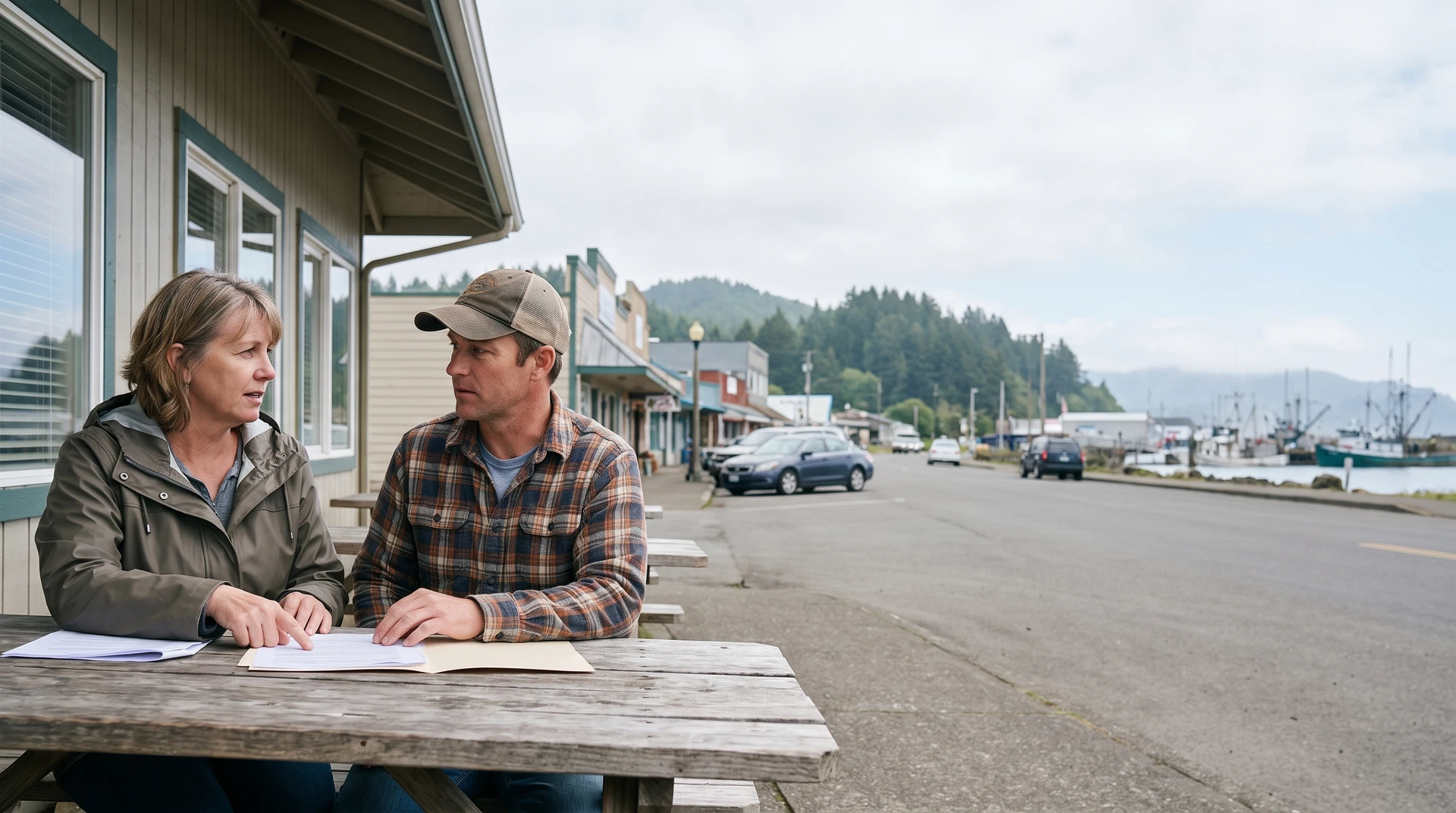

The Oregon and California coasts are among the most beautiful — and most insurance-complex — places in the country to own property, operate a business, or run a boat. The combination of wildfire exposure, coastal storm risk, a booming short-term rental market, commercial fishing, cannabis agriculture, and a large tourism economy creates a unique set of insurance exposures that standard policies routinely fail to cover.
The following ten claim scenarios are drawn from real claim archetypes that independent agents in Oregon and Northern California encounter regularly. Names and identifying details are not used — but the coverage gaps, the dollar amounts, and the lessons are real. Each one represents a situation where a policyholder believed they were covered and discovered, at the worst possible moment, that they were not.
Don't Wait for a Claim to Find Your Gaps
An independent agent can review your current coverage and identify exposures before they become claims. Most coverage reviews take less than 30 minutes.
The Vacation Rental Kitchen Fire — Brookings, Oregon
Claim Amount: $340,000What Happened
A guest left a stovetop unattended during a holiday weekend rental. The resulting fire caused $340,000 in structural damage and contents loss.
The Coverage Gap
The owner's standard homeowners policy had a livery exclusion — any commercial rental activity voided coverage. The Airbnb Host Guarantee covered only $50,000. The owner was personally liable for the remaining $290,000.
The Lesson
A dedicated short-term rental policy or commercial landlord policy with proper liability limits is essential for any property listed on Airbnb, VRBO, or similar platforms.
The Charter Boat That Sank at the Dock — Crescent City, California
Claim Amount: $280,000What Happened
A 42-foot charter fishing vessel sank at its slip overnight after a through-hull fitting failed. The boat was a total loss.
The Coverage Gap
The owner's recreational boat policy excluded commercial charter use. Because the vessel was licensed and advertised for hire, the policy was void at the time of the loss. No coverage for the hull, no coverage for the dock damage, no coverage for salvage.
The Lesson
Any vessel used for commercial charter, fishing guide, or whale-watching operations requires a commercial marine policy — not a recreational boat policy.
The Roofing Contractor's Employee Fall — Gold Beach, Oregon
Claim Amount: $1.2 millionWhat Happened
A roofing subcontractor fell from a residential roof and suffered a traumatic brain injury. The homeowner had hired the contractor directly without verifying workers' compensation coverage.
The Coverage Gap
Oregon law allows injured workers to sue property owners when the contractor has no workers' comp. The homeowner's liability policy excluded contractor injuries on the job site. The homeowner faced a $1.2 million judgment.
The Lesson
Always verify that any contractor you hire carries current workers' compensation insurance before work begins. Ask for a certificate of insurance — not just a verbal assurance.
The Wildfire Evacuation and Underinsurance — Josephine County, Oregon
Claim Amount: $890,000What Happened
A Southern Oregon homeowner's property was destroyed in a wildfire. The home had been insured for $420,000 — the original purchase price from 12 years earlier.
The Coverage Gap
Rebuilding costs in Southern Oregon had risen to $310 per square foot. The actual replacement cost was $890,000. The policy paid $420,000. The owner received less than half of what was needed to rebuild.
The Lesson
Replacement cost coverage must be updated regularly — especially in Oregon and Northern California where construction costs have risen 40–60% since 2019. Extended replacement cost endorsements provide a critical buffer.
The Vacation Rental Slip-and-Fall — Cannon Beach, Oregon
Claim Amount: $425,000What Happened
A guest slipped on a wet deck at a beachfront vacation rental and suffered a broken hip and spinal injury. The medical bills and lost wages claim totaled $425,000.
The Coverage Gap
The owner's homeowners liability coverage was $100,000 — the standard limit. The short-term rental exclusion in the policy meant even that $100,000 was disputed. The owner settled for $425,000 out of pocket.
The Lesson
Short-term rental operators need commercial liability coverage with limits of at least $1 million, plus umbrella coverage. Standard homeowners liability is both insufficient and often inapplicable.
The Cannabis Crop Total Loss — Humboldt County, California
Claim Amount: $1.8 millionWhat Happened
A licensed outdoor cannabis cultivator in Humboldt County lost an entire harvest to wildfire. The crop was valued at $1.8 million.
The Coverage Gap
Standard farm policies exclude cannabis entirely as a federally illegal substance. The grower had no crop insurance. The loss was total and uninsured.
The Lesson
Cannabis cultivators in California and Oregon must obtain specialty surplus lines crop insurance. Coverage exists — but only through brokers who specialize in cannabis, and it must be in place before planting season.
The Commercial Fishing Vessel Collision — Newport, Oregon
Claim Amount: $560,000What Happened
A commercial crab boat collided with a recreational vessel in Yaquina Bay. The recreational vessel sank. Two people were injured. The crab boat owner faced liability claims totaling $560,000.
The Coverage Gap
The commercial fishing vessel's policy had a $300,000 liability limit — the minimum required for Oregon State Marine Board licensing. The excess $260,000 came directly from the owner's personal assets.
The Lesson
Commercial fishing vessels operating in Oregon waters should carry a minimum of $1 million in marine liability, with umbrella coverage above that. Minimum state requirements are not adequate protection.
The Restaurant Food Contamination Closure — Eureka, California
Claim Amount: $310,000What Happened
A Northern California restaurant was forced to close for six weeks after a norovirus outbreak was traced to its kitchen. The health department mandated a full remediation and retraining program.
The Coverage Gap
The owner's BOP (Business Owners Policy) covered property damage but excluded food contamination, loss of income from health department closure, and the cost of the remediation program. Total uninsured loss: $310,000.
The Lesson
Restaurants need a food contamination endorsement and business interruption coverage that specifically includes government-ordered closure. Standard BOP policies routinely exclude both.
The HOA Deck Collapse — Lincoln City, Oregon
Claim Amount: $780,000What Happened
A shared oceanfront deck at an Oregon Coast condominium complex collapsed during a community event. Fourteen people were injured. Three required surgery.
The Coverage Gap
The HOA's master policy had a $500,000 liability limit. The total claims exceeded $780,000. Individual unit owners faced special assessments to cover the gap — and several were sued personally because their HO-6 policies had inadequate loss assessment coverage.
The Lesson
HOA boards should carry at least $2 million in general liability. Individual unit owners need HO-6 policies with robust loss assessment coverage — typically $50,000 minimum — to protect against exactly this scenario.
The Delivery Driver Accident — Coos Bay, Oregon
Claim Amount: $490,000What Happened
A restaurant delivery driver caused a serious accident while making a delivery. The injured party sued the driver and the restaurant. Total damages: $490,000.
The Coverage Gap
The driver's personal auto policy excluded commercial delivery use. The restaurant's general liability policy excluded auto accidents. The restaurant had no commercial auto or hired/non-owned auto coverage. Both the driver and the restaurant were personally exposed.
The Lesson
Any business that uses personal vehicles for deliveries — or hires drivers who use their own cars — needs hired and non-owned auto (HNOA) coverage. It is inexpensive and often overlooked until a claim occurs.
Which of These Gaps Could Apply to You?
If you own a vacation rental, a boat, a business, a farm, or a coastal property in Oregon or Northern California, at least one of these scenarios is relevant to your current coverage. An independent agent at Gerald Ross Agency can review your policies and identify gaps before they become claims.
Summary: The 10 Claims at a Glance
| # | Scenario | Amount | Key Coverage Needed |
|---|---|---|---|
| 01 | The Vacation Rental Kitchen Fire | $340,000 | Homeowners Insurance |
| 02 | The Charter Boat That Sank at the Dock | $280,000 | Boat Insurance |
| 03 | The Roofing Contractor's Employee Fall | $1.2 million | Workers' Compensation Insurance |
| 04 | The Wildfire Evacuation and Underinsurance | $890,000 | Homeowners Insurance |
| 05 | The Vacation Rental Slip-and-Fall | $425,000 | Umbrella Insurance |
| 06 | The Cannabis Crop Total Loss | $1.8 million | Cannabis Business Insurance Guide |
| 07 | The Commercial Fishing Vessel Collision | $560,000 | Marine Insurance |
| 08 | The Restaurant Food Contamination Closure | $310,000 | General Liability Insurance |
| 09 | The HOA Deck Collapse | $780,000 | HOA Insurance Guide |
| 10 | The Delivery Driver Accident | $490,000 | Commercial Auto Insurance |
Frequently Asked Questions
Does a standard homeowners policy cover short-term rental activity?
No. Most standard homeowners policies contain a livery exclusion that voids coverage when the property is rented for compensation. Short-term rental operators need a dedicated vacation rental policy or commercial landlord policy.
What is the most common insurance gap on the Oregon and California coasts?
Underinsurance is the most common gap — homeowners who have not updated their dwelling coverage to reflect current replacement costs. With construction costs up 40–60% since 2019, many coastal homeowners are insured for significantly less than what it would cost to rebuild.
Does a recreational boat policy cover charter use?
No. Recreational boat policies exclude commercial use including charter, fishing guide, and whale-watching operations. Any vessel used for hire requires a commercial marine policy.
Am I liable if a contractor is injured on my property?
Potentially yes. In Oregon, if a contractor does not carry workers' compensation insurance, the injured worker may be able to sue the property owner. Always verify workers' comp coverage before any contractor begins work.
How much liability coverage should a short-term rental owner carry?
At minimum, $1 million in commercial liability coverage, plus a personal umbrella policy of $1–2 million above that. Standard homeowners liability limits of $100,000–$300,000 are inadequate for short-term rental operations.
Talk to an Independent Agent Today
Gerald Ross Agency has served Oregon and Northern California since 1935. We work with 50+ carriers to find coverage that actually protects you — not just the minimum that satisfies a lender or a license requirement.
Serving Brookings, Gold Beach, Coos Bay, Crescent City, Eureka, and communities throughout Oregon and Northern California.


