



The cannabis industry in Oregon and Northern California is at an inflection point. Oregon's market has been grappling with oversupply and price compression since 2021. California's licensed market continues to consolidate as operators who cannot absorb the state's high tax burden and regulatory costs exit the industry. And across both states, the insurance market for cannabis businesses has tightened dramatically — most notably following Lloyd's of London's 2024 withdrawal from U.S. cannabis, which removed one of the largest and most flexible sources of coverage from the market. If you operate a dispensary, cultivation facility, processing operation, or delivery service in Oregon or Northern California, understanding your insurance options in 2026 is more important — and more challenging — than at any point since legalization.
Cannabis Business Insurance Is Harder to Find in 2026. We Can Help.
Gerald Ross Agency has access to the specialty surplus lines and MGA programs that write cannabis business insurance in Oregon and Northern California. Whether you operate a dispensary, grow, processing facility, or delivery service, we can find the coverage your OLCC or DCC license requires.
Part One: Why Cannabis Insurance Is Different — and Why It Has Gotten Harder
The fundamental challenge of cannabis business insurance is federal law. Cannabis remains a Schedule I controlled substance under the Controlled Substances Act, which means that federally chartered banks, federally regulated insurance carriers, and most standard admitted insurers will not touch it. This forces every cannabis business in Oregon and California into the surplus lines (non-admitted) insurance market — a market that operates outside the state's standard rate and form filing requirements and is generally more expensive and less predictable than admitted coverage.
For years, Lloyd's of London syndicates were the backbone of the U.S. cannabis insurance market, providing general liability, property, crop, and product liability coverage through specialty managing general agents (MGAs). In 2024, Lloyd's issued guidance to its syndicates effectively withdrawing from U.S. cannabis due to the federal Schedule I classification and associated legal risk. This was not a quiet market adjustment — it was a structural shock that removed a significant portion of available capacity from the market almost overnight. The carriers and MGAs that remain are writing at higher premiums and with tighter underwriting criteria than before.
Oregon's cannabis market has additional headwinds. The state's early legalization and permissive licensing created a massive oversupply of flower, driving wholesale prices down by more than 70% from their peak. Many Oregon cannabis operators are running on thin margins, and some have responded by reducing or eliminating insurance coverage — a decision that leaves them personally exposed and, for OLCC licensees, potentially in violation of their license conditions. The 2026 Oregon legislative session saw several cannabis-related bills, including HB 4139 (an omnibus cannabis bill that ultimately collapsed) and HB 4142 (medical marijuana), reflecting ongoing regulatory uncertainty. The OLCC's new Hemp Product Registry, launched January 1, 2026, adds another compliance layer for operators who work across the cannabis and hemp markets.
In California, the Department of Cannabis Control (DCC) — which consolidated the Bureau of Cannabis Control, CDFA, and CDPH into a single agency — has continued to tighten compliance requirements. California's cannabis tax burden remains among the highest in the nation, and the licensed market continues to lose ground to the unlicensed market in many regions. For Northern California operators in Humboldt, Mendocino, Trinity, and Siskiyou counties, the combination of high taxes, tight insurance markets, and persistent competition from unlicensed grows creates a uniquely difficult operating environment. Our guide to insurance for Northern California's Emerald Triangle covers the broader risk landscape for this region.
Part Two: What Oregon and California Actually Require
Oregon OLCC Insurance Requirements
Oregon's OLCC does not prescribe a single statewide insurance minimum in statute for all cannabis license types. However, most OLCC license conditions and local municipality operating permits require proof of commercial general liability insurance with at least $1 million per occurrence and $2 million aggregate. Retailers (dispensaries) and processors are the most commonly required to demonstrate proof of insurance as a condition of licensure. Some jurisdictions — particularly larger cities and counties — impose additional requirements.
Oregon cannabis businesses must use surplus lines carriers or non-admitted insurers, since no admitted Oregon carrier currently writes cannabis business insurance. The Oregon Insurance Division maintains a list of eligible surplus lines insurers (the Oregon Surplus Lines Association), and coverage must be placed through a licensed Oregon surplus lines broker. Gerald Ross Agency is licensed to place surplus lines coverage in Oregon and can document your coverage in the format required by the OLCC or your local jurisdiction.
Oregon OLCC license types that most commonly require insurance documentation include: Retailer (dispensary), Processor (extraction, edibles, concentrates), Producer (grower — outdoor, indoor, mixed light), Wholesaler, and Laboratory. Research Certificate holders and event organizers operating under temporary OLCC permits also need appropriate coverage.
California DCC Insurance Requirements
California's requirements are more explicit. The DCC mandates that all licensees maintain commercial general liability insurance with a minimum of $1 million per occurrence and $2 million aggregate. Distributors (Type 11 and Type 13 licenses) face the most stringent requirements: they must also carry a $5,000 surety bond payable to the State of California and must notify the DCC within 10 days of any lapse in coverage. Failure to maintain required insurance can result in license suspension.
California insurance must be from a carrier licensed in California or on the LASLI (List of Approved Surplus Lines Insurers) maintained by the California Department of Insurance. Some municipalities — including San Francisco — impose their own additional minimums of $1 million per occurrence for local operating permits. Our surety bond services include the California distributor bond and other cannabis-related bonds required by state and local regulators.
State Insurance Requirements by License Type
| License Type | Oregon OLCC Minimum | California DCC Minimum | Notes |
|---|---|---|---|
| Retailer / Dispensary | $1M/$2M GL (local permit) | $1M/$2M GL | Some cities require higher limits |
| Producer / Cultivator | $1M/$2M GL (local permit) | $1M/$2M GL | Crop insurance strongly recommended |
| Processor / Manufacturer | $1M/$2M GL (OLCC condition) | $1M/$2M GL | Product liability essential |
| Distributor | $1M/$2M GL (local permit) | $1M/$2M GL + $5K bond | CA: notify DCC within 10 days of lapse |
| Delivery Service | $1M/$2M GL + commercial auto | $1M/$2M GL + commercial auto | Hired/non-owned auto if using personal vehicles |
| Testing Laboratory | $1M/$2M GL (OLCC condition) | $1M/$2M GL | E&O/professional liability recommended |
| Microbusiness (CA only) | N/A | $1M/$2M GL | Combined license — all activities covered |
| Event Organizer | $1M/$2M GL + event liability | $1M/$2M GL + event liability | Temporary permit — event-specific policy |
Part Three: Essential Coverages for Cannabis Businesses
Meeting the state minimum GL requirement is the floor, not the ceiling. A well-structured cannabis insurance program addresses the full range of exposures that cannabis businesses face — and many of those exposures are not covered by a standard GL policy, even one written specifically for cannabis.
Commercial General Liability
Cannabis GL covers third-party bodily injury and property damage claims arising from your business operations — a customer slipping and falling in your dispensary, a delivery driver damaging a customer's property, or a visitor injured at your cultivation facility. It is the foundational coverage and the one most commonly required by regulators. Make sure your GL policy specifically includes cannabis operations in its covered activities; many standard GL policies contain cannabis exclusions that would void coverage even if the policy is otherwise active.
Product Liability
Product liability is one of the most important and most underestimated coverages for cannabis businesses. It covers claims arising from a customer suffering harm from a cannabis product — adverse reactions, mislabeled THC content, contamination with pesticides or mold, or packaging defects that allow a child to access the product. In Oregon and California, where seed-to-sale tracking and mandatory lab testing are required, product liability claims most often arise from testing failures, improper labeling, or processing errors that reach consumers. This coverage is separate from GL and is essential for any business that manufactures, processes, or sells cannabis products.
Commercial Property and Cannabis Inventory
Standard commercial property policies explicitly exclude cannabis inventory because it remains federally illegal. This means that your dispensary's flower, concentrate, and edible inventory, your cultivation facility's plants in the ground, your drying and curing product, and your processing equipment used exclusively for cannabis all require a specialty cannabis commercial property policy. The value of cannabis inventory can be substantial — a mid-size Oregon dispensary may carry $50,000 to $200,000 in product at any given time — and an uninsured loss of that inventory can be catastrophic.
For cultivation facilities, commercial property coverage should extend to the greenhouse or indoor grow structure, HVAC and lighting systems, irrigation equipment, and security systems. For dispensaries, it should cover the retail buildout, display cases, point-of-sale systems, and cash on hand (subject to limits — cash coverage is typically capped and requires a safe endorsement for higher amounts). For commercial insurance across all cannabis operation types, getting the replacement cost valuation right is critical.
Crop Insurance for Cultivators
Cannabis crop insurance covers the value of plants in the ground and harvested product that has not yet been processed or sold. Coverage is available through USDA's Whole Farm Revenue Protection (WFRP) program for licensed cultivators, and through specialty surplus lines crop programs. Covered perils typically include fire, theft, vandalism, hail, wind, and certain named weather events. Flood and earthquake are typically excluded and require separate policies.
For outdoor cultivators in the Emerald Triangle, theft coverage is the most critical component of crop insurance. Armed theft of outdoor cannabis grows is a persistent and serious risk in Humboldt, Mendocino, and Trinity counties — the region's remote geography and the high value of cannabis plants make outdoor grows attractive targets. Specialty crop programs that include theft coverage are available but are priced to reflect this risk. Security system requirements (cameras, motion sensors, perimeter fencing) are typically conditions of coverage.
Commercial Auto and Delivery Coverage
Cannabis delivery services — which are legal and regulated in both Oregon and California — require commercial auto coverage that specifically includes cannabis delivery as a covered activity. Standard personal auto policies exclude commercial delivery use, and standard commercial auto policies often exclude cannabis. Hired and non-owned auto coverage is important for operations that use employee personal vehicles for deliveries. For larger delivery fleets, a commercial auto policy with a cannabis endorsement is the appropriate structure. Our guide to trucking and transportation insurance in Oregon covers commercial auto fundamentals that apply to cannabis delivery operations.
Workers' Compensation
Workers' compensation is required by law for cannabis businesses with employees in both Oregon and California. Oregon requires coverage through SAIF Corporation or a private carrier; California requires coverage through a licensed carrier or the State Compensation Insurance Fund (SCIF). Workers' comp for cannabis operations functions the same way as for any other industry — it covers medical expenses and lost wages for employees injured on the job — but premiums can be higher than for comparable non-cannabis businesses due to the physical nature of cultivation and processing work and the limited carrier market.
Is Your Cannabis Coverage Actually Covering You?
Many cannabis businesses in Oregon and Northern California are operating with standard commercial policies that contain cannabis exclusions — meaning they have no effective coverage at all. Gerald Ross Agency can review your current policies and identify gaps before they become uninsured losses.
Cannabis Business Coverage Summary
| Coverage | What It Covers | Who Needs It | In Standard Policy? |
|---|---|---|---|
| General Liability | Third-party bodily injury, property damage | All license types | No — cannabis-specific GL required |
| Product Liability | Consumer harm from cannabis products | Dispensaries, processors, cultivators | No — specialty coverage |
| Commercial Property | Buildings, equipment, non-cannabis inventory | All with physical locations | Yes (excludes cannabis inventory) |
| Cannabis Inventory | Flower, concentrate, edibles, in-process product | Dispensaries, processors | No — specialty coverage |
| Crop Insurance | Plants in ground, harvested product, theft | Cultivators (outdoor/indoor) | No — specialty coverage |
| Commercial Auto | Delivery vehicles, fleet, hired/non-owned | Delivery services, distributors | No — cannabis endorsement required |
| Workers' Compensation | Employee injuries, medical, lost wages | All with employees (required by law) | Yes — standard WC applies |
| Cyber Liability | POS data breach, seed-to-sale system attack | Dispensaries, processors | No — specialty coverage |
| D&O / EPL | Board decisions, employment practices claims | Multi-location operators, MSOs | No — specialty coverage |
| Surety Bond | State-required bond (CA distributors: $5K) | CA distributors, some OR license types | No — separate bond required |
Part Four: Regional Risks in Oregon and Northern California
Southern Oregon: Wildfire, Oversupply, and Market Contraction
Southern Oregon — Jackson, Josephine, Douglas, and Klamath counties — is one of the most productive cannabis cultivation regions in the state. It is also one of the most challenging insurance markets in the western United States. The 2020 Almeda Fire, which destroyed more than 2,500 structures in the Rogue Valley, fundamentally changed how carriers price property risk in the region. Cannabis cultivation facilities in or near the wildland-urban interface face the tightest underwriting conditions, with some carriers declining to write new business in high-risk fire zones entirely.
Oregon's cannabis market oversupply has hit Southern Oregon producers particularly hard. Wholesale flower prices that peaked above $1,500 per pound in 2016 have fallen below $200 per pound in recent years, squeezing margins to the point where some operators have eliminated insurance coverage to reduce costs. This is a false economy: an uninsured fire loss at a cultivation facility, or a product liability claim from a contaminated batch, can end a business that might otherwise have survived the market downturn. If you have received a non-renewal notice for your cannabis property coverage, read our guide on what to do when your carrier drops you — the surplus lines market remains the most viable path forward for Southern Oregon cannabis operators.
The Emerald Triangle: Crop Theft, Remote Locations, and the Legacy-to-Licensed Transition
Humboldt, Mendocino, and Trinity counties in Northern California constitute the Emerald Triangle — the largest cannabis-producing region in the United States by historical output. The region's insurance challenges are unique. Remote locations make standard carrier underwriting difficult. The ongoing transition from unlicensed legacy cultivation to licensed operations means many operators are acquiring insurance for the first time and may not fully understand what their policies do and do not cover. And crop theft remains a serious, persistent risk that distinguishes the Emerald Triangle from virtually every other agricultural insurance market in the country.
Armed theft of outdoor cannabis grows — where thieves enter cultivation sites at harvest time and steal entire crops at gunpoint — is not a rare event in the Emerald Triangle. It is a regular occurrence that has resulted in injuries and deaths. Specialty crop insurance programs that include theft coverage are available for licensed cultivators, but they are priced to reflect this risk and typically require documented security measures as conditions of coverage. For cultivators who have not previously carried crop insurance, the cost may be significant — but it is far less than the cost of an uninsured crop loss.
The Emerald Triangle also faces significant wildfire risk. The 2020 and 2021 fire seasons were devastating for Northern California cannabis cultivators, destroying crops, drying facilities, and processing equipment across all three counties. Standard wildfire coverage for cannabis operations is available through surplus lines markets, but underwriting scrutiny has increased significantly since 2020. Cultivators in high-risk fire zones should expect higher premiums and may need to demonstrate defensible space and fire mitigation measures to obtain coverage.
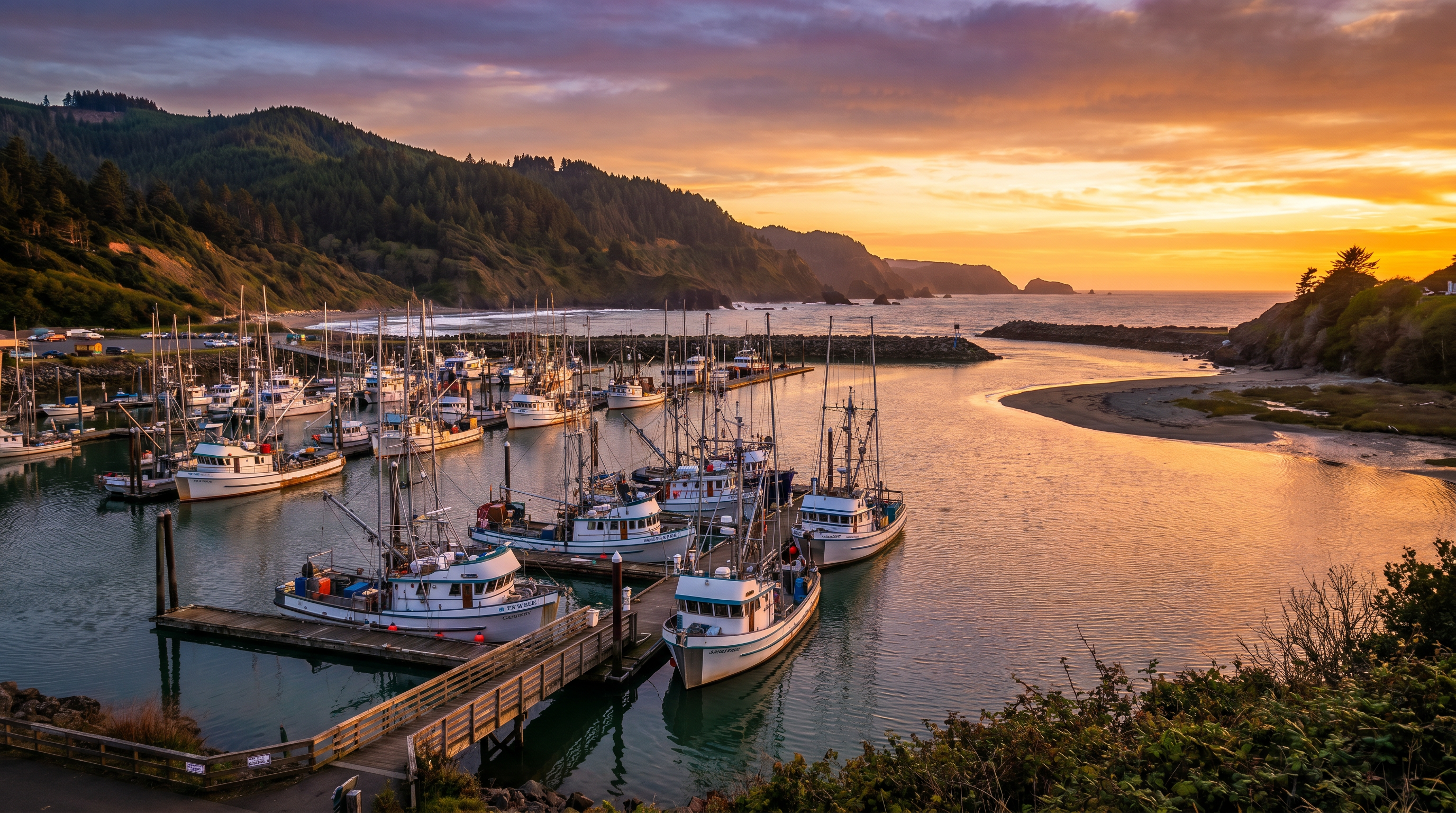
Oregon Coast: Dispensaries, Delivery Services, and Coastal Property Risk
The Oregon Coast — from Astoria to Brookings — has a growing number of licensed cannabis retailers serving both residents and the significant tourist population that visits the coast year-round. Coastal dispensaries face the same GL and product liability requirements as inland retailers, but with additional property risk: wind, rain, flooding, and the Cascadia Subduction Zone earthquake risk that affects the entire coast. Dispensaries in coastal flood zones should carry flood insurance on their buildings and contents — standard commercial property policies do not cover flood damage.
Cannabis delivery services operating on the Oregon Coast face additional commercial auto considerations. Coastal Highway 101 is one of the most dangerous roads in Oregon during winter storms, and delivery drivers operating in adverse conditions face elevated accident risk. Commercial auto policies for cannabis delivery should include adequate liability limits and should specifically address the cannabis delivery use case — not all commercial auto carriers will write this coverage.
Cyber Liability: The Growing Digital Exposure for Cannabis Businesses
Cannabis businesses are increasingly attractive targets for cyberattacks. Dispensaries collect sensitive customer data through loyalty programs and age verification systems. Oregon and California both require seed-to-sale tracking through state-mandated systems (METRC in both states), which creates additional digital infrastructure that can be compromised. Point-of-sale systems, which handle significant cash and card transactions, are a common attack vector. And because cannabis businesses operate largely in cash — due to limited banking access — ransomware attacks that take POS systems offline can be immediately devastating.
Cyber liability insurance for cannabis businesses covers data breach response costs, regulatory fines under Oregon's OCPA and California's CCPA, ransomware payments and recovery costs, and business interruption losses from system downtime. Given the sensitivity of cannabis customer data and the cash-heavy nature of the industry, this coverage is no longer optional for any cannabis business that collects customer information or operates digital systems.
Finding Coverage in a Tight Market: Why an Independent Agent Matters
The cannabis insurance market in 2026 requires an agent who understands both the regulatory landscape and the current state of the surplus lines market. Following Lloyd's withdrawal, the remaining carriers and MGAs that write cannabis business insurance are: a smaller set of Lloyd's syndicates that have maintained limited cannabis appetite; domestic surplus lines carriers and specialty MGAs including Cannasure, Next Wave, and a handful of others; and state-specific programs in Oregon and California that have emerged to fill some of the gap. The market is not as thin as it was immediately after Lloyd's withdrawal, but it is significantly tighter and more expensive than it was in 2022 or 2023.
An independent agent with surplus lines access and specific cannabis experience can navigate this market in ways that a standard commercial agent cannot. At Gerald Ross Agency, we serve cannabis businesses across the Oregon Coast, Southern Oregon, and Northern California — including the Emerald Triangle. We understand the OLCC and DCC documentation requirements, the underwriting criteria of the specialty carriers that remain active in this market, and the regional risk factors that affect pricing and availability for cannabis operations in our service territory.
Whether you are a new OLCC licensee looking for your first cannabis GL policy, an established dispensary group seeking to consolidate coverage across multiple locations, or an Emerald Triangle cultivator who lost coverage after Lloyd's withdrew and has been operating uninsured, we can help. Contact us for a confidential coverage review and quote.
Frequently Asked Questions
Does Oregon require cannabis businesses to carry insurance?▼
What insurance does California require for cannabis businesses?▼
Why is cannabis insurance so expensive and hard to find?▼
Does standard commercial property insurance cover cannabis inventory?▼
What is product liability insurance for cannabis businesses?▼
Is crop insurance available for cannabis cultivators in the Emerald Triangle?▼
Does workers' compensation cover cannabis employees in Oregon and California?▼
Get the Right Cannabis Insurance for Your Oregon or California Operation
The cannabis insurance market has changed dramatically in 2026. Gerald Ross Agency has the surplus lines access and cannabis-specific expertise to find the coverage your OLCC or DCC license requires — and to build a complete insurance program that protects your inventory, your crop, your employees, and your customers. Call us or request a quote today.