



Oregon's transportation sector is the circulatory system of the Pacific Northwest economy. From the semi-trucks hauling freight through the Coast Range on US-101 to the log trucks navigating narrow timber roads in the Siskiyou National Forest, the dump trucks servicing Southern Oregon's construction boom, and the delivery vans running last-mile routes through Humboldt County, commercial vehicles of every type move Oregon's goods and keep its industries running. Every one of those operators faces a complex web of federal FMCSA requirements, Oregon ODOT state filings, and commercial insurance obligations that must all be in place before a single mile is driven for hire.
Need Trucking Insurance in Oregon or Northern California?
Gerald Ross Agency has access to specialty trucking programs for carriers, owner-operators, log trucks, NEMT operators, and fleets of all sizes. We handle ODOT Form E and FMCSA BMC-91 filings on your behalf.
Part One: Federal FMCSA and Oregon ODOT Requirements
Getting trucking insurance wrong is not just a financial risk — it is an operational one. A missing ODOT Form E filing can result in a suspended operating authority. An inadequate cargo policy can leave you personally liable for a shipper's freight. An improperly structured policy can result in a denied claim at the worst possible moment. Understanding the regulatory framework is the starting point for building a trucking insurance program that actually protects your business.
FMCSA Federal Requirements
The Federal Motor Carrier Safety Administration (FMCSA) regulates interstate trucking and sets minimum insurance requirements under 49 CFR Part 387 for carriers operating across state lines. The federal minimums for most general freight carriers are $750,000 combined single limit (CSL) for trucks hauling general freight over 10,001 lbs, $1,000,000 CSL for carriers hauling certain types of freight including household goods, and $5,000,000 CSL for carriers hauling explosives, poison gas, or radioactive materials. Carriers transporting passengers in vehicles with 15 or fewer seats must carry $1,500,000; vehicles with 16 or more seats require $5,000,000.
These are minimums, not recommendations. Most shippers, brokers, and load boards require carriers to carry $1,000,000 in primary auto liability as a standard contract requirement, regardless of the FMCSA minimum. Carriers must file a BMC-91 form with the FMCSA to prove they have the required liability coverage in place. Freight brokers and freight forwarders must post a $75,000 BMC-84 surety bond — a requirement that has been reinforced by the FMCSA's January 2026 Broker and Freight Forwarder Financial Responsibility Rule. For more on broker bonding, see our guide to freight brokerage insurance in Oregon.
Oregon ODOT Requirements
Oregon adds its own layer of requirements for carriers operating within the state under ORS 825.160 and ORS 825.162. The Oregon Department of Transportation (ODOT) requires a Form E filing for all intrastate for-hire carriers (Class 1A). This form is filed by your insurance company directly with ODOT's Commerce and Compliance Division (CCD) and proves that you have valid liability insurance. Without a current Form E on file, your Oregon operating authority will be suspended — meaning you cannot legally haul for hire in the state. Oregon's minimum acceptable amount is $750,000 per accident for auto liability combined single limit for intrastate carriers.
Household goods movers must also file a Form H with ODOT to prove cargo insurance coverage. New carriers must post a Highway Use Tax Bond (typically $2,000) to open a Weight-Mile Tax account — Oregon's weight-mile tax applies to commercial vehicles over 26,000 lbs and is one of the state's primary revenue sources for highway maintenance. Every commercial truck over 26,000 lbs must carry an Oregon Weight Receipt as proof of tax registration, which cannot be obtained without the bond and valid insurance on file. An independent agent like Gerald Ross Agency handles both the Form E filing and the Highway Use Tax Bond, ensuring your operating authority is never at risk due to a missed filing.
Oregon Trucking Insurance Requirements at a Glance
| Requirement | Minimum Amount | Filed With | Form |
|---|---|---|---|
| Primary Auto Liability (General Freight, Interstate) | $750,000 CSL (practical: $1M) | FMCSA | BMC-91 |
| Primary Auto Liability (Hazmat) | $1M–$5M CSL | FMCSA | BMC-91 |
| Primary Auto Liability (Passengers, ≤15 seats) | $1,500,000 CSL | FMCSA | BMC-91 |
| Primary Auto Liability (Intrastate Oregon) | $750,000 CSL | ODOT CCD | Form E |
| Cargo Insurance (Household Goods) | $5,000 minimum | ODOT CCD / FMCSA | Form H / BMC-34 |
| Freight Broker / Forwarder Bond | $75,000 | FMCSA | BMC-84 |
| Oregon Highway Use Tax Bond | $2,000 (new carriers) | ODOT CCD | Surety Bond |
Part Two: Core Coverages Every Oregon Trucking Company Needs
Primary Auto Liability
Primary auto liability is the foundation of every trucking insurance program. It covers bodily injury and property damage that you cause to others while operating your commercial vehicle. This is what gets filed with the FMCSA (BMC-91) and with ODOT (Form E). Without it, you cannot legally operate. For most Oregon carriers, the practical minimum is $1,000,000 CSL — the FMCSA minimum of $750,000 is rarely sufficient for the contracts most carriers want to haul. The cost of primary liability varies significantly by truck type, commodity, radius of operation, and driver history.
Physical Damage Insurance
Physical damage coverage protects your truck and trailer against collision, theft, fire, vandalism, and weather damage. It is not required by law, but any lender financing your equipment will require it, and operating without it means a totaled truck comes entirely out of your pocket. Physical damage is typically written as a percentage of the truck's stated value. For a truck worth $150,000, a policy with a $2,500 deductible might cost $4,000 to $6,000 per year depending on the truck's age, your driving record, and where you operate.
Motor Truck Cargo Insurance
Cargo insurance covers the freight you are hauling if it is damaged, stolen, or destroyed while in your care, custody, and control. Most shippers and brokers require cargo coverage of at least $100,000 as a condition of doing business. Some commodities — electronics, pharmaceuticals, high-value goods — require higher limits or specialized cargo policies. Cargo insurance does not cover every loss automatically. Most policies contain exclusions for certain commodities (live animals, currency, fine art), certain causes of loss (improper loading, inherent vice), and certain situations (unattended vehicles). Review your cargo policy carefully and make sure the exclusions do not eliminate coverage for the freight you actually haul.
Bobtail and Non-Trucking Liability
When an owner-operator is leased to a motor carrier, the carrier's insurance typically covers the truck while it is under dispatch. But when the driver is bobtailing (driving the tractor without a trailer) or using the truck for personal purposes, that gap is covered by bobtail insurance (also called non-trucking liability). Bobtail coverage is typically inexpensive — $300 to $600 per year — but it fills a significant gap for owner-operators who are leased to carriers. Without it, you may have no liability coverage when driving your truck off-duty.
Workers' Compensation and General Liability
Oregon law requires workers' compensation coverage for any employer with one or more employees, including truck drivers. The penalties for operating without required workers' comp are severe — the Oregon Workers' Compensation Division can assess fines of up to twice the premium that should have been paid, and you can be held personally liable for all medical and wage-replacement costs for an injured driver. For owner-operators who are sole proprietors, workers' comp is not mandatory in Oregon, but many carriers and shippers require it as a condition of doing business. General liability covers slip-and-fall accidents at your terminal, loading and unloading injuries, and other non-driving incidents — an important complement to commercial auto coverage for carriers with terminals or warehouses.
Trailer Interchange
If you haul trailers that you do not own — a common arrangement in intermodal and drop-and-hook operations — trailer interchange coverage protects you against damage to those trailers while they are in your possession. Without it, you may be personally liable for damage to a trailer worth $50,000 or more.
Is Your Trucking Policy Structured Correctly?
A missing Form E filing or an improperly structured cargo policy can shut down your operation or leave you personally liable for a major loss. Gerald Ross Agency reviews your current coverage and handles all ODOT and FMCSA filings on your behalf.
Part Three: Specialty Coverage for Oregon's Transportation Industries
Logging and Timber Haulers
Oregon's timber industry creates a specialized insurance need that standard trucking policies do not address. Log trucks operate on narrow forest roads, carry extremely heavy loads, and face off-road liability exposures that most commercial auto policies exclude. The Loggers Broad Form endorsement is essential for timber haulers — without it, an accident in the woods (backing into a loader, for example) will likely be denied under a standard trucking policy. Log trucks in Oregon also face higher insurance costs than most other truck types, reflecting the physical hazards of the work. Annual premiums for log trucks at $1,000,000 liability limits typically run $14,000 to $18,000 per year. Our broader guide to logging and timber insurance in Oregon covers the full range of exposures for this industry.
Dump Trucks and Construction Hauling
Dump trucks servicing Oregon's active construction market face a different risk profile than long-haul carriers — shorter routes, more frequent loading and unloading, and regular operation near construction sites where other workers and equipment are present. Aggregate and construction material haulers should verify that their cargo policy covers the materials they haul and that their GL policy covers loading and unloading operations. The commercial insurance needs of construction haulers often overlap with contractor coverage — a combined review of both programs can identify gaps and reduce premium duplication.
Refrigerated Cargo (Reefer)
Carriers hauling temperature-sensitive freight — food, pharmaceuticals, flowers — face cargo claims that can arise not just from accidents but from equipment failures. A reefer breakdown that spoils a load of produce can generate a cargo claim equal to the full value of the shipment. Reefer breakdown coverage is a specific endorsement that covers temperature-related cargo losses caused by mechanical failure of the refrigeration unit. For carriers serving Oregon's agricultural regions — the Willamette Valley, the Rogue Valley, and Northern California's wine country — this endorsement is essential.
Non-Emergency Medical Transportation (NEMT)
Oregon's aging population and rural geography create significant demand for non-emergency medical transportation. NEMT operators face a unique combination of commercial auto liability, passenger liability, and regulatory requirements from the Oregon Health Authority (OHA). Standard commercial auto policies may not adequately cover the passenger liability exposure of NEMT operations — specialized NEMT coverage is available and advisable. FMCSA passenger carrier minimums require $1,500,000 for vehicles carrying 15 or fewer passengers, and OHA Medicaid transportation contracts typically impose additional insurance requirements.
Last-Mile Delivery and Courier Operations
Courier companies, delivery service partners, and other last-mile operators face high-frequency, low-severity claim patterns — lots of minor fender-benders and package damage claims. Commercial auto policies for delivery operations are typically written on a per-vehicle basis, and the cost per vehicle is lower than long-haul trucking but adds up quickly for larger fleets. Hired and non-owned auto coverage is important for operations that use contractor-owned vehicles, and cargo coverage should be structured to match the value of the packages being delivered.
Oregon Trucking Insurance Cost Estimates (2026)
The following estimates represent typical annual premiums for primary auto liability at $1,000,000 CSL for a driver with a clean record operating in Oregon or Northern California. Actual premiums vary significantly by truck type, commodity, radius, driver history, and loss experience.
| Vehicle Type | Annual Premium (Est.) | Notes |
|---|---|---|
| Box Truck / Delivery Van | $6,000 – $9,000 | Lower risk, urban/suburban routes |
| Hotshot / Pickup + Trailer | $8,000 – $11,000 | Varies by commodity and radius |
| Dump Truck | $9,000 – $13,000 | Construction exposure, loading/unloading |
| Semi Truck (General Freight) | $11,000 – $15,000 | Standard long-haul, clean record |
| Refrigerated (Reefer) Truck | $12,000 – $16,000 | Add reefer breakdown endorsement |
| Log Truck | $14,000 – $18,000 | Loggers Broad Form required |
| Hazmat Carrier | $18,000 – $30,000+ | Commodity-dependent, $1M–$5M limit |
| NEMT Van (≤15 passengers) | $8,000 – $13,000 | Passenger liability, OHA requirements |
Part Four: Regional Risks for Oregon and Northern California Carriers
The geography of Oregon and Northern California creates insurance challenges specific to this region. Understanding them helps carriers and owner-operators make better coverage decisions and avoid the most common gaps.
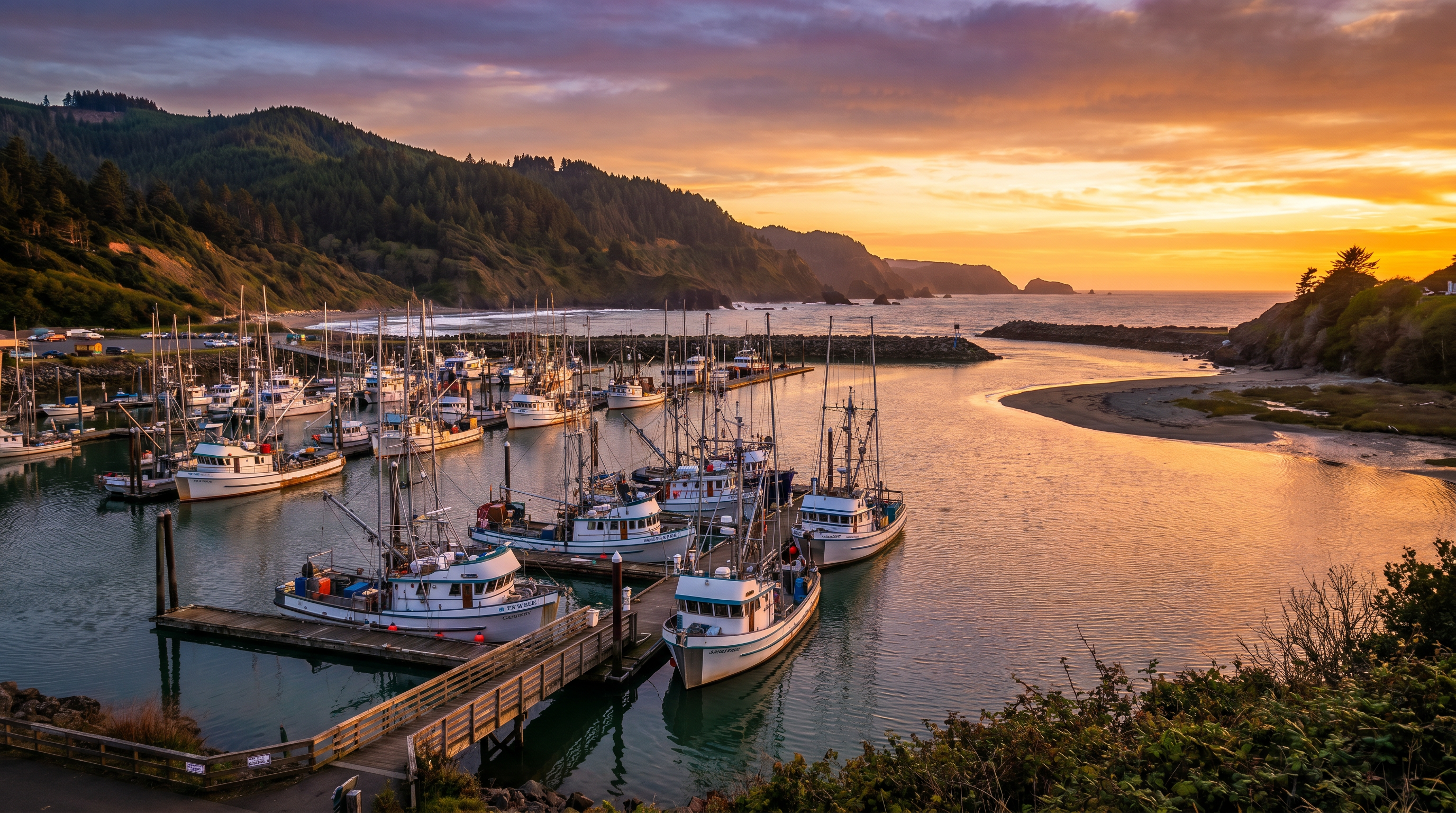
Along the Oregon Coast — from Astoria through Lincoln City, Newport, Coos Bay, and Brookings — US-101 is one of the most scenic but also most challenging commercial trucking routes in the western United States. Narrow lanes, sharp curves, steep grades, frequent fog, and seasonal landslides create elevated accident risk. Coastal carriers face higher physical damage premiums and should verify that their policy covers the specific routes they operate. Coastal proximity also increases the risk of salt-air corrosion damage to trailers and equipment — a maintenance issue that can affect physical damage claims.
In Southern Oregon's Rogue Valley and the wildland-urban interface zones of Josephine, Jackson, and Klamath counties, wildfire is the dominant risk for carriers operating near timber operations. The 2020 Almeda Fire and subsequent fires have changed how carriers and their insurers think about equipment parked or stored in Southern Oregon. If you have received a non-renewal notice for your commercial auto or physical damage coverage, our guide on what to do when your carrier drops you explains your options in the surplus lines market.
In Northern California's Emerald Triangle — Humboldt, Mendocino, and Trinity counties — carriers serve a diverse mix of agricultural, timber, and rural residential customers. The region's road network includes many unpaved and weight-restricted routes that can affect coverage terms. Our guide to insurance in Northern California's Emerald Triangle covers the broader commercial insurance landscape for this region.
Why an Independent Agent Is the Right Choice for Trucking Insurance
Trucking insurance is one of the most complex lines of commercial coverage, and not every agent has the experience to place it correctly. The regulatory filings — Form E, BMC-91, Highway Use Tax Bond — require an agent who understands the ODOT and FMCSA systems and can manage them on your behalf. The specialty coverages — Loggers Broad Form, reefer breakdown, NEMT passenger liability — require access to specialty programs that most captive agents do not carry.
Gerald Ross Agency is an independent agency serving the Oregon Coast, Southern Oregon, and Northern California since 1935. We have relationships with specialty trucking programs as well as the surplus lines markets that are essential for carriers in high-risk zones or with challenging loss histories. We handle all ODOT and FMCSA filings on your behalf and provide annual coverage reviews to ensure your program keeps pace with changes in your operation. For related coverage topics, see our guides to surety bonds for Oregon businesses and landscaping company insurance — many of our trucking clients also operate equipment-intensive businesses that benefit from a coordinated commercial insurance review.
Frequently Asked Questions
What is the minimum liability insurance required for trucking in Oregon?▼
What is the ODOT Form E and why do I need it?▼
Do I need a surety bond to operate a trucking company in Oregon?▼
What is bobtail insurance and do I need it as an owner-operator?▼
Does my cargo policy cover all types of freight?▼
Do log trucks in Oregon need special insurance?▼
What insurance does a non-emergency medical transportation (NEMT) operator need in Oregon?▼
Keep Your Trucks on the Road — Properly Insured and Compliant
Whether you are a single owner-operator on the Oregon Coast, a log truck fleet in Southern Oregon, or a transportation company serving Northern California, Gerald Ross Agency has the expertise and carrier relationships to get your trucking insurance right. We handle the filings, find the right programs, and keep you compliant.