


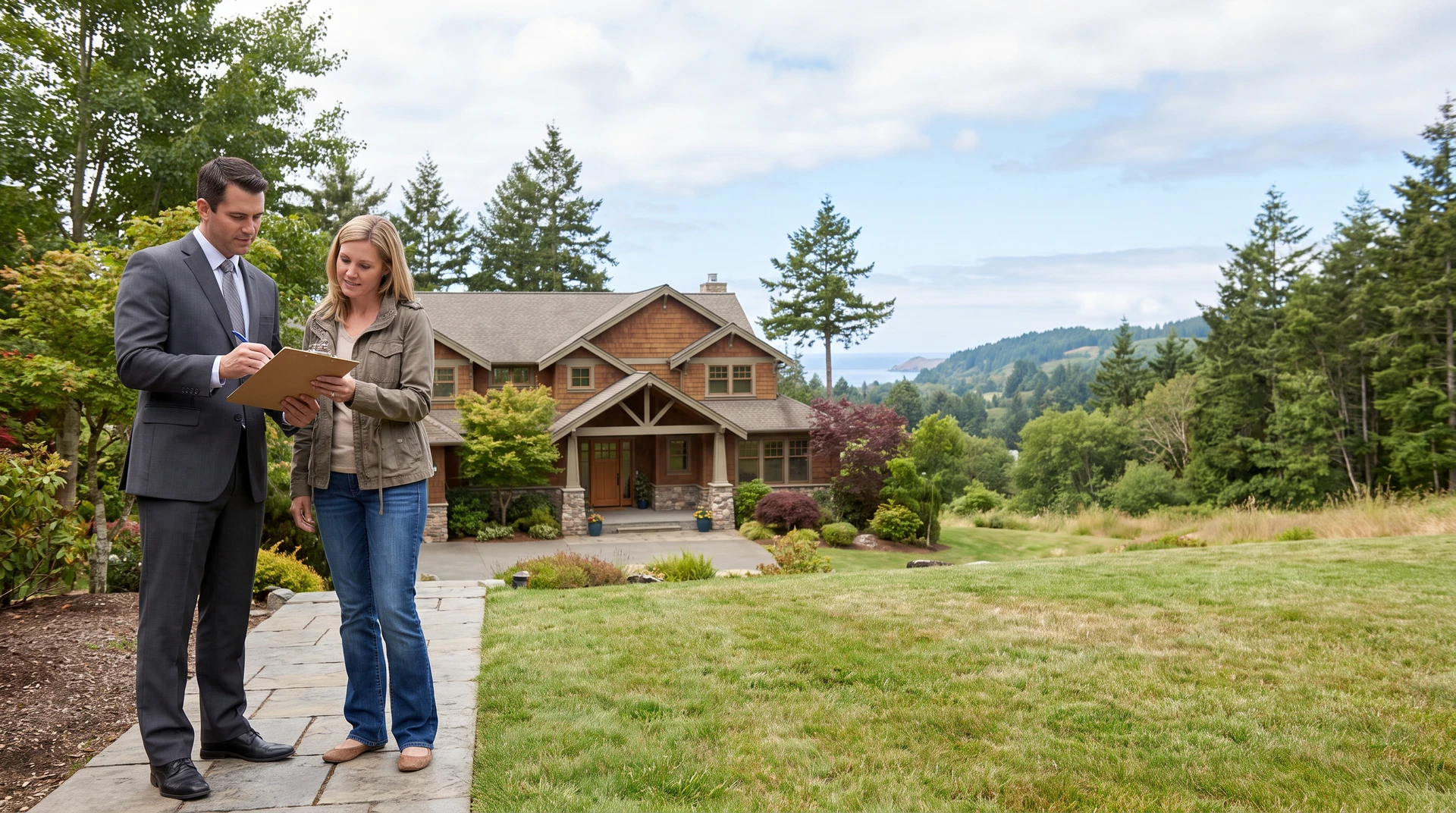

A property limit can look substantial on a declarations page and still deserve a fresh conversation. The price a home or building might sell for is not the same as the estimated cost to rebuild it after a covered loss. Across Oregon and Northern California, labor availability, materials, code requirements, architectural details, site access, and the scale of a regional disaster can all affect the rebuilding question.
Key takeaways
- Replacement cost is a rebuilding estimate, not a property’s sale price or tax assessment.
- Renovations, custom features, detached buildings, local conditions, and code changes can alter the limit review.
- Homeowners and commercial property owners should review limits before a loss—not only at claim time.
Replacement cost is not market value
Market value reflects what a buyer may pay for a property, including land, location, views, demand, and comparable sales. Replacement cost focuses instead on the estimated cost to repair or reconstruct the insured structure with like kind and quality, subject to policy wording. The California Department of Insurance similarly advises that dwelling limits should consider labor and materials needed to rebuild rather than fluctuations in real-estate value. [1]
That distinction matters in coastal towns, rural areas, high-demand communities, and properties with difficult access. A beautiful location may increase a sale price without increasing the cost of framing a similar home. Conversely, a custom kitchen, specialty windows, masonry, a hillside foundation, or a remote building site may create rebuild complexity not obvious from market value alone. An annual home insurance review is the right time to update those details.
Why building inflation is only part of the story
Material costs and wage levels can move, but a reliable review is more than applying a percentage increase. Reconstruction can involve demolition, debris removal, engineering, permits, site preparation, contractor demand, and the cost of matching a home’s existing quality. After a widespread wildfire, winter storm, or other regional event, demand for skilled trades and materials can add further pressure. The Northwest Insurance Council notes that automatic inflation adjustments may not always keep pace with local construction conditions or significant property changes. [2]
That is why it is worth notifying an agent after a major remodel rather than assuming the next renewal adjustment will account for it. A finished basement, ADU, upgraded roof, solar-related electrical work, expanded deck, high-end flooring, custom cabinetry, or a newly built outbuilding can change the facts used in a replacement-cost discussion. Owners adding a cottage should also review our ADU and guest house insurance guide.
Building details
Confirm square footage, construction type, roof, foundation, detached structures, accessibility features, and custom finishes.
Recent cost changes
Discuss labor, materials, contractor availability, and the local rebuild complexity that may affect an estimate.
Improvements and records
Keep permits, contracts, invoices, photographs, and product information for renovations, additions, and major systems.
Policy structure
Review valuation basis, deductibles, ordinance or law, extended options where available, exclusions, and applicable conditions.
Insurance-to-value for commercial property
For a business owner, insurance-to-value is the practical question of whether building and business-property limits reasonably reflect the cost to repair or replace covered property under the policy’s valuation provisions. It can affect offices, retail locations, restaurants, warehouses, clinics, manufacturing sites, and mixed-use properties. A building’s income potential or appraised market value is not automatically the same as its reconstruction cost.
A commercial review should include the building itself, tenant improvements, permanently installed equipment, stock, leased property, outdoor property, and the time needed to resume operations. Owners can start with our commercial property insurance information and ask how business income, extra expense, and equipment breakdown questions fit the actual operation. Manufacturers may also want to review manufacturing insurance considerations when values and operations change.
What can make a rebuild more complicated than expected?
A rebuilding estimate is not simply a price per square foot. The condition and layout of the property matter. A historic home may require materials or methods that are harder to source. A coastal home may have elevated construction, corrosion-resistant details, unusual access, retaining features, or a location that makes staging and debris removal more involved. A rural residence may require work around a long driveway, water system, septic system, slope, or limited contractor availability. Commercial buildings can add specialized electrical, mechanical, fire-protection, refrigeration, ventilation, or accessibility components.
Code-related work can be another important discussion point. When an otherwise covered repair results in a requirement to update an undamaged part of the building, the policy’s ordinance-or-law language, applicable limits, and conditions may matter. The point is not to assume a particular outcome; it is to ask clear questions before a loss and understand how the property’s current construction differs from a simple, standard rebuild.
Replacement cost, actual cash value, and policy terms
“Replacement cost” is often used in everyday conversation, but it should not be treated as a promise that every claim will be paid in full. Policies can have deductibles, exclusions, settlement conditions, sublimits, eligibility requirements, and provisions that affect how loss amounts are determined. Some coverages may be settled using actual cash value, which generally accounts for depreciation, while others may be eligible for replacement-cost treatment when policy conditions are met. The declarations page and policy form—not a headline or property estimate—control the coverage.
That is why a useful review separates the questions. Ask what valuation method applies to the dwelling or commercial building, what applies to contents and equipment, whether there are special limits for detached structures or certain types of property, and what documentation is expected after a loss. A policy review is also a chance to discuss deductible choices and liability limits alongside property values, including whether a personal umbrella insurance discussion makes sense for the household.
Coverage questions to bring to a review
There is no universal limit or endorsement that fits every property. The purpose of a review is to understand the policy’s choices and conditions. Ask whether the policy is written on an actual cash value or replacement-cost basis; whether it includes coinsurance, agreed-value, or reporting provisions; and what documentation supports the current building limit. Ask what happens if a repair triggers current building codes, and whether ordinance or law coverage is available or appropriate.
Also separate building limits from the other pieces of a policy. Detached structures, personal property, valuable items, landscaping, retaining walls, fences, service lines, and loss-of-use or business-income limits may have their own terms or sublimits. A household with significant jewelry, fine art, firearms, collectibles, or home-office equipment can use a valuable items coverage discussion to identify what should be documented separately.
When an immediate review is especially worthwhile
Do not wait for a renewal packet if the property has changed materially. A prompt review is sensible after completing an addition, converting a garage, finishing a basement, adding an ADU, purchasing an adjacent structure, changing a roof system, adding custom millwork, upgrading electrical service, installing specialized equipment, or changing the way the property is occupied. It is also useful after buying a home that had prior renovations, especially if the previous policy details are not available.
Business owners should raise the same question after a buildout, expansion, move, significant equipment purchase, new inventory line, leasehold improvement, or change in occupancy. A restaurant that installs a new walk-in cooler, a clinic that adds diagnostic equipment, or a manufacturer that acquires a production line may have a different property and business-interruption conversation than it did the prior year. The objective is to bring updated facts to the review, not to guess at a limit based on a prior appraisal or purchase price.
Has your property changed since the last review?
A short limit review can help identify the property details and documents that deserve a conversation before a covered loss.
Request a property reviewOregon and Northern California loss exposures
Local geography affects more than scenery. Coastal properties may need a careful discussion of wind-driven rain, drainage, access, and elevated construction. Inland forested or hillside locations can require a separate wildfire-readiness and rebuilding conversation. Standard property policies commonly treat flood and earthquake differently from many other causes of loss, so a limit review should not replace a peril review. Consider flood insurance and earthquake insurance separately where those exposures are relevant.
Owners in wildfire-prone locations can also use the agency’s wildfire protection technology and readiness resources to organize property details, mitigation records, and preparedness questions. These steps do not guarantee coverage or claim outcomes; they help make the property and insurance conversation more informed.
Documentation makes the next review more useful
Keep a simple file for major property work: dated photographs, permits, plans, contractor agreements, invoices, material selections, appraisals, and equipment specifications. A room-by-room home inventory is equally helpful for personal property. For a business, maintain current equipment lists, purchase records, floor plans, lease obligations, and key vendor contacts. Documentation can help an agent understand the risk and can be useful in the event of a covered claim.
For rental, vacation-rental, or mixed-use property, the review should address how the property is actually occupied and managed. A new tenant, short-term rental listing, or business use may change the questions to ask. See our vacation rental insurance resources if a property’s use has changed.
Questions to ask your agent and contractor
For an insurance review, bring a list of improvements and ask how each one is reflected in the current property details. Ask whether detached structures, custom finishes, leased equipment, and business personal property are listed or treated separately. Ask whether the valuation approach is current, what information was used to develop it, and what policy conditions should be understood before a loss. For a contractor or builder, ask for clear descriptions of scope, materials, and completed work; those records can be more useful than a broad verbal summary later.
It is equally important to avoid treating an online estimator as the final word. Public calculators and broad regional averages can be useful starting points, but they may not account for every detail of a particular structure or site. A carefully documented discussion between the owner, agent, and qualified property professionals gives everyone better information for the coverage review.
A practical annual property-limit checklist
- Read the declarations page and identify dwelling, building, personal property, and income-related limits.
- List improvements, additions, new equipment, and occupancy changes since the last review.
- Gather photos, receipts, plans, permits, and contractor records for major work.
- Ask how your policy values covered property and what conditions apply to a loss.
- Discuss flood, earthquake, wildfire, ordinance-or-law, liability, and deductible questions separately.
Ready for a clearer property-limit conversation?
Gerald Ross Agency can help you organize the questions and information needed for a thoughtful insurance review.
Frequently asked questions
Should I raise my coverage limit by the same percentage every year?
Automatic adjustments may be part of a policy, but they are not a substitute for reviewing significant renovations, custom features, local construction conditions, or changes in occupancy. Ask how the limit was developed and whether updated information should be considered.
Can a home be overinsured because its limit exceeds its market price?
Replacement cost and market value are different measurements. A limit should be discussed in relation to the estimated cost to rebuild the insured structure and the policy terms, not land value or a sale-price estimate alone.
Does business income coverage automatically increase with building limits?
Not necessarily. Business income and extra expense have their own limits, periods, conditions, and valuation considerations. Review them alongside building and contents values.


