


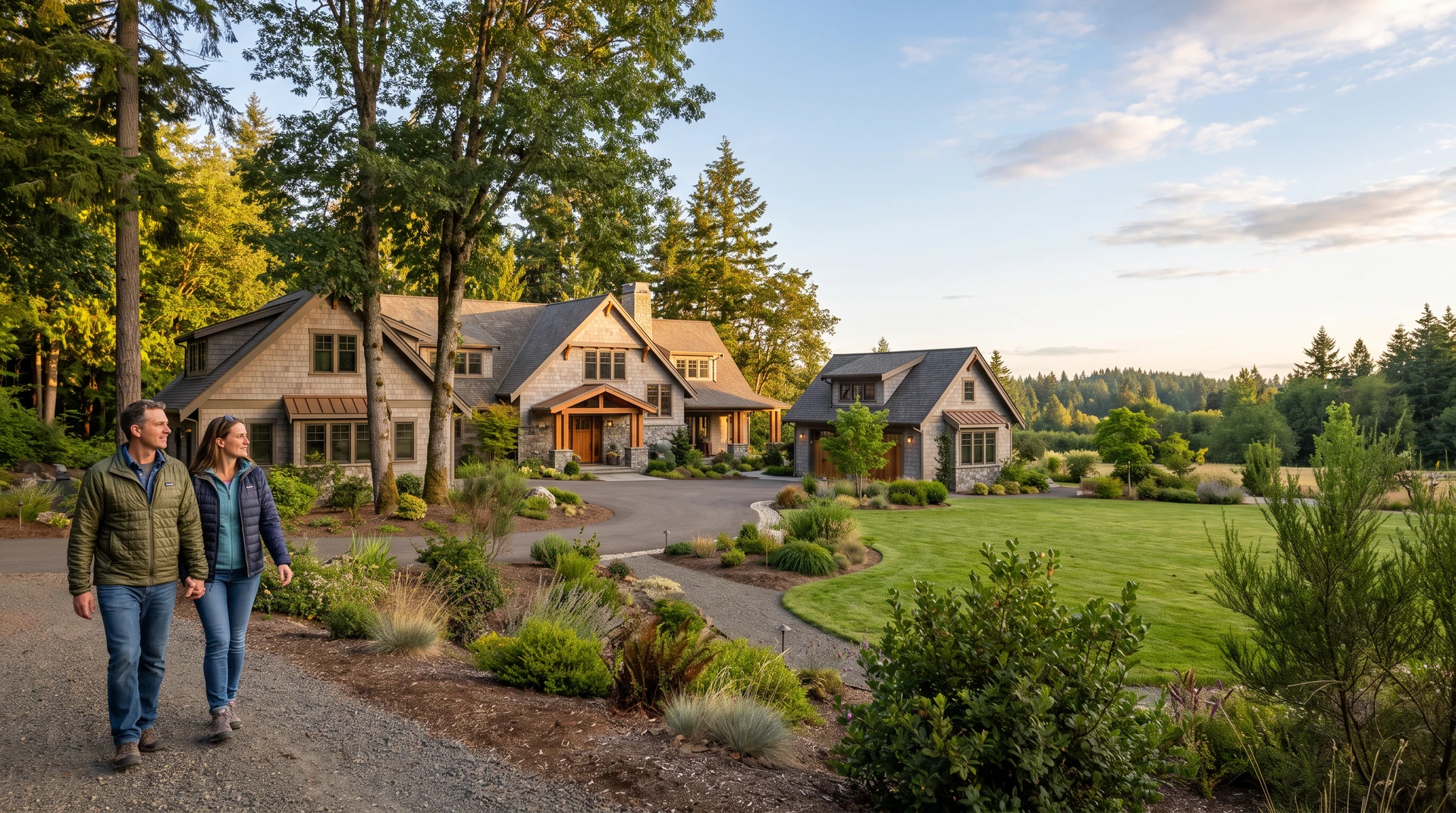

An accessory dwelling unit can be a practical home for family, a future rental, a place for a caregiver, or a carefully planned addition to a property. It can also change the property details and use assumptions behind a homeowners policy. Before building, moving someone in, or offering a detached cottage for rent, Oregon and Northern California owners should make the insurance conversation part of the project plan.
Key takeaways
- Attached and detached units may be treated differently under a policy.
- Family use, long-term rental, short-term rental, and vacancy are not interchangeable.
- Construction cost, liability limits, documentation, and local loss exposures deserve review before occupancy.
Start with the structure—not the nickname
An ADU may be an attached suite, a converted garage, a cottage behind the main home, or a stand-alone structure. Insurance does not rely only on the label “guest house.” The more useful questions are whether it is attached, who owns it, what it cost to rebuild, how it will be used, and whether the policy recognizes that use. A detached building may draw on an other-structures limit, which is often a percentage of the primary dwelling limit. That may not match the finished cost of a well-built cottage.
That is why a pre-construction review of home insurance matters. Share plans, contractor details, the intended square footage, utilities, high-value finishes, and projected completion date. After completion, request that the policy records reflect the real property rather than relying on a pre-project estimate.
Occupancy can change the coverage conversation
A backyard cottage occupied by an adult child is different from the same cottage rented to an unrelated tenant. A unit used for occasional guests is different again from one advertised online. A change in occupancy may affect property, liability, loss-of-income, and underwriting questions. Do not assume that a policy designed for an owner-occupied home automatically addresses every version of rental use.
For a long-term tenant, discuss whether a landlord form, endorsement, or another arrangement is appropriate. Oregon’s consumer guidance also notes that a property owner’s coverage does not cover a renter’s personal property or personal liability. Encourage an ADU tenant to consider renters insurance, and ensure any insurance requirement in a lease is reviewed carefully.
Attached suite, converted garage, or detached cottage: why the details matter
Before asking for a quote, make a simple one-page description of the project. Note whether the unit shares a roof, foundation, meter, driveway, septic system, or utilities with the main home. Include its square footage, construction materials, kitchen and bath features, heating source, accessibility modifications, and whether it is permitted as a separate dwelling. These details help an insurance professional identify questions about dwelling coverage, other-structures coverage, premises liability, and potentially rental income.
A converted garage deserves the same attention as a newly built cottage. Once a garage is finished as living space, the value of its interior, plumbing, electrical work, insulation, and appliances can be substantially different from the original structure. A policy record that still describes a garage may not give an underwriter or agent enough information to discuss limits accurately.
Construction is its own insurance phase
Insurance planning should start before excavation, demolition, or major conversion work begins—not just after a tenant moves in. Ask a contractor about licensing, certificates of insurance, subcontractor practices, property protection during the job, and how completed work will be documented. Owners should also ask their own insurer whether construction, materials, or a partially completed structure changes the existing policy’s requirements or exclusions.
During the project, keep dated photographs of the site, copies of signed agreements, change orders, receipts, permits, inspection records, and major equipment specifications. This is good project management and a practical record if a covered loss interrupts the work. A contractor’s insurance and an owner’s property coverage address different interests; one should not be assumed to replace the other.
Structure and replacement cost
Confirm the finished ADU, fixtures, permits, square footage, and construction quality are reflected in the dwelling or other-structures limit.
Occupancy
Explain whether the cottage will house family, a long-term tenant, a caregiver, guests, or stay vacant between uses.
Rental income and liability
Ask what applies if the unit becomes uninhabitable after a covered loss or if a visitor or tenant alleges injury or damage.
Separate belongings
Owners and occupants should inventory their property; an owner policy generally does not insure a tenant’s possessions.
Local loss exposures
Review wildfire, flood, earthquake, drainage, shoreline weather, and code-upgrade questions that may affect the location.
Build cost, code upgrades, and records matter
Replacement cost is not market value. It is the estimated amount needed to repair or rebuild the insured structure with like kind and quality after a covered loss, subject to policy terms. Keep construction contracts, invoices, plans, photographs, product records, and final permits. These records make an insurance review more accurate and can be useful if a future claim or rebuilding question arises.
Ask specifically about building ordinance or law coverage. An older primary dwelling plus a new ADU can create a complicated repair path after a loss. Local codes may require upgrades during reconstruction, and standard limits may not address every related cost. Property owners in flood-prone areas should also review flood insurance; most standard homeowners policies do not cover flood damage.
Think through income, access, and loss-of-use questions
If a unit will produce rent, ask how the loss of that rent would affect the household after a covered property loss. The answer is not automatic: available coverage, conditions, waiting periods, and limits depend on the policy and the actual rental arrangement. The point of a review is to identify the question before a loss rather than assuming every source of income is treated the same way.
Also consider practical access. A detached cottage may share a driveway, gate, pathway, retaining wall, deck, or water system with the main home. In coastal, rural, hillside, and forested locations, those shared features can influence how a property is maintained and how repairs are managed. Discussing them alongside the new dwelling gives the agency a more complete picture of the risk.
Planning an ADU or changing how one is used?
A short insurance review before construction or tenancy can surface the property details a carrier will need.
Request a property reviewLiability is about the whole property
More people using a property can mean more everyday liability scenarios: a guest on a walkway, a contractor completing work, a tenant with visitors, a dog incident, or damage extending from one unit into another. Liability limits should reflect the owner’s household, assets, use of the property, and rental arrangement. A personal umbrella policy may provide additional liability protection above eligible underlying policies, subject to its conditions.
For owners who use the main home for consulting, a studio, inventory, or other work, an ADU project can be a useful time to revisit business insurance. Homeowners and renters policies often have limitations for business property and business activities.
Short-term rental use needs a separate conversation
An ADU occasionally used by family is not the same as a property advertised to rotating guests. Before listing a unit on a rental platform or accepting short stays, ask about the platform’s protections, any local registration rules, cleaning and key-control practices, and the property policy’s treatment of transient rental activity. Our vacation rental insurance resources can help identify topics to raise during that conversation.
Do not wait for the first reservation to disclose the use. A short discussion before advertising can clarify whether the current program fits, what documentation is needed, and how to protect the primary residence, the new cottage, and the owner’s liability position.
Oregon and Northern California location questions
Location still matters. Coastal weather, drainage, hillside access, wildfire exposure, smoke, and distance from emergency services can influence the practical insurance review. Owners near forested areas may also want to look at wildfire insurance and readiness questions, including documentation, defensible-space work, and limits for attached or detached improvements. Earth movement is another separate topic worth discussing through earthquake insurance where applicable.
Oregon Coast properties may also have wind-driven rain, drainage, and access issues that are different from an inland ADU. Northern California homes may combine hill access, wildfire preparedness, and earthquake questions. There is no single ADU insurance answer for either state; property construction, occupancy, local conditions, and the carrier’s program all matter.
A practical review checklist
- Call before construction, conversion, occupancy, or marketing begins.
- Confirm the main home, detached structure, and personal-property limits are current.
- Describe exactly who will occupy the unit and whether rent will be charged.
- Save records of construction, upgrades, valuables, and maintenance.
- Review deductibles, liability limits, flood, earthquake, wildfire, and rental-income questions.
Get clear before the keys change hands
Gerald Ross Agency can help you identify the questions to take to the market before your ADU, guest house, or backyard cottage changes use.
Frequently asked questions
Is my guest house part of my homeowners policy?
It may be, but the answer depends on construction, location on the property, limits, ownership, occupancy, and policy terms. Review it before relying on an assumption.
Can I require an ADU tenant to carry renters insurance?
Lease requirements and state law should be reviewed carefully. The tenant’s renters policy can help protect the tenant’s belongings and personal liability, while the owner should maintain appropriate coverage for the property and rental activity.


