


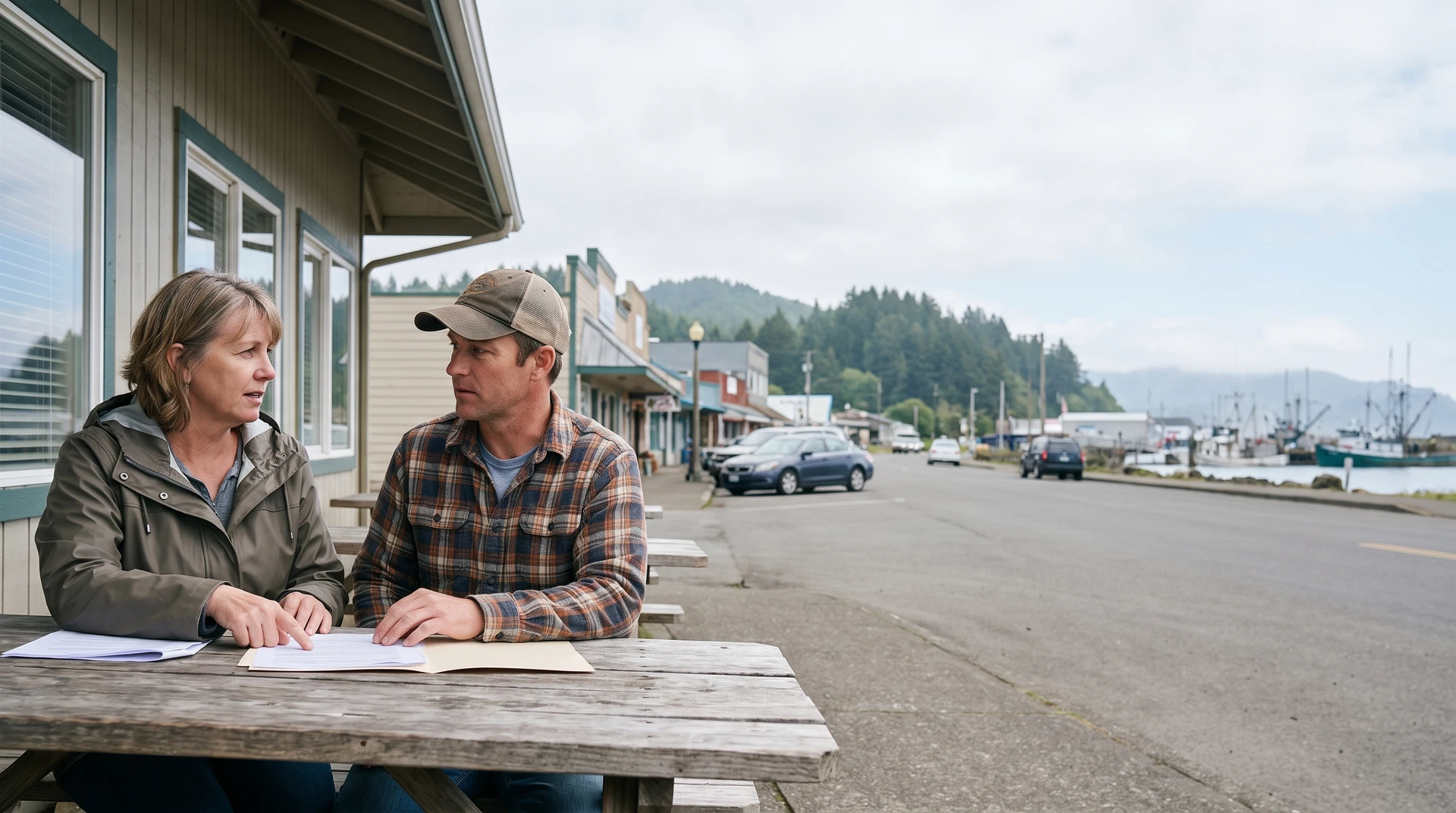

Oregon and Northern California have some of the most productive and economically significant maritime industries on the Pacific Coast. From the Dungeness crab fleets working out of Brookings, Gold Beach, and Coos Bay, to the salmon and tuna charters operating along the Oregon Coast, to the freight forwarders and NVOCCs moving cargo through the Port of Portland and the Port of Humboldt Bay — maritime commerce here is both diverse and complex. With that complexity comes a set of bonding requirements that many operators do not fully understand until they are facing a regulatory problem or a vessel arrest. This guide explains the major types of maritime bonds required in Oregon and Northern California, who needs them, how much they cost, and how they interact with your marine insurance program.
Need a Maritime Bond or Marine Insurance Quote?
Gerald Ross Agency places FMC bonds, outfitter guide and charter vessel bonds, boat dealer bonds, and admiralty release bonds — alongside full marine insurance programs for commercial fishing vessels, charters, and recreational watercraft across Oregon and Northern California.
Part One: Understanding Maritime Bonds
Before diving into specific bond types, it is worth clarifying what a maritime bond is — and how it differs from the marine insurance that most vessel operators are more familiar with. A surety bond is a three-party contract. The principal is the maritime operator who must fulfill an obligation. The obligee is the party — typically a government agency or court — that requires the bond as a guarantee. The surety is the bond company that guarantees the principal's performance and pays the obligee if the principal fails to meet their obligation.
Marine insurance, by contrast, is a two-party indemnity contract between the insured and the insurer. It pays for accidental losses — a vessel damaged in a storm, cargo lost at sea, a crew member injured on the job. Bonds do not pay for accidents; they guarantee performance of a legal or regulatory duty. Most maritime operators in Oregon and Northern California need both: insurance to protect against the unexpected, and bonds to satisfy the regulatory and legal requirements of their industry.
When a bond claim is paid, the surety has the right to seek reimbursement from the principal. This is fundamentally different from insurance, where the insurer does not expect repayment after a covered loss. For this reason, bond underwriting focuses heavily on the principal's creditworthiness and financial stability — the surety wants to be confident that if they pay a claim, they can recover from the principal. Operators with strong credit and clean regulatory histories pay the lowest bond premiums.
Why Maritime Operators Need Both Bonds and Insurance
A common misconception among first-time maritime business owners is that having marine insurance eliminates the need for bonds, or vice versa. In practice, they serve entirely different purposes and are required by different parties. Your marine insurer requires you to carry insurance to protect the vessel and manage liability. The Federal Maritime Commission requires an FMC bond to protect your customers and trading partners. The Oregon State Marine Board requires a surety bond to protect customers who pay deposits for guided trips. A federal court may require an admiralty release bond to protect a maritime lien claimant. None of these requirements can be satisfied by the other. An independent insurance agent who understands both marine insurance and surety bonds is the most efficient way to ensure all your requirements are met.
Part Two: Federal Maritime Commission (FMC) Bonds
The Federal Maritime Commission (FMC) is the U.S. agency responsible for regulating international ocean shipping. Any business that acts as an Ocean Transportation Intermediary (OTI) in U.S. international ocean trade must be licensed by the FMC and must maintain proof of financial responsibility — in practice, a surety bond. There are two categories of OTIs that require FMC bonds.
Ocean Freight Forwarders (OFFs)
An Ocean Freight Forwarder arranges ocean transportation for exporters — booking cargo space, preparing shipping documents, and coordinating the movement of goods from the shipper to the vessel. Oregon-based freight forwarders working the Pacific trade lanes — moving agricultural products, manufactured goods, and other cargo through the Port of Portland or other Pacific ports — must obtain an FMC license and post a $50,000 surety bond (plus $10,000 for each additional U.S. office). The bond is filed on Form FMC-48 and must be underwritten by a surety company listed on the U.S. Treasury's Circular 570 approved list.
The FMC bond for an ocean freight forwarder protects shippers and other parties from financial harm caused by the forwarder's failure to comply with the Shipping Act of 1984, the Foreign Shipping Practices Act of 1988, and other applicable statutes. If the bond is cancelled, the FMC license is revoked 30 days after the cancellation notice is received. Operating as an unlicensed OTI can result in fines of up to $5,000 per violation, or $25,000 per intentional violation.
Non-Vessel-Operating Common Carriers (NVOCCs)
A Non-Vessel-Operating Common Carrier issues its own bills of lading and acts as a carrier to shippers, while contracting with actual vessel operators to move the cargo. NVOCCs are common in the Pacific trade — consolidating smaller shipments from Oregon and Northern California exporters into full container loads for trans-Pacific shipping. Licensed U.S.-based NVOCCs must post a $75,000 surety bond (plus $10,000 per additional U.S. office). Unlicensed non-U.S.-based NVOCCs operating in U.S. trades must post a $150,000 bond.
NVOCCs that serve the U.S.-China trade may also file an Optional Rider for Additional NVOCC Financial Responsibility, adding $50,000 to the bond to meet Chinese government requirements. This rider is cancelled automatically if the underlying bond is cancelled. The annual premium for FMC bonds is typically a small percentage of the bond amount — well-qualified applicants often pay 1%–2% annually, making these bonds relatively affordable relative to the regulatory protection they provide.
Maritime Bond Requirements Summary
| Bond Type | Who Needs It | Required Amount | Obligee |
|---|---|---|---|
| FMC Bond — Ocean Freight Forwarder | Oregon-based OFFs in international ocean trade | $50,000 + $10K/office | Federal Maritime Commission |
| FMC Bond — NVOCC (U.S.-based) | Licensed NVOCCs issuing bills of lading | $75,000 + $10K/office | Federal Maritime Commission |
| FMC Bond — NVOCC (non-U.S.) | Unlicensed foreign NVOCCs in U.S. trades | $150,000 | Federal Maritime Commission |
| Outfitter Guide Bond | Guides accepting deposits >$100/person | $5,000 | State of Oregon (OSMB) |
| Charter Vessel Bond | Charter vessels accepting advance deposits | $5,000 | State of Oregon (OSMB) |
| Boat Dealer Bond | Oregon licensed boat dealers | $50,000 | Oregon DMV |
| Admiralty Release Bond | Vessel owners releasing arrested vessels | Equals claim amount | U.S. District Court |
| Boat Registration Agent Bond | Agents handling vessel registrations | $5,000 | Oregon State Marine Board |
Part Three: Oregon State Marine Board Bonds
For the commercial fishing charters, whale-watching operations, river guides, and recreational fishing guides that are the lifeblood of Oregon's coastal tourism economy, the Oregon State Marine Board (OSMB) is the primary regulatory authority. The OSMB registers Outfitter Guides and Charter Vessels under ORS Chapter 704 and ORS Chapter 830 respectively, and imposes bonding requirements on operators who accept advance payments from customers.
Outfitter Guide Surety Bond
An Oregon Outfitter Guide is any individual who provides outdoor recreational activities for compensation on land or water they do not own or control. This includes fishing guides on the Rogue, Umpqua, and Chetco rivers, kayak and paddleboard tour operators along the Oregon Coast, whale-watching guides, and hunting guides who use watercraft. If an Outfitter Guide accepts deposits of more than $100 per person before the date of service, they must post a $5,000 surety bond naming the State of Oregon as obligee.
The bond protects customers who pay in advance for a guided experience that is later cancelled, rescheduled without notice, or not delivered as promised. It is submitted with the annual Outfitter Guide registration application. Registration fees are $350 per year for standard Outfitter Guides and $500 per year for Charter Guides (Outfitter Guides with a USCG Operator's License operating on navigable waterways). The bond premium is typically $50–$150 per year — a minimal cost relative to the protection it provides and the regulatory compliance it demonstrates.
Charter Vessel Surety Bond
Charter Vessels in Oregon are defined as vessels inspected by the U.S. Coast Guard that carry seven or more passengers-for-hire in addition to their crew. These vessels — the deep-sea fishing charters, whale-watching boats, and coastal tour vessels that operate out of Brookings, Gold Beach, Bandon, Coos Bay, Newport, and other Oregon ports — must be operated by a USCG-licensed captain and must carry both liability insurance and, if accepting advance deposits, a $5,000 surety bond. The bond requirement is triggered when the vessel or its booking agent accepts money from a customer before the date of service.
Charter Vessel registration fees are $50 per year for Oregon-registered boats and $100 per year for federally documented vessels. The liability insurance requirement is a minimum of $500,000 combined single limit per occurrence, covering the vessel, its employees, and all activities. The surety bond and liability insurance work together: the insurance covers accidental injuries and property damage during the trip; the bond covers the operator's failure to deliver the promised service.
Are Your Maritime Bonds and Marine Insurance in Order?
Gerald Ross Agency reviews your full maritime compliance picture — FMC bonds, OSMB bonds, Hull and Machinery, P&I, cargo, and crew coverage — and identifies gaps before they become regulatory problems or uninsured losses.
Part Four: Admiralty Court Release Bonds
Maritime law gives certain creditors — fuel suppliers, repair yards, crew members, cargo owners — a maritime lien against a vessel for unpaid debts. Unlike a typical lien, a maritime lien travels with the vessel regardless of ownership and can be enforced by arresting the vessel in a U.S. District Court through an in rem action under the Federal Rules of Civil Procedure Supplemental Rules for Admiralty Claims. When a vessel is arrested, a U.S. Marshal takes physical custody of it — which can be catastrophic for a commercial fishing vessel in the middle of a season.
Under FRCP Supplemental Rule E(5), the vessel owner can secure the vessel's release by posting substitute security — typically a surety bond — in an amount sufficient to cover the plaintiff's claim. The bond substitutes for the vessel as the res (the thing against which the lien is enforced), and any judgment in rem issued against the vessel owner automatically binds the sureties. This allows the vessel to return to fishing or commerce while the underlying dispute is litigated in the U.S. District Court for the District of Oregon or the Northern or Eastern District of California.
Admiralty release bonds are not standard commercial bonds — they require a surety company with experience in maritime law and the ability to post security quickly. The bond amount equals the plaintiff's claim, which can range from a few thousand dollars for a fuel debt to hundreds of thousands for a major cargo loss or personal injury claim. For commercial fishing operators on the Oregon Coast, having a relationship with an insurance agent who can arrange admiralty release bonds quickly is an important part of risk management. Our surety bond team can connect you with the right resources when you need them.
Part Five: Boat Dealer and Registration Agent Bonds
Oregon's marine industry includes not just vessel operators but also the dealers, brokers, and registration agents who facilitate the buying, selling, and registration of watercraft. These businesses face their own bonding requirements under Oregon law.
Oregon boat dealers — businesses that sell new or used vessels to the public — must obtain a dealer license from the Oregon DMV and post a $50,000 surety bond. The bond protects buyers from fraud, misrepresentation, and failure to deliver clear title. It is the same bond structure used for auto dealers, adapted for the marine context. Boat registration agents — businesses that handle vessel registration on behalf of owners — must post a $5,000 surety bond naming the Oregon State Marine Board as obligee.
For boat dealers in coastal Oregon communities — Brookings, Gold Beach, Coos Bay, Newport, Lincoln City, Astoria — and in Northern California's Humboldt and Del Norte counties, these bonds are a routine cost of doing business. The annual premium for a $50,000 dealer bond is typically $500–$1,500 depending on credit. Our commercial insurance team handles both the bond and the dealer's commercial property, general liability, and garage liability coverage as a complete package.
Part Six: How Maritime Bonds Fit Into Your Marine Insurance Program
Maritime bonds and marine insurance are complementary, not interchangeable. A complete maritime risk management program for an Oregon or Northern California commercial fishing operator typically includes Hull and Machinery (H&M) insurance covering physical damage to the vessel, Protection and Indemnity (P&I) insurance covering third-party liability and crew injuries under the Jones Act, Cargo insurance covering the catch in transit, and the applicable surety bonds — outfitter guide or charter vessel bonds if the operation accepts advance deposits, and FMC bonds if the operation handles international freight.
For operators in the Dungeness crab, salmon, and groundfish fisheries that are central to the economies of Brookings, Gold Beach, Coos Bay, and Newport, the fishing season is the year's entire income. A vessel arrest during crab season — even for a relatively small maritime lien — can be financially devastating. Maintaining clean accounts with fuel suppliers, repair yards, and crew members, and having a surety relationship in place for admiralty release bonds if needed, is as important as carrying adequate hull and P&I coverage.
In Northern California, the commercial fishing fleets operating out of Humboldt Bay (Eureka), Crescent City, Fort Bragg, and Bodega Bay face similar risk profiles. The region's unique regulatory environment — including California Department of Fish and Wildlife permit requirements and proximity to federal marine protected areas — adds complexity to the compliance picture. Our guide to insurance in Northern California's Emerald Triangle covers the broader commercial insurance landscape for this region.
For operators who have faced non-renewal or cancellation of their marine insurance — a growing problem in the current market — our guide on what to do when your carrier drops you explains the surplus lines options available for hard-to-place marine risks. And for operators who also need coverage for shore-side facilities — docks, processing buildings, cold storage — our commercial property insurance resources can help.
Why Work With Gerald Ross Agency for Maritime Bonds and Marine Insurance
Maritime bonding and marine insurance are specialty lines that require an agent with deep knowledge of both the regulatory environment and the carrier markets. Gerald Ross Agency has been serving the Oregon Coast and Northern California since 1937. We understand the commercial fishing industry, the charter and guide sector, the freight forwarding community, and the boat dealer market — and we have relationships with the specialty carriers and surety companies that serve these industries.
As an independent agency, we are not tied to any single carrier. We can access admitted carriers, surplus lines markets, and specialty marine programs to find the most competitive combination of bonds and insurance for your operation. We can also coordinate your FMC bond, OSMB bond, hull and P&I coverage, and commercial property insurance through a single point of contact — reducing the administrative burden of managing multiple policies and renewals.
For maritime operators who have questions about their current bond or insurance program, or who are starting a new operation and need to understand their compliance requirements, we offer a no-obligation coverage review. Contact us to schedule a conversation with one of our marine insurance specialists, or request a quote online. You can also explore our full range of marine insurance and surety bond services on our website.
Frequently Asked Questions
What is a maritime bond and how is it different from marine insurance?▼
Who needs a Federal Maritime Commission (FMC) bond in Oregon?▼
Does every Oregon fishing charter need a surety bond?▼
What is an admiralty court release bond and when do I need one?▼
How much does an Oregon outfitter guide or charter vessel bond cost?▼
What marine insurance coverages should a commercial fishing vessel carry in addition to bonds?▼
Can Gerald Ross Agency help with both maritime bonds and marine insurance?▼
Protect Your Maritime Operation — Bonds and Insurance in One Place
Whether you operate a commercial fishing vessel out of Brookings, run a charter service on the Oregon Coast, forward freight through Pacific ports, or sell boats along the Northern California coast, Gerald Ross Agency has the expertise and carrier relationships to get your maritime bonds and marine insurance right. Call us or request a quote today.


