



Key Takeaways
- Standard homeowners policies do not cover jet skis, PWCs, or motorized watercraft once they leave your property — a dedicated watercraft policy is required.
- Agreed value hull coverage pays the full insured amount in a total loss with no depreciation deducted — almost always worth the modest premium difference over actual cash value.
- Navigation territory clauses are critical for Oregon Coast boaters — verify your policy explicitly covers bar crossings and open Pacific waters before heading offshore.
- Sailboat and powerboat insurance differ significantly: sailboats need rigging endorsements and racing coverage; powerboats need engine breakdown and fuel spill liability.
- Full-coverage watercraft policies typically cost $200–$700/year for jet skis and $600–$2,500/year for mid-size to sport fishing boats — bundling with home and auto saves 15–25%.
- Gerald Ross Agency has insured Oregon Coast marine risks since 1985 and shops 50+ carriers to find the right coverage for your vessel.
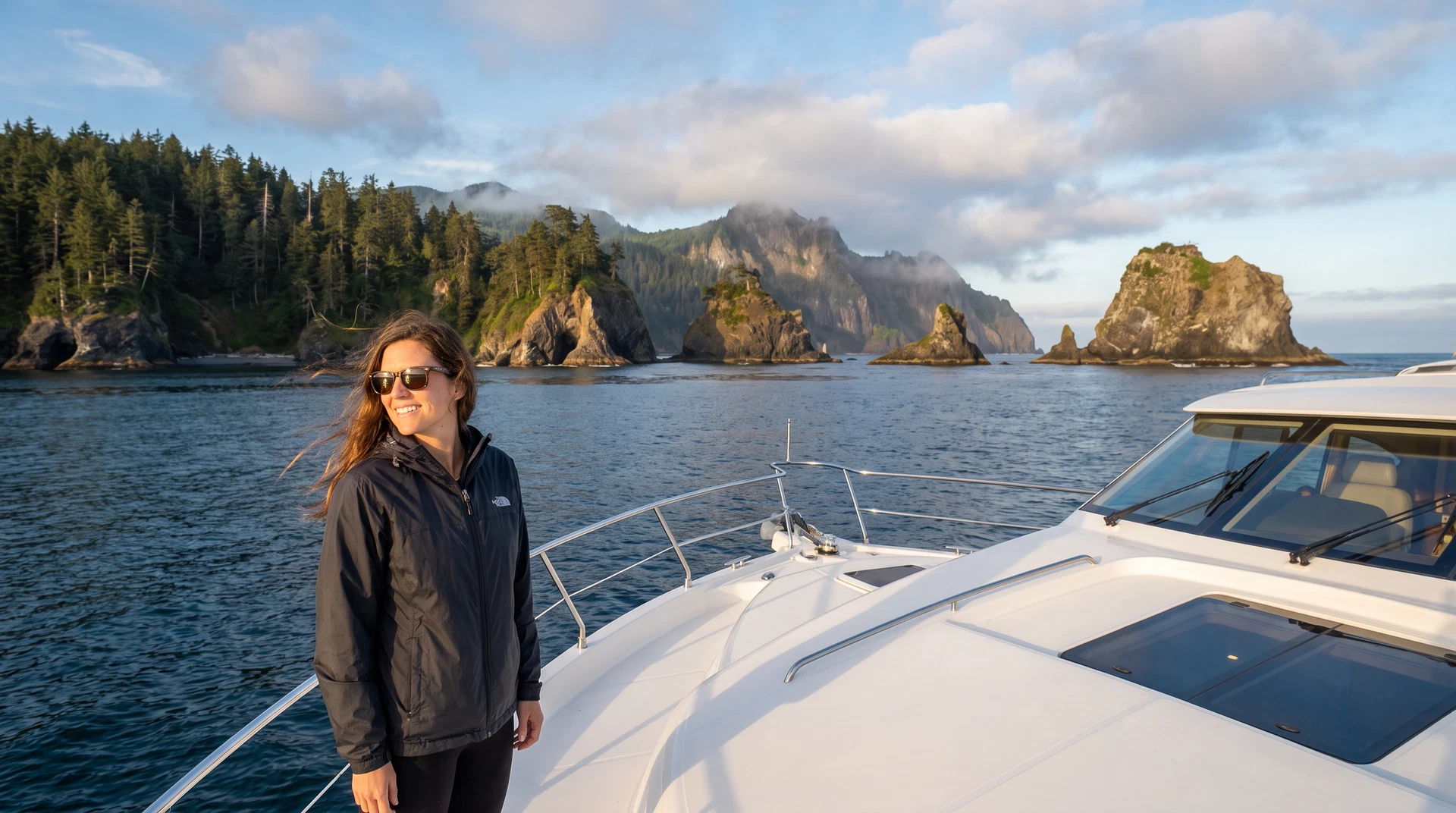
The Oregon Coast and Northern California offer some of the most spectacular boating waters in the world — from the sheltered estuaries of Coos Bay and the Rogue River to the open Pacific off Brookings and Crescent City. Whether you own a sport fishing powerboat, a bluewater sailboat, a jet ski, or a pontoon for lake days, one thing is certain: the right insurance is not optional. It is the difference between a bad day on the water and a financial catastrophe.
This guide covers everything Oregon and Northern California watercraft owners need to know — what a proper marine insurance policy covers, why your homeowners policy almost certainly does not cover your jet ski, how sailboat and powerboat insurance differ, and what you can expect to pay in 2026. We also address the unique risks of Oregon Coast bar crossings and the navigation territory clauses that catch many boaters off guard.
Get a Watercraft Insurance Quote
Gerald Ross Agency has insured Oregon Coast boaters since 1985. We shop 50+ carriers to find the right coverage for your vessel.
What Watercraft Insurance Actually Covers
A proper watercraft policy is built around several core coverage components, each addressing a different category of risk. Understanding what each component does — and what it does not do — is essential before you buy.
Hull Coverage
Pays to repair or replace your vessel if it is damaged or destroyed by a covered peril — collision, fire, theft, storm, or sinking.
Liability Coverage
Covers bodily injury and property damage you cause to others on the water. Recommended minimum: $300,000–$500,000.
Uninsured Boater
Pays your damages if an uninsured or underinsured boater hits you — a surprisingly common scenario on busy coastal waterways.
On-Water Towing
Covers emergency towing if your vessel breaks down, runs aground, or needs assistance — essential for offshore and coastal boating.
Medical Payments
Pays medical expenses for you and your passengers regardless of fault — no need to prove liability to access this coverage.
Personal Property
Covers fishing gear, electronics, navigation equipment, and personal effects aboard your vessel — often with scheduled endorsements for high-value items.
One of the most important decisions you will make is choosing between agreed value and actual cash value (ACV) hull coverage. With agreed value, you and the insurer agree on the vessel's value at policy inception, and that is exactly what you receive in a total loss — no depreciation deducted. With ACV, the insurer pays the current market value at the time of loss, which can be significantly less than what you paid or what it costs to replace. For newer vessels and well-maintained boats, agreed value coverage is almost always worth the modest premium difference (typically 10–15% more).
Navigation territory clauses are another critical detail. Most policies specify where your vessel is covered — inland waters only, coastal waters within a certain distance of shore, or open ocean. Oregon Coast boaters who venture offshore or cross river bars need to verify their policy's navigation limits carefully. A policy that covers "inland waters" does not cover you on the Pacific Ocean, even if the harbor is just a mile away.
Why Your Homeowners Policy Does Not Cover Your Jet Ski
This is the most common misconception in watercraft insurance — and one of the most expensive. Many personal watercraft (PWC) owners assume their homeowners or renters policy covers their jet ski, Sea-Doo, or WaveRunner. In nearly every case, it does not.
The Coverage Gap You Need to Know
Standard homeowners policies exclude motorized watercraft once they leave your property. In the rare cases where limited coverage exists, it typically caps at $1,000–$1,500 for theft and provides no liability protection on the water. A single accident involving another person can result in tens of thousands of dollars in medical and legal costs — none of which your homeowners policy will cover.
A dedicated PWC policy fills this gap completely. For a jet ski or Sea-Doo valued between $8,000 and $20,000, a full-coverage PWC policy typically costs between $200 and $500 per year — a modest premium for comprehensive protection. High-performance models valued at $20,000–$30,000 typically run $350–$700 annually. Coverage includes hull damage, liability (including water sports liability for towing riders), theft, on-water towing, and medical payments.
The liability component is especially important. PWCs are fast, maneuverable, and frequently operated in crowded waterways. According to the Insurance Information Institute, personal watercraft cause thousands of serious injuries each year — and 80% of PWC collisions involve two personal watercraft hitting each other. Without dedicated liability coverage, a collision that injures another rider could expose you to a lawsuit that your homeowners policy will not defend.
If you own multiple PWCs, most carriers offer multi-watercraft discounts that reduce the per-unit premium by 10–15%. You can also often bundle your PWC policy with your auto insurance or homeowners insurance for an additional multi-policy discount of 15–25%.
Sailboat Insurance vs. Powerboat Insurance: What Is Different and Why It Matters
Sailboats and powerboats are insured under the same general framework, but the risk profiles are meaningfully different — and the coverage details reflect that. Understanding these differences helps you make sure your policy actually matches your vessel and how you use it.
| Coverage Area | Powerboat | Sailboat |
|---|---|---|
| Hull Coverage | Standard — collision, fire, theft, sinking | Standard + rigging, mast, sails as separate scheduled items |
| Liability Limits | $100K–$500K typical | $300K–$1M+ recommended for offshore cruising |
| Navigation Territory | Coastal or inland — verify bar crossing coverage | Often includes offshore/bluewater endorsements |
| Engine Breakdown | Available as endorsement — critical for inboard engines | Less critical — wind-powered, but auxiliary engine coverage available |
| Racing Coverage | Rarely needed | Standard policies exclude racing — separate racing endorsement required |
| Agreed Value | Standard option | Strongly recommended — hull values depreciate slowly on quality sailboats |
| Fuel Spill Liability | Important — powerboats carry more fuel | Less critical but still available |
Sailboat-Specific Coverage Considerations
Sailboats have several unique risk factors that require specific attention. The rig — mast, boom, standing rigging, running rigging, and sails — represents a significant portion of the vessel's value and is subject to catastrophic failure in heavy weather. Standard hull policies may cover rig damage, but the coverage is often sublimited or subject to exclusions for gradual deterioration. For offshore cruisers and racing sailors, a scheduled rigging endorsement that lists specific components and their replacement values is strongly recommended.
Racing exclusions are another critical issue for sailboat owners. Most standard marine policies exclude coverage for incidents that occur during a race or organized competitive event. If you participate in club racing, offshore races, or any organized sailing competition, you need a racing endorsement or a separate racing policy.
Sailboat insurance typically costs 1%–2% of the vessel's agreed value annually. A well-maintained 35-foot cruising sailboat valued at $80,000 would typically cost $800–$1,600 per year for full coverage including liability. Bluewater cruising endorsements — for vessels that venture beyond coastal waters into offshore passages — add to the premium but are essential for any sailor planning extended passages along the Oregon Coast or down to Northern California.
Powerboat-Specific Coverage Considerations
Powerboats face different risks — higher fuel loads, faster speeds, and greater mechanical complexity. Engine breakdown coverage is a particularly valuable endorsement for powerboat owners, especially those with inboard or sterndrive engines. Standard hull policies cover sudden physical damage but typically exclude mechanical breakdown. An engine breakdown endorsement covers the cost of repairs when the engine fails due to mechanical or electrical causes — not just accidents.
Fuel spill liability is another powerboat-specific concern. Federal law requires boat owners to report and remediate fuel spills, and the costs can be substantial. Many marine policies include fuel spill liability coverage, but the limits vary widely. For larger powerboats with significant fuel capacity, verifying that your policy includes adequate fuel spill coverage is essential.
Oregon Coast and Northern California: Regional Risks That Affect Your Coverage
Boating on the Oregon Coast and in Northern California presents risks that are genuinely different from inland lake boating or protected bay sailing. Understanding these regional factors helps you make sure your policy is built for where you actually boat.
Oregon River Bar Crossings
The river bar crossings at Brookings, Gold Beach (Rogue River), Bandon (Coquille River), and Coos Bay are among the most dangerous in the United States. The U.S. Coast Guard issues bar closure advisories regularly, and accidents at these crossings are common. Many standard boat policies include navigation territory clauses that restrict or exclude coverage at or beyond the bar. If you fish or boat offshore from any Oregon Coast harbor, verify explicitly that your policy covers bar crossings and open Pacific waters.
Pacific Storm and Swell Exposure
The Pacific Ocean off Oregon and Northern California is notoriously rough, with large swells, strong currents, and rapidly changing conditions. Storm damage — both at sea and in harbor — is a significant risk. Make sure your policy covers storm damage at your home marina and while underway, and that your liability limits are adequate for open ocean conditions.
Theft at Oregon Coast Marinas
Marine theft — including outboard motors, fishing electronics, and personal watercraft — is a real risk at Oregon Coast and Northern California marinas. Verify that your policy covers theft of the vessel and its equipment, and consider scheduled endorsements for high-value electronics, fishing gear, and outboard motors.
Northern California Coastal Waters
Northern California's coastal waters — from Crescent City south through Eureka and beyond — share many of the same risk characteristics as Oregon. Fog, strong currents, and rocky coastlines create significant hazards. California also has stricter environmental regulations around fuel spills and discharge, making adequate fuel spill liability coverage especially important for powerboat owners in this region.
What Does Watercraft Insurance Cost in 2026?
Watercraft insurance premiums vary significantly based on vessel type, value, coverage level, navigation territory, and the owner's experience and claims history. The following ranges reflect general market conditions for Oregon and Northern California boaters in 2026 and are provided for educational context only.
| Vessel Type | Typical Value | Liability Only | Full Coverage (Annual) |
|---|---|---|---|
| Jet Ski / PWC (entry) | $8K–$15K | $150–$250 | $200–$400 |
| Jet Ski / PWC (performance) | $15K–$30K | $200–$350 | $350–$700 |
| Small Powerboat (14–20 ft) | $15K–$40K | $200–$400 | $300–$700 |
| Mid-Size Powerboat (21–30 ft) | $40K–$120K | $400–$700 | $600–$1,400 |
| Sport Fishing Boat | $50K–$200K | $500–$900 | $800–$2,500 |
| Cruising Sailboat (30–40 ft) | $60K–$150K | $400–$700 | $700–$1,800 |
| Bluewater Sailboat (40+ ft) | $100K–$400K | $700–$1,200 | $1,500–$5,000+ |
Several factors can reduce your premium meaningfully. Completing a U.S. Coast Guard Auxiliary or U.S. Power Squadrons boating safety course typically earns a 10–15% discount with most carriers. Bundling your watercraft policy with your homeowners or auto insurance can save an additional 15–25%. Installing GPS tracking, engine immobilizers, or automatic fire suppression systems can earn further discounts of 5–15%. As an independent agency with access to 50+ carriers, Gerald Ross Agency can shop the market on your behalf and find the combination of coverage and price that fits your vessel.
How to Save Money on Watercraft Insurance Without Sacrificing Coverage
- Complete a Boating Safety Course: U.S. Coast Guard Auxiliary and U.S. Power Squadrons courses earn 10–15% discounts with most carriers. Oregon requires boating safety education for operators born after January 1, 1984.
- Bundle with Home and Auto: Multi-policy discounts of 15–25% are available when you insure your watercraft with the same carrier as your home and auto. Ask your agent to compare bundled and unbundled options.
- Choose the Right Deductible: Raising your deductible from $500 to $1,000–$2,500 can reduce your premium by 15–25%. This works best if you have an emergency fund to cover the deductible in a claim.
- Install Security Equipment: GPS tracking systems, engine immobilizers, and alarm systems can earn discounts of 5–15% with many carriers — and reduce your theft risk significantly.
- Use Lay-Up Coverage in Winter: If you store your boat for the winter, a lay-up endorsement reduces your premium during the storage period by suspending navigation coverage while maintaining theft and fire protection.
- Shop Multiple Carriers: Marine insurance rates vary by 20–40% between carriers for identical coverage. Working with an independent agent who can access multiple carriers is the single most effective way to find the best rate.
Ready to Compare Watercraft Insurance Rates?
Gerald Ross Agency serves boaters across the Oregon Coast, Southern Oregon, and Northern California. We shop 50+ carriers and have been insuring marine risks since 1985.
Frequently Asked Questions
Is boat insurance required in Oregon?
Oregon does not require boat insurance by law, but most marinas require proof of liability insurance as a condition of moorage. Lenders financing a vessel purchase will also require hull coverage. Even where not legally required, the financial exposure from an uninsured accident — particularly in Oregon's coastal waters — makes coverage essential.
Does my homeowners policy cover my jet ski?
Almost certainly not. Standard homeowners policies exclude motorized watercraft once they leave your property. In rare cases where limited coverage exists, it typically caps at $1,000–$1,500 for theft only, with no liability protection on the water. A dedicated PWC policy is required for meaningful coverage.
What is the difference between agreed value and actual cash value?
Agreed value means you and the insurer agree on the vessel's value at policy inception, and that is exactly what you receive in a total loss — no depreciation. Actual cash value pays the current market value at the time of loss, which can be significantly less. For newer or well-maintained vessels, agreed value is almost always the better choice.
Does my boat insurance cover bar crossings on the Oregon Coast?
It depends on your policy's navigation territory clause. Many standard policies restrict coverage to inland waters or coastal waters within a specified distance of shore. Oregon Coast bar crossings — at Brookings, Gold Beach, Bandon, and Coos Bay — involve open Pacific waters that may fall outside your policy's navigation territory. Always verify this explicitly with your agent before crossing the bar.
Can I get a discount for completing a boating safety course?
Yes. Most carriers offer 10–15% discounts for completing U.S. Coast Guard Auxiliary or U.S. Power Squadrons boating safety courses. Oregon requires boating safety education for operators born after January 1, 1984, so many Oregon boaters already qualify.
How does sailboat insurance differ from powerboat insurance?
Sailboats have unique coverage needs — rigging, mast, and sail coverage; racing exclusions; and often bluewater navigation endorsements for offshore passages. Powerboats need engine breakdown coverage and fuel spill liability. Both use the same core framework (hull, liability, uninsured boater, medical payments), but the endorsements and coverage details differ significantly.
Get a Watercraft Insurance Quote from Gerald Ross Agency
Gerald Ross Agency has been serving Oregon Coast boaters and watercraft owners since 1985. As an independent agency with access to 50+ carriers, we shop the market to find the right coverage for your vessel — whether it is a jet ski, a sport fishing boat, a cruising sailboat, or a powerboat. Serving Brookings, Gold Beach, Coos Bay, and all of Northern California.


