


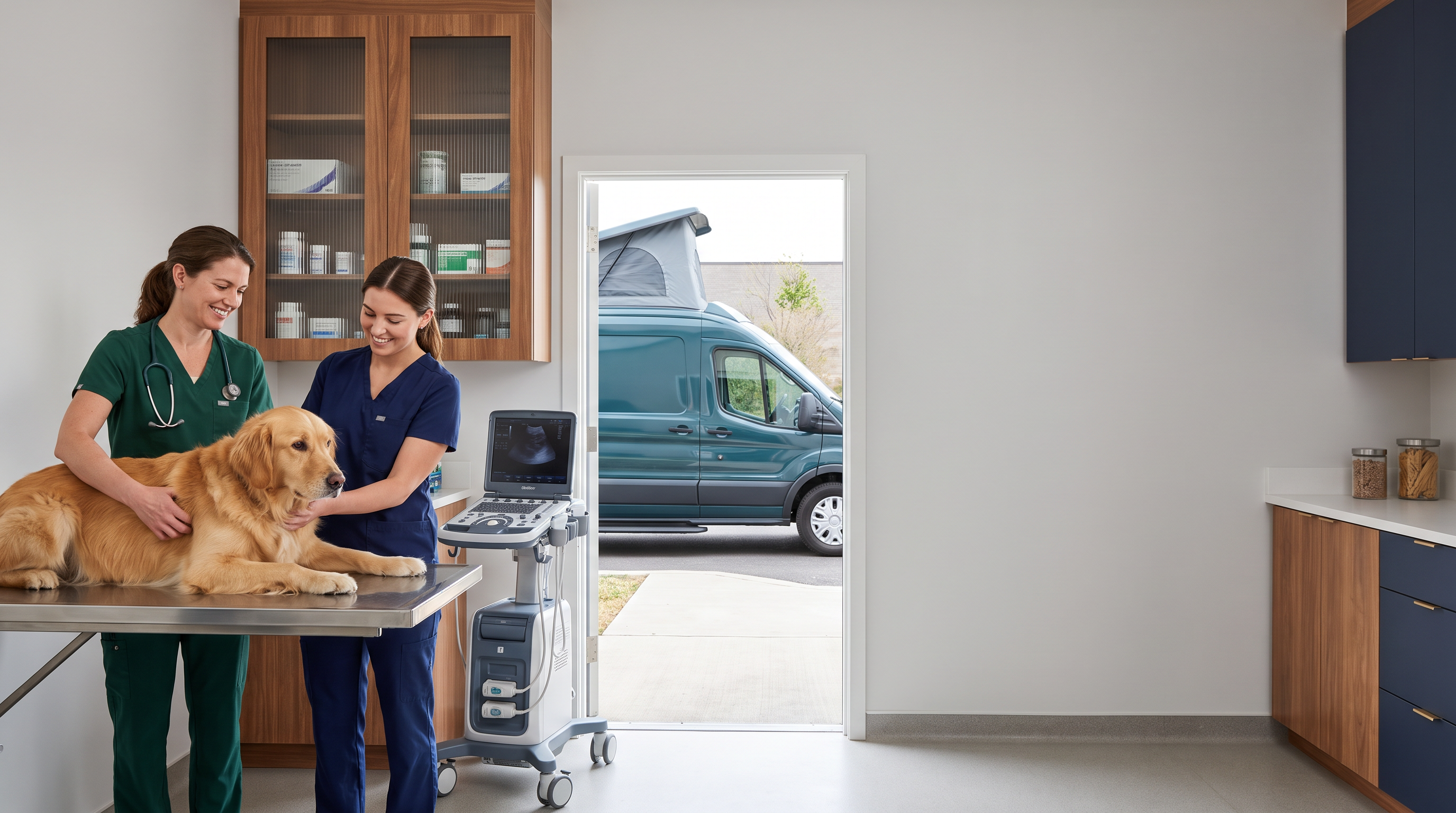

A veterinary business can treat an animal in an exam room, keep a patient overnight, and visit another at home in a mobile unit—yet each part of the work can raise a different insurance question. A treatment allegation is not the same as a dog escaping from the premises; a van collision is not the same as damage to a portable ultrasound inside it. Oregon and Northern California practice owners should map the work, animals, property, people, and places before assuming any one policy covers the whole operation.
The central distinction
One practice, several different exposures
Separate professional care, premises and visitors, animals in custody, staff injuries, property and drugs, vehicle operations, and records or payment systems. The issued forms—not a blog label—decide what, if anything, responds.
Why the operating model matters more than the word “vet”
A walk-in small-animal hospital, a farm-call service, a solo house-call veterinarian, a van equipped for treatment, and a clinic that sends a vehicle to nearby communities do not present identical risks. Ask whether your veterinary practice insurance application describes the actual species, procedures, anesthesia and surgery, boarding or hospitalization, after-hours care, telehealth, mobile services, territory, and patient transport. New services or locations should be discussed before they begin.
Oregon's board has separate facility and practice standards touching medical records, equipment, medications, refrigeration, and mobile license availability.[1] California's veterinary board publishes a detailed mobile-premises checklist that addresses sanitation, emergency equipment, waste, drugs, records, and how a mobile unit relates to its base facility.[2] These are regulatory reference points, not blanket descriptions of every practice. A house call made from a passenger vehicle may raise different licensing questions from treatment delivered inside a mobile premises; confirm the current rules with the applicable board or qualified adviser.
Practice exposure map
Four lanes to review separately
Use this to organize an insurance conversation, not to infer that any coverage is automatically included.
Care and clinical decisions
Examinations, anesthesia, surgery, diagnostics, telehealth, referrals, prescriptions, advice, and allegations about professional judgment.
Animals in custody
Hospitalized animals, overnight care, boarding, transport, escape, another animal's attack, fire, and non-treatment injury.
Property and medicine
X-ray, ultrasound, analyzers, autoclaves, computers, cold storage, drugs, leased equipment, and equipment away from the clinic.
People and places
Technicians, clients, premises, house calls, mobile units, owned or hired vehicles, and routes between locations.
Professional liability: a clinical allegation is not a slip-and-fall
An owner might allege that a diagnosis, surgical procedure, anesthesia decision, medication instruction, referral, or follow-up fell below a professional standard. Veterinary malpractice or professional liability insurance is the starting point for that discussion. AVMA Insurance Services describes professional coverage for allegations of negligence, errors, or omissions in veterinary care.[8] But its product description is not a promise about another insurer's form, and it does not determine whether Gerald Ross Agency can place a particular specialty product.
Review who is an insured: owner, entity, employed veterinarians, relief vets, technicians, students, and contractors. Ask about procedure and species restrictions, territorial limits, defense inside or outside limits, claims-made dates and retroactive dates where applicable, prior acts, consent to settle, regulatory or license defense, and notice of a circumstance that may become a claim. When a clinician changes practices or the ownership structure changes, the named insured and continuity of claims-made coverage deserve a fresh look.
A client who trips in the lobby, suffers property damage, or alleges harm from ordinary premises operations presents a different question for commercial general liability. General liability is not a substitute for professional liability. Nor should a practice assume that a medical-malpractice label automatically covers every type of veterinary treatment, because the actual policy description and wording matter.
Is the full practice described on your application?
Bring the species, services, overnight-care arrangements, mobile operations, and contracts to a policy-specific review.
Request a veterinary insurance reviewAnimal custody and non-treatment injury deserve their own conversation
Suppose a hospitalized dog escapes, a boarded animal is injured by another animal, or a patient is hurt while being transported for non-treatment reasons. The professional-care question and the animal-in-custody question may be different. AVMA Insurance Services offers an animal bailee extension for some non-treatment losses involving animals in a practice's care, custody, or control, including certain premises and transit situations.[9] This demonstrates a coverage category to ask about—not a guarantee it is available on your policy.
Ask about per-animal, per-occurrence, premises, and transit limits; the number and value of animals in custody; boarding versus medical hospitalization; theft, escape, fire, attacks, loading, and travel; and whether a third-party carrier or a separate boarding business is involved. A signed intake form, consent, or waiver may help define operations, but it does not create insurance or eliminate all liability. Review the actual endorsement and the customer agreement together.
Diagnostic equipment, refrigeration, and controlled inventory
An analyzer, digital radiography setup, dental suite, ultrasound, surgical light, autoclave, and monitoring system can be costly to replace and essential to appointment capacity. A commercial property insurance review should distinguish buildings from owned and leased equipment, tenant improvements, medicines and consumables, portable items, and items permanently fitted to a vehicle. Check replacement-cost or other valuation language, equipment breakdown, power surge, mechanical failure, transit or off-premises limits, and business interruption requirements instead of assuming every problem is a covered property loss.
Oregon's veterinary standards call for adequate refrigeration for perishable supplies, drugs, and biologicals.[1] A power interruption or failed refrigerator can create two separate problems: replacement of the appliance and loss of temperature-sensitive contents. Ask specifically whether spoilage, temperature change, power outage, backup power, equipment breakdown, and inventory valuation appear in the form. Follow product-specific storage instructions and clinical protocols; insurance planning is not a clinical judgment.
Controlled substances and other prescription inventory introduce security, diversion, and documentation concerns. California's veterinary board explains inventory and administration record questions and notes that the place of registration can matter.[5] Oregon has its own facility and practice rules.[1] Disclose where drugs are stored—including any base facility or mobile unit—and how inventory is secured and documented. Ask a licensing or controlled-substance adviser about the current rules; a property or crime policy does not establish compliance or automatically cover unexplained shortage, diversion, or dishonest acts.
People, animal-handling injuries, and workers' compensation
Veterinary teams face bites, scratches, kicks, crush injuries, lifting strain, needlesticks, infection exposure, chemicals, anesthetic gases, radiation, and fatigue. Those hazards are documented by CDC/NIOSH.[3] Its prevention guidance emphasizes workplace-specific hazard assessment, safe animal handling, training, sharps procedures, equipment maintenance, and incident reporting.[4] Appropriate protection for workers should be considered alongside insurance rather than treated as a substitute for it.
Oregon says most employers must carry workers' compensation coverage for employees.[7] For an Oregon operation, discuss workers' compensation insurance with the actual workforce, payroll, classification, and travel pattern in view. Northern California operations need a separate review of California rules. Relief veterinarians, students, volunteers, contractors, and traveling technicians may not all be classified alike. Employment status and coverage cannot be established simply by calling someone a contractor.
Mobile units, house calls, and vehicle cargo
Mobile vet insurance is more than auto liability. A house-call practice may use a personal car, a clinic-owned pickup, an employee's car, or a customized van with plumbing, refrigeration, built-in equipment, and an examination area. A commercial auto insurance review should identify owned, hired, and non-owned vehicles; driver eligibility; territory; business use; patient transportation; and whether vehicle modifications are included in stated values. A personal auto policy should not be assumed to cover business use or a converted treatment unit.
Vehicle liability and physical damage are not the same as coverage for ultrasound units, mobile X-ray systems, computers, vaccines, medications, or animals in transit. Ask about equipment away from the base, loading and unloading, unattended vehicle restrictions, theft, collision-related cargo loss, portable-property schedules, and animal bailee terms. If the mobile practice crosses the Oregon–California line, check each policy's territory and applicable licensing rules separately.
Plan for a delayed appointment, breakdown, or wildfire evacuation as well. Who can communicate with clients, preserve temperature-sensitive medicine, retrieve records, relocate the animals in your care, and arrange an alternate clinician? AVMA recommends a tailored emergency plan and business impact analysis that account for utility loss, inaccessible facilities, diagnostic equipment, and records.[6]
Add the mobile unit to the same review
Bring the vehicle list, ownership, conversion costs, drivers, equipment, medication transport practices, and service territory.
Discuss clinic and mobile exposuresRecords, payments, and interruption after a loss
Electronic patient records, appointment systems, cloud imaging, pharmacy platforms, payment terminals, and client contact details can make a clinic dependent on a small number of vendors. A cyber liability insurance review should explore security incidents, data loss, ransomware, vendor events, notification, restoration, and cyber business interruption. Do not assume cyber responds to a power outage, bad clinical advice, a drug diversion incident, or every service disruption: the trigger, waiting period, sublimits, and exclusions matter.
AVMA's emergency-planning guide suggests estimating the impact if internet or phone service fails, a laboratory instrument is unusable, medical records are inaccessible, or clients cannot reach the practice.[6] Build an offline contact plan and backup process, then compare your continuity needs with the property and cyber forms. A business owners policy may combine some property and liability features; ask whether a business owners policy actually fits the clinic's occupancy, size, mobile services, specialized equipment, and the endorsements it needs.
How to organize a policy review before renewal
Start with your actual operations, not a generic veterinary insurance checklist. A simple example: if a clinic adds overnight hospitalization, purchases a portable analyzer, and begins visiting ranches in a second state, the animals in custody, equipment away from premises, vehicle use, service description, territory, staffing, and state rules may all need attention. No single example establishes how a claim would be handled; it shows why the change should be disclosed.
Policy-specific review
Six questions worth asking with the forms open
These are conversation prompts, not coverage conclusions.
Scope of practice
Which species, procedures, surgeries, telehealth services, emergency calls, relief assignments, and off-site services appear in the application and insured description?
Clinical and custody
Where does professional liability end and animal bailee or care, custody, and control coverage begin? What are the per-animal and premises or transit limits?
Equipment and inventory
Which items are scheduled, leased, portable, installed in a van, refrigerated, or subject to breakdown, power interruption, theft, or temperature change?
Mobile vehicles
Who owns or leases each vehicle? Which drivers and uses are disclosed? How are patient transport, hired/non-owned vehicles, cargo, and vehicle conversions treated?
People and data
How are employees, volunteers, students, relief veterinarians, contractors, medical records, payment information, and service outages addressed?
Contracts and claims
What do referral, boarding, landlord, equipment lease, and independent contractor agreements require? How do claims-made dates, defense, notice, deductibles, and exclusions work?
Bring these documents to a veterinary insurance conversation
Gerald Ross Agency can help compare the described operation with available options and specific policy wording. The agency's veterinary practice coverage page is a useful starting point, but the current application, declarations, endorsements, and contracts are essential for an individualized discussion.
Renewal file
Eight items that make a review more useful
Locations, ownership or leases, mobile unit details, house-call territory, and a complete list of services and species.
Licenses, staff and relief arrangements, payroll, training, and written incident or infection-control procedures.
Patient admission, hospitalization, boarding, transport, and third-party custody processes and agreements.
A serial-numbered schedule of owned, leased, and portable diagnostic equipment and van conversions.
Medication and vaccine inventory, storage locations, security arrangements, refrigeration monitoring, and power backup.
Vehicle list, titles or leases, driver information, routes, patient transport, and hired/non-owned vehicle uses.
Electronic records, cloud vendors, backups, access controls, payment systems, and incident-response contacts.
Current declarations, policy forms, endorsements, loss history, contracts, and emergency/business-continuity plan.
Frequently asked questions
Is veterinary malpractice insurance the same as general liability?
No. Veterinary professional liability typically concerns allegations arising from professional care, while commercial general liability generally addresses different premises and operations allegations. Animal custody, exclusions, defense provisions, policy limits, and the facts must be reviewed in the issued forms.
Does veterinary professional liability cover an animal that escapes or is hurt while boarding?
Do not assume so. A separate animal bailee or care, custody, and control option may be relevant for non-treatment loss or injury while a practice houses, boards, grooms, or transports an animal. Eligibility, per-animal, premises, and transit limits, exclusions, and conditions vary.
Will a business auto policy protect a mobile veterinarian's equipment and medicines?
Vehicle liability and physical damage are different from property inside the vehicle. Ask how diagnostic equipment, refrigerated vaccines, medicine, records, and other supplies are insured during travel, loading, unattended stops, and a house call, and how the policy addresses loss of temperature control.
Does a home-based or house-call veterinary practice need a mobile-premises license?
Rules depend on the jurisdiction and the actual operating model. A house-call veterinarian using a passenger vehicle, a mobile treatment unit, and a fixed clinic with an associated mobile unit may be treated differently. Check the current Oregon or California veterinary board rules and get qualified licensing guidance; an insurance policy is not a license.
What documents help an insurance agent review a veterinary practice?
Prepare a service list, clinic and mobile locations, vehicles and drivers, animal custody arrangements, annual receipts, payroll, staff roles, professional licenses, medical and diagnostic equipment schedule, controlled-inventory practices, refrigeration and power-backup plan, cyber and records systems, contracts, and current policy forms. These records help a review but do not themselves create coverage.
Sources and further reading
Official regulatory and worker-safety sources, plus professional veterinary insurance and emergency-planning resources, informed this guide. A source's description of its own insurance offering does not determine the terms or availability of any other policy.
- [1] Oregon Veterinary Medical Examining Board: Facility and minimum veterinary practice standards
- [2] California Veterinary Medical Board: Mobile veterinary premises minimum standards checklist
- [3] CDC / NIOSH: Hazards to veterinary medicine and animal care workers
- [4] CDC / NIOSH: Veterinary safety and health hazard prevention and control
- [5] California Veterinary Medical Board: Controlled substance administration: frequently asked questions
- [6] American Veterinary Medical Association: Emergency planning for veterinary practices
- [7] Oregon Workers' Compensation Division: Do I need workers' compensation insurance?
- [8] AVMA Insurance Services: Professional liability insurance
- [9] AVMA Insurance Services: Animal bailee: professional liability extension
Ready to review your clinic and mobile practice together?
Share your services, locations, staffing, vehicles, diagnostic equipment, animal custody arrangements, and current coverage so the agency can help organize policy-specific questions.
Important: This article is general education, not a coverage determination, veterinary or medical advice, licensing guidance, controlled-substance instruction, or legal advice. Availability, eligibility, pricing, and claim outcomes depend on the issued policy, declarations, endorsements, definitions, limits and sublimits, deductibles, exclusions, conditions, underwriting, applicable law, and actual facts. A permit, written procedure, contract, inventory, or risk-control measure does not automatically create coverage or guarantee payment. Consult the relevant board or qualified professional on regulatory obligations and ask your insurer or licensed producer to review the actual forms.


