

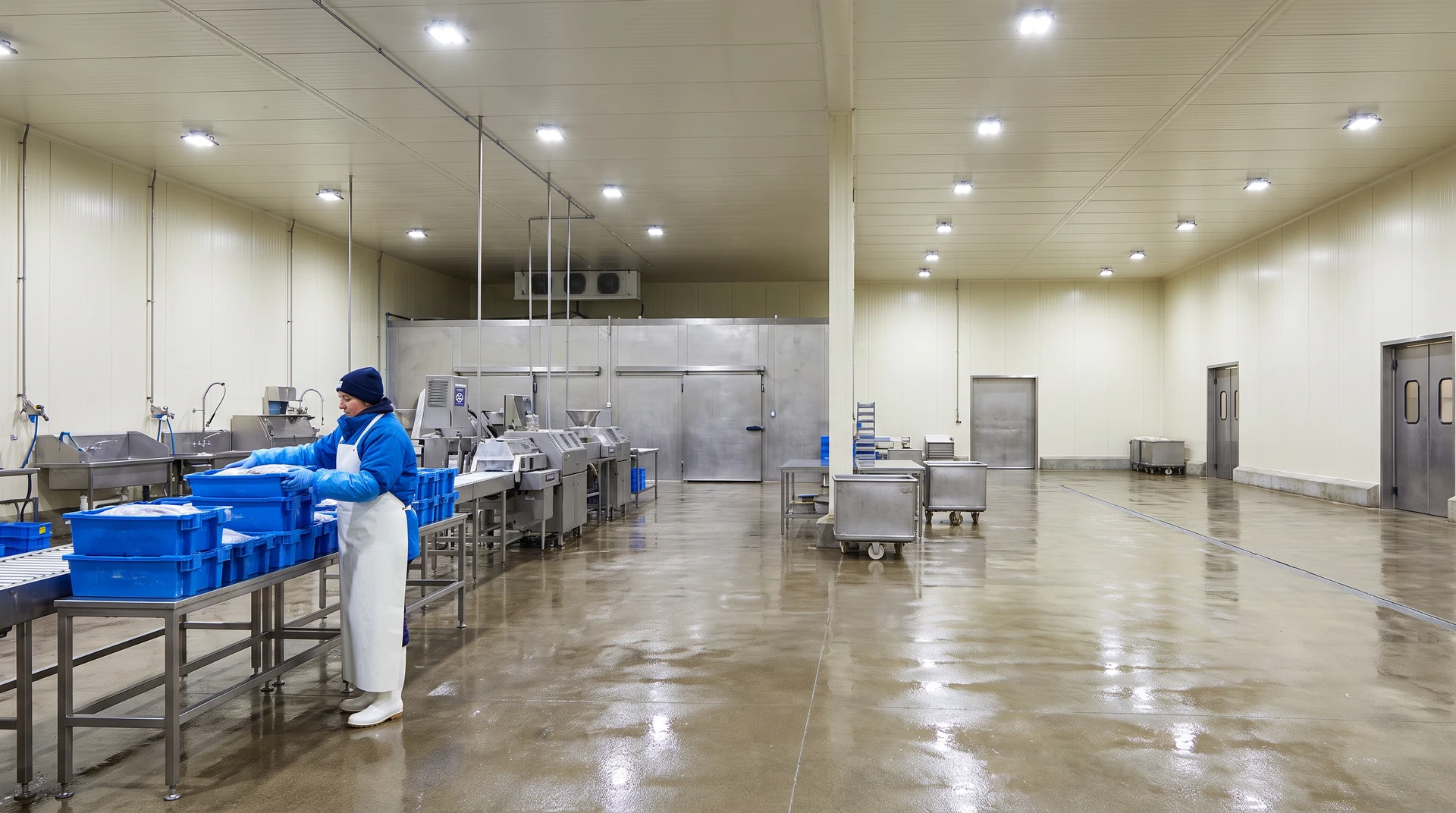

Seafood processors, fish markets, cold-storage operators, dockside buyers, wholesalers, seafood distributors, and specialty retailers keep a coastal supply chain moving. A day's work can include receiving a fresh catch, unloading deliveries, icing and packing product, monitoring freezers, maintaining refrigerated cases, coordinating a truck route, selling directly to customers, and managing detailed food-safety records. That mix creates insurance questions that are broader than a standard storefront or warehouse policy. A thoughtful review does not guarantee that a loss is covered; it helps a business identify the property, products, people, contracts, and continuity questions that should be addressed before a breakdown, recall, injury, storm, or interruption occurs.
Key takeaways
- Seafood operations should describe their real product flow—receiving, processing, freezing, storage, delivery, wholesale, retail, and any prepared-food service—rather than relying on a broad industry label.
- Refrigeration, electrical equipment, inventory valuation, temperature monitoring, utility interruption, and spoilage questions deserve a dedicated review.
- Product liability, general liability, workers' compensation, auto, cyber, and contractual requirements may each be relevant, depending on the operation.
Why seafood insurance starts with the operation—not a policy name
“Seafood business” can describe very different enterprises. One company may buy fish at the dock, transport it to a small cooler, and sell wholesale. Another may cut, package, freeze, smoke, distribute, or export product. A fish market may operate a retail counter, deliver orders, sell prepared foods, or host a small tasting program. A third-party cold-storage facility may hold inventory it does not own. Each model changes the questions to ask about buildings, stock, equipment, customer access, food handling, contractual obligations, transportation, and lost income.
Federal seafood guidance is a useful reminder that food-safety controls and operational records matter. FDA guidance explains that processors use hazard analysis and HACCP planning to identify relevant fishery-product hazards and formulate controls.[1] The FDA also notes that public cold-storage facilities are treated as processors under the seafood HACCP regulation rather than being categorically exempt.[2] Those food-safety requirements are not insurance coverage instructions, but the underlying product flow, storage, monitoring, and records can be important information for an insurance conversation.
A practical review framework
Three operating lanes to map before renewal
When a business separates product, equipment, and people-and-contract questions, it is easier to gather useful information for its accountant, food-safety advisers, insurer, and broker.
Product and cold chain
Document receiving, storage, monitoring, alarms, equipment maintenance, and the product flow from dock or supplier through delivery.
Property and equipment
List refrigeration systems, compressors, panels, freezers, ice machines, processing lines, packaging equipment, stock, docks, and office equipment.
People and contracts
Review employee duties, customer areas, delivery operations, vendor agreements, supplier requirements, certificates, and incident-response roles.
Refrigeration, freezers, and product-flow questions
For many seafood businesses, the critical physical assets are not just the building and retail counter. They can include walk-in coolers, freezers, blast freezers, compressors, condensers, refrigeration controls, ice machines, display cases, packaging equipment, scales, generators, dock equipment, electrical panels, temperature alarms, and backup systems. The inventory can change quickly and may be owned by the business, held for a supplier, or handled under a customer or warehouse agreement.
Ask precise questions: What happens if a compressor fails, a breaker trips, a utility outage lasts overnight, a door is left open, a truck refrigeration unit malfunctions, or a monitoring alert is missed? Is the business concerned about equipment breakdown, spoilage, temperature changes, utility-service interruption, contingent business income, and the time needed to clean, test, restock, or reopen? The answers depend on the policy terms, endorsements, deductibles, documentation, valuation approach, and the facts of the event. The purpose of the review is to clarify those questions before a product loss occurs.
FDA's seafood guidance highlights receiving and storage controls, continuous temperature monitoring, and calibration of temperature-recording equipment as topics for secondary processors.[1] These practices are operational controls, not insurance promises. They are also a reason to keep maintenance records, alarm logs, repair invoices, monitoring procedures, and emergency-contact steps organized in a business property insurance review.
Property, stock, and equipment: make the inventory specific
An insurance application that says only “fish market” may not capture the difference between a storefront with a few refrigerated cases and a facility that receives pallets, operates processing lines, stores frozen product, runs delivery routes, and has high-value equipment. Build a current schedule with building improvements, processing and refrigeration equipment, generators, forklifts, packaging supplies, reusable containers, office technology, stock by ownership category, and any off-premises or transit exposure.
Ownership matters. A warehouse or processor may hold seafood for a supplier, customer, vessel owner, co-op, distributor, or retailer. Contracts may allocate responsibility for inventory, temperature loss, pickup timing, packaging, loading, and records. Bring those agreements to the review. A general liability insurance discussion can also help identify customer areas, dock access, loading zones, slips, falls, demonstrations, deliveries, and operations that may sit outside the four walls of a retail counter.
Have a refrigeration and inventory review before the busy season
Bring your equipment list, inventory values, monitoring procedures, maintenance records, product-flow map, and current policy declarations.
Request a seafood business coverage reviewProduct liability, food-safety records, and recall preparation
Businesses that process, package, distribute, or sell seafood should understand the difference between food-safety compliance and insurance. The FDA's Fish and Fishery Products Hazards and Controls Guidance discusses hazards and control strategies for processors, including time-and-temperature-related hazards, pathogens, toxins, allergen concerns, and labeling topics.[1] Oregon's Department of Agriculture likewise explains that wholesale seafood processors and importers need a seafood HACCP plan, and identifies processing and warehouse licensing considerations.[3]
For insurance purposes, that operational detail may affect questions about product liability, completed operations, recall-related expense, customer requirements, vendor agreements, traceability, contamination allegations, label issues, and the cost of communicating with customers. A policy can have important limitations, waiting periods, exclusions, sublimits, and definitions. The goal is not to assume a product issue will be paid. It is to identify how products move through the business and ask which risks are retained, transferred by contract, or addressed through available insurance options.
Fish markets that also prepare chowder, smoke fish, offer hot food, or operate a café counter should also describe that operation accurately. A restaurant and food-service insurance conversation may be useful when immediate-consumption food service changes the premises, kitchen, liquor, customer, or delivery picture.
Workers, docks, forklifts, and delivery routes
Seafood operations can involve cold environments, wet floors, sharp tools, repetitive tasks, lifting, forklifts, pallet jacks, dock edges, hoses, cleaning chemicals, traffic in loading areas, and early or late shifts. Workforce planning should cover training, protective equipment, injury reporting, equipment lockout practices, emergency release and communication procedures for refrigerated areas, and clear traffic separation where pedestrians and mobile equipment share a space.
Washington's Food Safety Program states that food businesses processing or warehousing products for commerce and resale must follow safe handling and processing practices, with licensing and inspection information available through the state program.[4] That regulatory context reinforces the value of discussing actual job duties, payroll, contractor use, seasonal labor, and safety controls in a workers' compensation insurance review. Employee injuries, wage exposure, and return-to-work requirements are separate from property and product concerns.
When product goes beyond the facility, the exposure changes again. Company vans, refrigerated box trucks, pickup deliveries, employee errands, and contract hauling all raise questions about vehicle ownership, driver eligibility, maintenance, route planning, cargo, and customer delivery terms. A commercial auto insurance review should distinguish the business's own vehicles from hired, rented, and non-owned vehicle use.
Coastal continuity panel
Plan the first 24 hours after a cold-chain interruption
Assign who receives alarms, verifies temperatures, contacts refrigeration technicians, documents conditions, notifies suppliers or customers, reroutes product, authorizes disposal, protects staff, and communicates with your broker or carrier. A written plan will not decide coverage, but it can make the operational response more organized and the record more useful.
Coastal weather, ports, utilities, and supplier disruption
On the Oregon, Washington, and Northern California coast, a seafood operation may be affected by wind, heavy rain, flooding, road closures, wildfire smoke, utility outages, harbor restrictions, vessel delays, a broken dock, or a supplier interruption. The business may need a contingency plan for generators, alternate cold storage, alternate delivery routes, emergency communications, cleaning and sanitation, documentation, staff scheduling, and customer updates.
These are operational continuity issues first. Insurance may be part of the conversation, but it is not a substitute for a written plan. Businesses with waterfront connections, vessel exposure, dock operations, cargo transfers, or maritime contracts may also benefit from a commercial marine insurance discussion. A separate wildfire preparedness resource can help owners think through evacuation, communications, documentation, and property-readiness questions when smoke or fire conditions affect access or operations.
Cyber, payments, and the modern seafood supply chain
Even a dockside or family-owned seafood business may depend on point-of-sale systems, online ordering, customer contact information, payment terminals, temperature-monitoring apps, cloud accounting, vendor banking information, email, and remote cameras. A fraudulent payment-change request, compromised email, ransomware event, stolen device, or inactive access credential can interrupt the business in ways that a freezer policy will not address.
Develop practical controls: verify payment changes through an independent contact method, limit access to banking and inventory systems, use multifactor authentication, remove former employees promptly, back up essential records, and rehearse who contacts customers and vendors after an incident. A cyber liability insurance discussion can help business owners understand the incident-response, privacy, social-engineering, and recovery questions relevant to their actual systems and contracts.
Annual renewal worksheet
What to bring to a seafood insurance review
Current declarations, endorsements, deductibles, renewal proposals, and loss history.
A written product-flow map from receiving through processing, storage, wholesale, retail, delivery, or disposal.
Current equipment, refrigeration, generator, freezer, cooler, and inventory schedules with estimated values.
Temperature-monitoring, alarm, maintenance, calibration, emergency, and vendor-contact records.
Supplier, customer, warehouse, lease, delivery, harbor, and contractor agreements with insurance requirements.
Payroll, job descriptions, seasonal labor details, vehicle list, driver information, and safety procedures.
Food-safety, recall, traceability, customer-notification, and continuity-plan contacts.
Put your seafood operation's insurance questions in one place
Gerald Ross Agency can help seafood processors, cold-storage operators, fish markets, and coastal distributors organize a practical coverage-review conversation.
Frequently asked questions
Does a seafood business need equipment-breakdown coverage?
Refrigeration and other equipment exposures are important questions for many seafood operations, but the availability and scope of equipment-breakdown coverage depend on the policy, endorsements, equipment, maintenance, cause of loss, exclusions, and deductible. Ask how a covered breakdown, spoilage, electrical event, and business interruption would be evaluated under the actual policy.
Can a retail fish market be treated the same as a seafood wholesaler?
Not necessarily. The business model may differ in product ownership, food preparation, wholesale activity, customer access, delivery, storage, contracts, payroll, equipment, and food-safety obligations. The insurance review should use an accurate description of the specific operation.
What is the difference between a HACCP plan and insurance?
HACCP is a food-safety system focused on hazard analysis and controls. Insurance is a financial-risk-transfer arrangement governed by its policy terms. The operational details documented through food-safety practices can inform an insurance conversation, but a HACCP plan is not a substitute for coverage and an insurance policy is not a food-safety plan.
Do seafood businesses need cyber coverage?
If the business uses online ordering, payment systems, cloud accounting, customer information, connected temperature monitoring, vendor payments, or email, it may have cyber and payment-fraud exposures worth discussing. Coverage varies by policy, so the systems, contracts, controls, and response plan should be reviewed rather than assumed.
References
- U.S. Food and Drug Administration, Fish and Fishery Products Hazards and Controls
- U.S. Food and Drug Administration, Questions and Answers on HACCP Regulation for Fish and Fishery Products
- Oregon Department of Agriculture, Food Processing and Warehouse Licensing
- Washington State Department of Agriculture, Food Safety Program
- California Department of Public Health, Cold Storage Facilities