


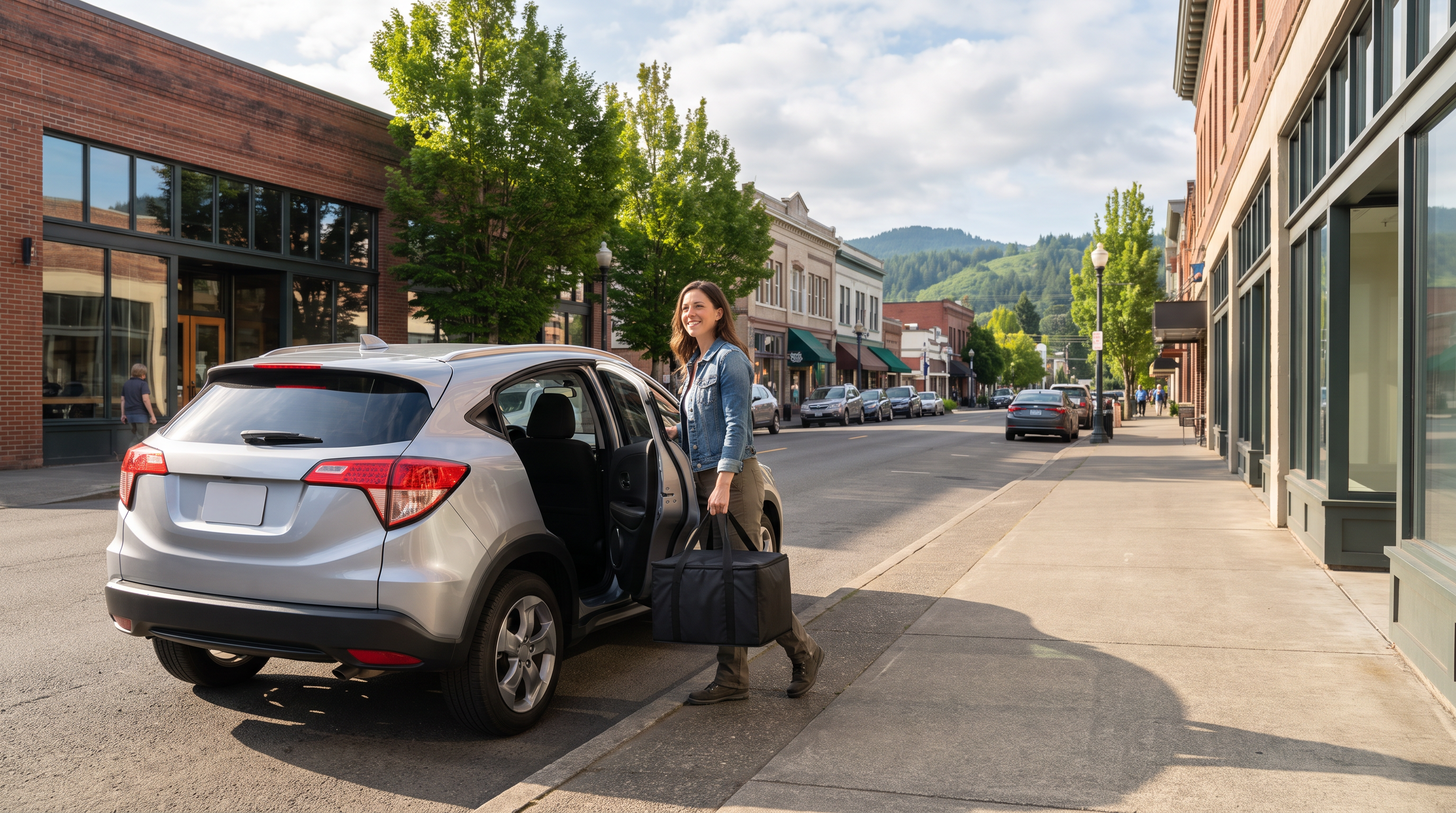

A personal vehicle can shift from a commute car to a business tool in the time it takes to turn on an app. Passenger rides, restaurant delivery, grocery delivery, errands, parcel work and other side gigs can each change the insurance conversation. The important question is not simply “Do I drive for an app?” It is “What does my car do, when does it do it, and does the issued policy describe that use?”
The first rule of a useful review
A platform’s insurance information is not a substitute for reviewing your own policy
A platform, personal insurer, lender and state regulator can each use different definitions and time periods. The actual answer comes from the issued policy and endorsement, the work being done, the platform agreement, the app status, the state where the activity occurs and the facts of a loss. Treat marketing summaries as a starting point—not proof of coverage.
Why paid driving changes an ordinary auto-insurance question
A standard auto insurance policy is built around the use described in its application and declarations. The Oregon Division of Financial Regulation cautions rideshare drivers that a personal policy may not cover damage or loss when the driver transports people for a fee through a transportation network company (TNC). It advises drivers to examine the company’s insurance program and agreement, then discuss the work and possible commercial-auto options with an insurer or agent.[1]
That does not mean every paid mile requires exactly the same solution. It does mean that paid driving should not be left off an application or renewal conversation. A few weekend restaurant-delivery runs, a regular passenger-rideshare schedule, airport trips, package routes, trips across state lines and driving that is independent of an app can raise different underwriting and policy questions. A personal auto insurance cost review should therefore start with the full use of the vehicle, not only the vehicle’s make and model.
Passenger rideshare and food delivery are related—but not interchangeable
Passenger rideshare regulation commonly separates the trip into different periods. The NAIC identifies the app-on waiting period, the accepted-request period before pickup and the passenger-in-vehicle period as distinct parts of the rideshare cycle.[2] That structure is useful because the insurance questions can change as a driver’s app status changes.
Food, grocery and parcel delivery can have a different set of platform terms, timing definitions and insurance conditions. A delivery driver may not carry a passenger, but they may carry someone else’s goods, work multiple apps, make rapid stops, travel farther from home, use a personal vehicle more intensively or drive while an app is open. Do not assume passenger-rideshare rules or benefits apply to delivery work. A state insurance department’s consumer guidance specifically warns that delivery-network activity can trigger personal-policy public-livery or conveyance exclusions and says the work should be disclosed to the insurer.[6]
Map the actual use
Four moments that should be described accurately
These are practical conversation prompts, not a promise that every platform or policy uses the same definitions.
Personal driving
The vehicle is being used for everyday personal transportation and the work apps are off. Start with the issued personal-auto policy; never assume a future gig use is already included.
App on and waiting
A rideshare app may be open while a driver waits for a passenger request. Regulators identify this as a distinct period, and it can carry different liability and physical-damage questions.
Accepted ride or active task
A passenger request may have been accepted, or a driver may be travelling to a pickup or delivery. Review the platform’s current terms and the policy’s coordination language for that exact work.
Passenger or goods in the vehicle
A rider may be aboard or goods may be in transit. Passenger rideshare and food delivery are not automatically treated alike, so the job must be described accurately to the insurer.
Oregon and California show why app status matters
Oregon and Northern California drivers may encounter different regulatory frameworks. For example, Portland’s TNC code distinguishes the app-on waiting period from accepted-request and passenger periods. It requires minimum TNC coverage of $50,000 per person, $100,000 per incident and $25,000 for property damage during the waiting period, and $1 million combined single-limit coverage in the accepted-request and passenger periods.[4] That is a Portland code example for TNC passenger service—not a universal guarantee for every Oregon platform, delivery driver or policy.
California’s Public Utilities Commission similarly describes three periods for TNC passenger service. Its current summary lists a $50,000/$100,000/$30,000 primary-insurance requirement while the app is open and waiting for a match, plus $1 million in primary commercial insurance for the accepted-request and passenger periods.[5] The CPUC also says the TNC must disclose that a personal policy may not cover TNC use and may not provide collision or comprehensive coverage while the driver is logged on.[5]
Those rules are helpful context, but they do not decide a personal claim. They also do not answer delivery-platform questions by themselves. State requirements, platform status, policy wording, available endorsements and the precise activity at the time of a loss all matter. A broader auto, motorcycle and boat insurance guide can help explain the underlying limits and coverage types that still deserve attention when a vehicle’s use changes.
Rideshare endorsements and commercial auto solve different problems
Some insurers offer personal-auto rideshare endorsements. Others may offer a business-auto approach, depending on the driver, vehicle, platform, location, hours, delivery type, other employees or contractors, and whether a passenger or goods are carried. The NAIC notes that personal policies often exclude livery or compensated driving and that rideshare-specific products may address gaps, especially while a driver is logged into an app but has not accepted a request.[2]
A commercial auto insurance conversation is worth having when paid driving is sustained, broader than a named rideshare activity, or linked to a business that owns, leases or directs the vehicle. A separate business auto review can also clarify titled vehicles, additional drivers, hired or non-owned autos, delivery radius, garaging, vehicle value, cargo-related questions and the scope of the business. It is not automatically necessary for every side gig, but it should not be ruled out based on a platform advertisement.
Starting a new passenger or delivery app?
Bring the app name, planned work, driver agreement and current declarations to a policy-specific review before your first paid trip or delivery.
Request a side-gig driving insurance reviewPhysical damage, deductibles and your own car deserve separate questions
Liability coverage for others and protection for the vehicle you own are not the same thing. Collision, comprehensive, towing, rental reimbursement, glass, roadside assistance and deductible treatment can be separate coverage questions. The NAIC notes that physical-damage protection may be contingent on a driver first carrying qualifying personal collision and comprehensive coverage, and that some state TNC frameworks do not require collision or comprehensive coverage while a driver is merely app-on and waiting.[2]
Ask direct questions: Is the vehicle eligible for the program? Is the policy altered when a delivery app is active? Does a deductible change? Does the platform describe primary, excess or contingent coverage? What happens when two apps are open? Is there protection if the driver is travelling to a pickup, is parked at a restaurant, carries a passenger or has goods in the vehicle? The right answer is the current written form and agreement—not a memory of an older online summary.
Liability limits, umbrella policies and other business exposures
A vehicle crash can involve injuries, multiple vehicles, property damage, a passenger, a pedestrian, a damaged delivery package or an uninsured driver. Liability limits are only one part of the discussion. An umbrella insurance review can help identify how an umbrella form treats the underlying auto policy, required limits, business use, listed vehicles and exclusions. It does not replace accurate underlying coverage or turn excluded work into covered work.
Some side gigs include more than driving. A driver may help load a customer’s property, enter a business, make a marketplace pickup, use a personal vehicle for a home-based enterprise or deliver goods for an independent business. In those settings, a general liability discussion can be relevant to non-auto allegations, while a personal auto or commercial auto form controls its own vehicle-related terms. Do not combine those policies in your mind; ask what each one actually insures.
Financing, family drivers and household records can complicate a side gig
A financed or leased vehicle can carry lender rules in addition to insurance requirements. Before starting paid driving, review loan or lease restrictions, required physical-damage coverage, driver authorization and vehicle-use terms. Tell the insurer if the regular driver changes, if an adult child begins using the car for paid delivery, if a spouse starts passenger rideshare work, or if a household vehicle becomes a dedicated gig vehicle. A related family auto, renters, home and umbrella guide explains why household changes can affect several insurance conversations at once.
Oregon requires every car to be covered by automobile insurance, and the Oregon Division of Financial Regulation advises drivers to tell their insurer promptly about important vehicle changes because policy requirements can differ.[7] Paid use should be handled with the same urgency. A renewal form, quote screen or delivery-platform onboarding step is not the right time to guess about the vehicle’s business use.
After a crash, accurate reporting matters more than a quick assumption
Follow safety and reporting steps first. Seek emergency help when needed, protect people at the scene, collect the information required by law, preserve photos and record the app status. Then report the incident according to the platform’s current process and the personal or commercial insurer’s notice requirements. Be accurate about whether the app was off, waiting, assigned, en route, carrying a passenger or carrying goods.
Do not change the story to fit the policy you hope applies. Insurers and platforms may need to coordinate a coverage investigation. The NAIC says drivers should understand how a TNC’s commercial policy works, what is covered during each driving state and how a claim is reported.[3] The claim outcome is determined by the actual policy, endorsement, agreement, limits, exclusions, eligibility, state law and facts—not by this article.
Before you begin, renew or add another platform
Eight items for a side-gig driving insurance file
Use this list to make the insurance conversation match the actual vehicle and work—not an assumption about an app.
A list of every platform and paid driving activity, including passenger rides, restaurant delivery, grocery delivery, parcel delivery, errands, marketplace pickups and courier work.
A copy or screenshot of the current platform agreement, insurance summary, driver requirements, claim-reporting instructions and any current evidence-of-insurance information.
The personal-auto declarations, endorsements, limits, deductibles, policy exclusions, renewal notices, prior loss information and any rideshare or delivery endorsement already in force.
Vehicle ownership and finance documents, lease terms, lender contact, registration, estimated annual mileage, delivery radius, garaging address and a record of anyone else who drives the vehicle.
The actual work pattern: expected hours, app-on time, states and cities served, passenger versus goods work, whether multiple apps run at once, and whether any work is done outside a platform.
A vehicle inventory: phone mount, safety gear, insulated bags, tools, cargo racks, dash camera, spare key, emergency kit and property regularly carried for the work.
A simple accident-and-claim procedure explaining when to stop work, obtain emergency assistance, report to the platform, report to the insurer, preserve app status and collect photos and witness information.
Questions for a policy-specific conversation about bodily injury, property damage, uninsured/underinsured motorist, personal injury protection, collision, comprehensive, towing, rental reimbursement and deductible treatment.
Adding delivery or rideshare work to a personal vehicle?
Tell Gerald Ross Agency how the vehicle will be used, where you drive, which apps are involved and whether you carry people, food, groceries, packages or equipment. We can help organize the policy questions for the available forms.
Talk through your driving planFrequently asked questions
Does a personal auto policy cover rideshare or food-delivery driving?
Do not assume it does. Oregon regulators and national insurance regulators caution that personal policies often exclude compensated, livery, delivery or transportation-network use. Whether any particular policy responds depends on its wording, endorsements, driver and vehicle details, the type of work, the app status, state requirements and the facts of the loss.
What is the difference between a rideshare endorsement and commercial auto insurance?
A rideshare endorsement can be a personal-auto policy addition designed for a defined transportation-network activity. Commercial auto is a separate business-auto approach that may be more appropriate for some sustained or broader business use. Availability, eligibility, limits, physical-damage treatment and delivery-work eligibility vary by insurer and state. Compare the actual forms before choosing either option.
Does a delivery platform's insurance automatically cover a driver's car?
Not automatically. Platform terms can distinguish among logged-off, app-on, pickup, active-delivery and other statuses. They can also contain conditions, deductibles, limits, exclusions and coordination rules. Review the current agreement and insurance materials for the exact platform and discuss the work with the personal-auto insurer before starting.
Will an umbrella policy cover an accident while I am doing gig work?
An umbrella policy is not a substitute for correctly describing the underlying auto use. Its eligibility and response depend on the umbrella form, required underlying insurance, business-use exclusions, insureds, vehicles, limits and loss facts. Ask for a policy-specific review before assuming it applies to rideshare or delivery work.
What should I tell my agent before beginning rideshare or delivery work?
Explain every paid driving activity, each platform, vehicle, state of operation, expected mileage and hours, whether passengers or goods are carried, delivery radius, other drivers, vehicle ownership or lease terms, existing coverages, desired deductibles and whether the vehicle is financed. Bring the platform agreement and current declarations page so the discussion can match the actual work.
Sources and further reading
Oregon and California regulatory materials, insurance-regulator education and related consumer guidance informed this article. Platform terms, regulations, endorsements, underwriting rules, app-status definitions and available coverage can change. The resources below do not determine an individual policy, claim result, platform benefit or insurance availability.
- [1] Oregon Division of Financial Regulation: Insurance in a sharing economy
- [2] National Association of Insurance Commissioners: Commercial Ride-Sharing
- [3] National Association of Insurance Commissioners: Uber or Lyft? Protect Yourself When Ridesharing
- [4] City of Portland: TNC Insurance Requirements
- [5] California Public Utilities Commission: Insurance Requirements for TNCs
- [6] North Carolina Department of Insurance: Driving for a Transportation Network or Delivery Network Company
- [7] Oregon Division of Financial Regulation: Auto Insurance 101
Let the policy conversation reflect the work your car actually does
Bring your current declarations, the platforms you use and the actual driving plan to Gerald Ross Agency for a practical, policy-specific discussion before the next paid mile.
Request an updated auto quoteImportant: General educational information only; not legal, tax, transportation, employment, platform, financial or insurance-coverage advice. Nothing here promises coverage, availability, acceptance or claim payment. Coverage, eligibility, premiums, limits, exclusions, deductibles, named insureds, listed vehicles, garaging, endorsements, vehicle ownership, lender terms, app status, platform agreement, business activity, state requirements, underwriting and claim facts determine outcomes. A platform summary, policy declaration, certificate, app screen, delivery record, regulatory summary or this article does not create coverage. Confirm current requirements with the appropriate authorities and the platform, and discuss the actual issued policy with a licensed insurance producer.


