
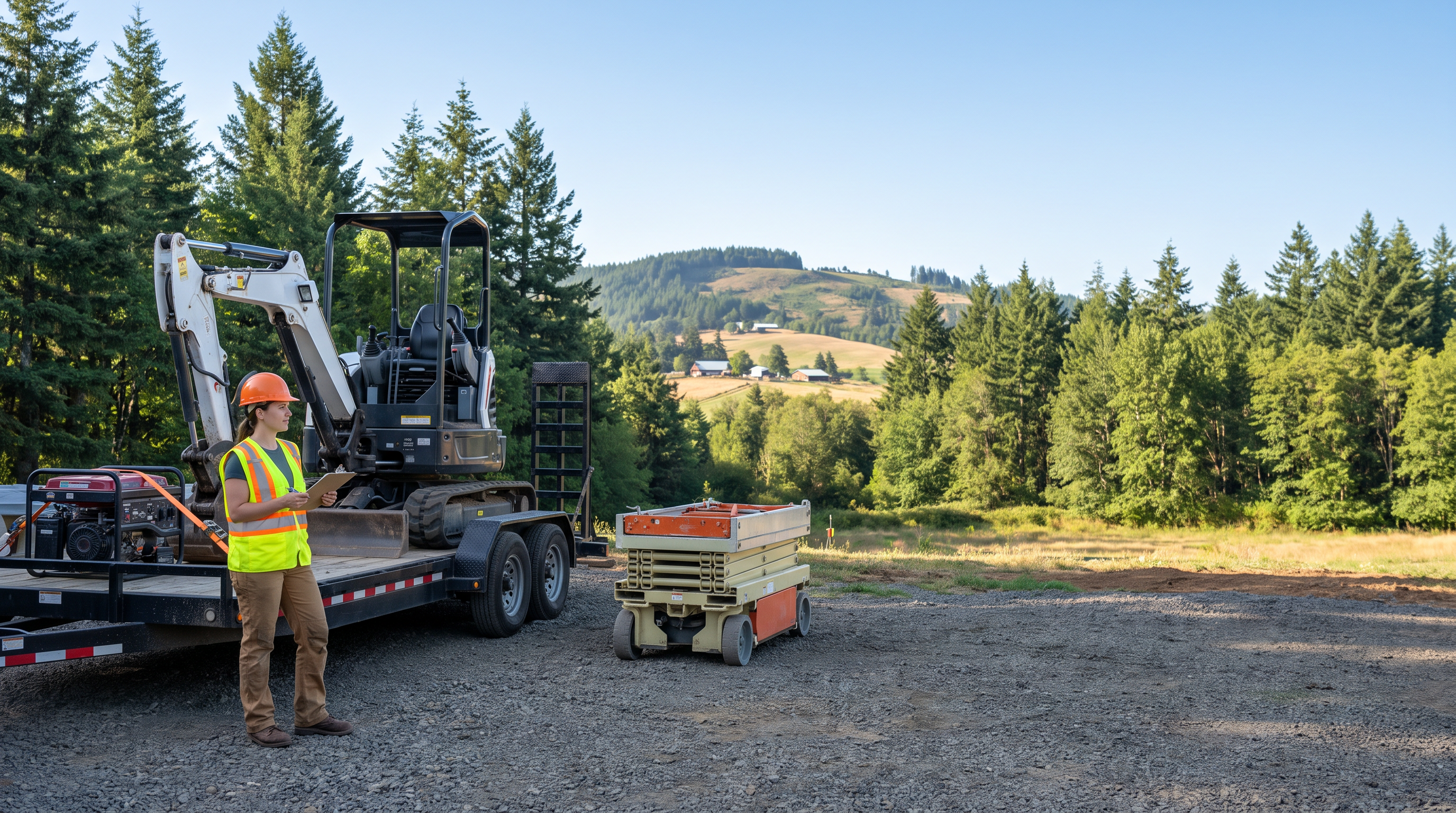

A rented skid steer, leased generator, borrowed scissor lift or trailer can keep a project moving. It can also make a routine loss question far less routine. “Who pays?” is rarely answered by the equipment’s label alone. The agreement, owner, business entity, equipment condition, operator, work being done, location, transport plan, cause of loss and actual insurance wording all matter.
The first rule
Treat the pickup as the start of a responsibility timeline
Before the machine leaves the rental yard, identify what is being rented, leased or borrowed; who signs; who is allowed to operate; where it will go; how it will travel; where it will be stored; which contract terms apply; and which policy is supposed to respond. That preparation is more useful than trying to reconstruct the arrangement after damage, theft or a return dispute.
Why rented, leased and borrowed equipment deserves a separate insurance conversation
Most businesses understand that a building, inventory or office furniture may be reviewed under a fixed-location property policy. Mobile equipment creates a different discussion because it can be on a trailer, in temporary storage, at a client’s property, at a remote jobsite or in someone else’s care. An industry overview of equipment floaters describes how inland-marine coverage is commonly used for mobile equipment, tools and machinery when property is away from a main premises, in transit or temporarily stored.[1] That is a useful starting point, not a coverage promise.
A business owners policy review can identify the property, business-income, liability and location questions in a company’s existing program. However, a skid steer, scissor lift, generator, compressor, trailer, attachment, surveying device, pump or specialty tool may need a closer look when it is rented, leased, borrowed, moved off premises or required by contract. The exact policy, endorsements, declarations, definitions, limits, deductibles, exclusions, equipment schedule and loss facts control.
Follow the equipment, not just the invoice
Four moments that can change the questions
Use this timeline to organize a policy-specific conversation with the rental company, insurer, safety professionals, transportation advisers and legal counsel when needed. It does not decide a claim or contract dispute.
Before pickup
Read the agreement before signing. Identify the legal renter, exact equipment, attachments, stated value, rental dates, approved uses, operator requirements, pickup or delivery terms, waiver options, required certificates, deductible, site restrictions and return condition.
During transport
List the towing vehicle, trailer, driver, route, parking plan, securement equipment, load weight, delivery provider and overnight stops. The movement of the equipment can create a different set of vehicle, cargo, theft and contract questions than its use at the jobsite.
At the jobsite
Match the actual work to the equipment, operator, location and safety plan. Soil, slopes, traffic, power lines, weather, access, subcontractors, employees, customers and unattended storage can change the loss scenario quickly.
At return
Document the condition, accessories, fuel or charge, operating hours, return time, inspection result and open issues. Report an incident promptly through the channels required by the agreement and policy, but do not assume a report establishes responsibility or coverage.
The contract is not just a pickup receipt
A rental, lease or borrowing agreement may define the named renter, equipment, attachments, term, delivery location, permitted use, minimum insurance request, responsibility for loss or damage, maintenance, transportation, cleanup, late return, fuel or charging, operator qualifications, restrictions, optional damage-waiver terms and what must happen after an incident. Each agreement is different. Read the actual document before signing and retain it with the equipment records.
Do not treat a certificate of insurance, a damage waiver, an email from a project manager or a verbal understanding as a substitute for that review. A certificate is limited evidence of insurance at a point in time. A waiver or rental protection plan is a separate contract. Neither changes an issued policy merely because it exists. A general liability insurance review may identify third-party injury and property-damage questions, but it does not by itself establish who bears a physical-damage bill for equipment in your care, custody or control.
Separate the equipment from the work being performed
The same machine can have different risk questions on different days. A rented lift used inside a finished office, a generator supporting a food truck, a borrowed mini excavator on a residential slope, a trailer carrying a skid steer between jobs or a pump on leased farmland each create a different story. Describe the equipment, attachments, people, project, site, weather, ground conditions, customer access, delivery and return plan instead of relying on a broad category such as “contractor equipment.”
For project-driven work, a contractors insurance discussion can help make the schedule, locations, subcontractors, completed work, tools and equipment questions more specific. For a larger or more exposed operation, a commercial umbrella insurance review may also help identify how the business’s underlying liability limits, contractual commitments and changing operations fit together. Neither policy label settles a loss; the issued forms and facts do.
Transporting the equipment is a separate risk, even when the trip is short
Equipment frequently changes hands at the rental yard, a jobsite, a storage lot or an owner’s property. The move may involve a company pickup, employee vehicle, hired hauler, rental trailer or a delivery service. List every vehicle and trailer, who owns each one, who drives, what is being hauled, where it is garaged, the equipment weight, the route, the delivery terms and where it may sit overnight. A commercial auto insurance review should include the real towing and delivery activities—not just the vehicles parked at the office.
Federal Motor Carrier Safety Administration rules for covered interstate commercial operations require cargo to be secured so it does not shift or fall and include general and equipment-specific securement requirements.[4] Those rules do not replace state rules, manufacturer instructions, training or a site-specific transport plan. They show why chains, straps, anchor points, trailer condition, weight, loading, edge protection, driver training and inspection deserve more attention than a last-minute hookup.
Adding rental equipment or hauling it to a new kind of job?
Bring the agreement, equipment list, project requirements and transportation plan to a policy-specific review before the pickup date—not after the first incident.
Request an equipment insurance reviewTheft and temporary storage can be as important as the jobsite itself
A machine may be more exposed when it is parked at an unsecured site, left on a trailer, stored at a yard, moved after hours or held while a project pauses. Ask where keys are kept, whether serial numbers and photos are recorded, who has access, whether the equipment can be immobilized, how the trailer is secured, what lighting or surveillance exists and how changes in location are communicated. A commercial property insurance conversation can be one place to compare what is at the fixed premises with what is mobile or temporarily away.
The theft question is not limited to someone taking a machine from a jobsite. The National Insurance Crime Bureau describes theft exposures during transit and at locations such as parking areas, warehouses and other supply-chain handoffs. It also discusses fictitious pickups and technology-enabled rerouting.[6] That broader theft context is a reason to verify a delivery vendor, define who may change pickup or delivery instructions and document transfer points. It does not establish that any individual theft will be insured.
Rented lifts, generators and specialty machinery need operational details
Equipment type matters. Oregon OSHA’s heavy-equipment resource page links to machinery, motor-vehicle and heavy-equipment training materials, while noting that the everyday phrase “heavy equipment” can include equipment that moves, digs, carries, lifts or processes heavy loads.[2] That is a useful reminder to identify the actual machine, attachment and work—not simply the project name.
For example, federal rules for aerial lifts require daily control tests, authorized operators, adherence to manufacturer load limits and checks before travel that booms are properly cradled and outriggers stowed.[3] The standard is not an insurance form, and insurance does not replace safety responsibilities. Still, the operation, inspection history, operator authorization and maintenance records can be important facts if a rental lift is involved in a loss.
Generators, pumps, compressors and similar equipment deserve their own operating questions: fuel, power connection, cables, weather, ventilation, maintenance, servicing, temporary storage, theft protection and whether the equipment is supporting a customer, a subcontractor or a business’s own work. The more specifically the business describes use, location and responsibility, the more useful an insurance review can be.
Borrowed equipment can be the easiest arrangement to underestimate
Borrowing a trailer from a friend, using a landlord’s tractor, accepting a subcontractor’s lift or sharing a generator between related businesses may feel informal. It can still involve different parties, different ownership, different operator permissions, a different jobsite and separate insurance policies. Make the arrangement specific before use: who owns it, who may operate it, who pays for maintenance, which location is authorized, how it will be transported, what happens if it is damaged and whether the owner wants a written agreement or evidence of insurance.
Those details also matter for farms and ranches. A farm and ranch insurance review can identify questions about a borrowed tractor, rented attachment, leased pump, applicator rig, temporary hay equipment or trailer used on and off the farm. In California, Caltrans notes that agricultural implements can have specific vehicle-code exemptions, while emphasizing that the provisions are selective and other requirements can still apply.[5] Confirm the current local, state and federal requirements with the proper authorities and advisers; do not treat an exemption summary or insurance policy as transportation advice.
People, subcontractors and technology can change the liability picture
Ask who is actually using the equipment. Employees, temporary workers, subcontractors, owner-operators, a customer’s crew and family members can create different contracting, training, supervision and insurance questions. A workers’ compensation insurance review should use current roles, payroll, work locations, supervision and job classifications rather than last year’s roster.
Rental activity can also create digital risk. Online bookings, electronic signatures, emailed certificates, GPS tracking, access codes, vendor portals, billing information, pickup instructions and remote equipment controls should be part of a cyber liability insurance discussion when they are used in the operation. Verify delivery and change-order requests through known contacts. Do not rely on a single email or forwarded document to authorize a high-value equipment handoff.
Bring evidence, not assumptions
Eight items to bring to a rented-equipment insurance review
A working file lets an insurance conversation focus on the specific agreement, equipment, transportation and jobsite. It is not a substitute for policy forms, contract advice, manufacturer instructions, training or regulatory guidance.
The fully signed rental, lease or borrowing agreement, including any schedules, amendments, damage-waiver terms, delivery receipt and return requirements.
A complete equipment list with make, model, serial number, attachments, appraised or stated value, photos at pickup and a record of existing damage.
The named business entity, every authorized operator, the intended use, jobsite address, project owner, subcontractors, employees and any customer access.
The transportation plan: towing vehicle, trailer, hitch, brake controller, driver, load weight, securement devices, delivery vendor, route and overnight parking location.
Current declarations and endorsements for contractors equipment, inland marine, property, auto, general liability, workers’ compensation, umbrella and any applicable specialty coverage.
A jobsite and storage plan covering keys, access codes, immobilizers, tracking, lighting, locks, fencing, fuel, batteries, weather protection and who holds responsibility when the site is unattended.
Inspection, maintenance, operator-training and safety records that apply to the equipment and the work being performed, along with contact information for the rental company and service provider.
Project contracts, additional-insured requests, indemnity or hold-harmless language, certificate requests, landlord requirements, subcontractor agreements and any farm or land lease that affects use or storage.
Build the review around the next pickup, not the last loss
Before renting, leasing or borrowing equipment, write down what will be different this time: the machine, attachment, owner, contract, value, operator, jobsite, project owner, customer access, trailer, vehicle, route, storage, delivery, subcontractor, weather exposure or return procedure. Compare that list against the actual policy, not an assumption about what is “normally covered.”
Use the right professional for the right question. A rental company can explain its agreement and optional protection. A licensed insurance producer can explain the actual policy and underwriting questions. An attorney can advise on contracts and responsibility. Transportation and safety professionals can address securement, operator training and jobsite controls. That focused approach is more useful than treating a rental counter conversation as a complete insurance review.
Need to compare a rental agreement with the coverage questions it creates?
Gerald Ross Agency can help organize the policy questions around your equipment, contract, operators, jobsite, trailer and transportation plan before the next pickup.
Talk through the equipment planFrequently asked questions
Does a contractor equipment policy automatically cover rented or leased equipment?
Do not assume it does. Eligibility, limits, sublimits, deductibles, valuation, rental duration, equipment type, scheduled versus unscheduled property, transit, theft, damage, exclusions and contract requirements can differ. The rental or lease agreement and the issued policy forms and endorsements control; a policy-specific review should occur before pickup.
Who pays if borrowed equipment is damaged or stolen?
The answer depends on facts such as the ownership arrangement, signed agreement, equipment condition, operator, location, cause of loss, applicable law and the actual insurance policies. A certificate, a verbal agreement, a damage waiver or a general article does not decide responsibility or create coverage. Document the arrangement and review the relevant policies before use.
Is the trailer that hauls rented equipment part of the insurance review?
Yes. The towing vehicle, trailer ownership, hitch and brake configuration, operator, route, cargo securement, physical damage, liability, hired or non-owned use, vehicle weight and equipment being transported can each raise separate questions. Review the actual vehicles, trailer and transport plan with qualified insurance and transportation professionals.
Does a rental damage waiver replace commercial insurance?
Not necessarily. A damage waiver, rental protection plan and insurance policy are different documents with different definitions, exclusions, conditions, limits and fees. Ask the rental company what its agreement and optional protection do and do not address, then compare that information with the issued policy and the business’s actual operations.
What should a business document at pickup and return?
Keep the signed agreement, equipment identification, serial number, photos or video of condition, delivery and return time, authorized operators, jobsite location, transportation plan, inspection forms, fuel or battery condition, accessories, attachments, incident contacts and communication with the rental company. Documentation does not guarantee a claim result, but it can make a later conversation more specific.
Sources and further reading
Government, safety and insurance-industry resources informed this article. Rental contracts, insurance forms, vehicle and equipment rules, jobsite standards, transport requirements and local obligations can change and often depend on the equipment, use, location, business relationship and actual facts. The resources below do not determine an individual contract, policy, claim result, coverage availability or compliance obligation.
- [1] Falvey Insurance Group: What is an Equipment Floater and What Does it Cover?
- [2] Oregon Occupational Safety and Health: Heavy equipment
- [3] Occupational Safety and Health Administration: 1926.453 - Aerial lifts
- [4] Federal Motor Carrier Safety Administration: Cargo Securement Rules
- [5] California Department of Transportation: Implements of Husbandry Exemptions (Farm Equipment)
- [6] National Insurance Crime Bureau: Cargo Theft
Make the equipment review match where the machine will actually go
Bring the agreement, current declarations, equipment schedule, jobsite information, operator list, trailer plan and handoff records to Gerald Ross Agency for a practical, policy-specific conversation before the equipment leaves the yard.
Request an equipment insurance quoteImportant: General educational information only; not legal, contract, insurance-coverage, safety, operator-training, equipment-maintenance, transportation, towing, load-securement, licensing or regulatory advice. Nothing here promises coverage, availability, eligibility, acceptance, compliance, legal responsibility or claim payment. The signed agreement, issued policy, forms, endorsements, exclusions, limits, deductibles, named insureds, listed property and locations, equipment details, business operations, operator qualifications, contracts, transportation plan, applicable law, regulator requirements, underwriting, safety practices and loss facts determine outcomes. A certificate, proposal, damage waiver, source summary or this article does not create coverage. Confirm current requirements with the appropriate authorities and discuss the actual issued policy with a licensed insurance producer.