



Key Takeaways
- Standard commercial general liability policies contain a broad watercraft exclusion that eliminates coverage for most port, dock, and marine terminal operations — a dedicated Marine General Liability (MGL) policy is required.
- The federal Longshore and Harbor Workers' Compensation Act (USL&H) mandates a separate workers' compensation policy for employees working on navigable waters, piers, docks, and terminals — state workers' comp does not cover these workers.
- Short-line railroads face unique liability exposures — including derailment, grade crossing accidents, and environmental contamination — that require specialty railroad liability policies with limits typically starting at $5M.
- Terminal Operators Legal Liability (TOLL) insurance covers cargo damage while in the terminal's care, custody, and control — a critical gap that standard commercial property policies do not address.
- Marine pollution liability (including COFR compliance for vessels over 300 gross tons) is a federal requirement that standard CGL and MGL policies typically exclude.
- Gerald Ross Agency specializes in marine and commercial insurance for Oregon Coast port businesses, fishing docks, and waterfront industrial operations — and can access specialty markets that most general agents cannot.
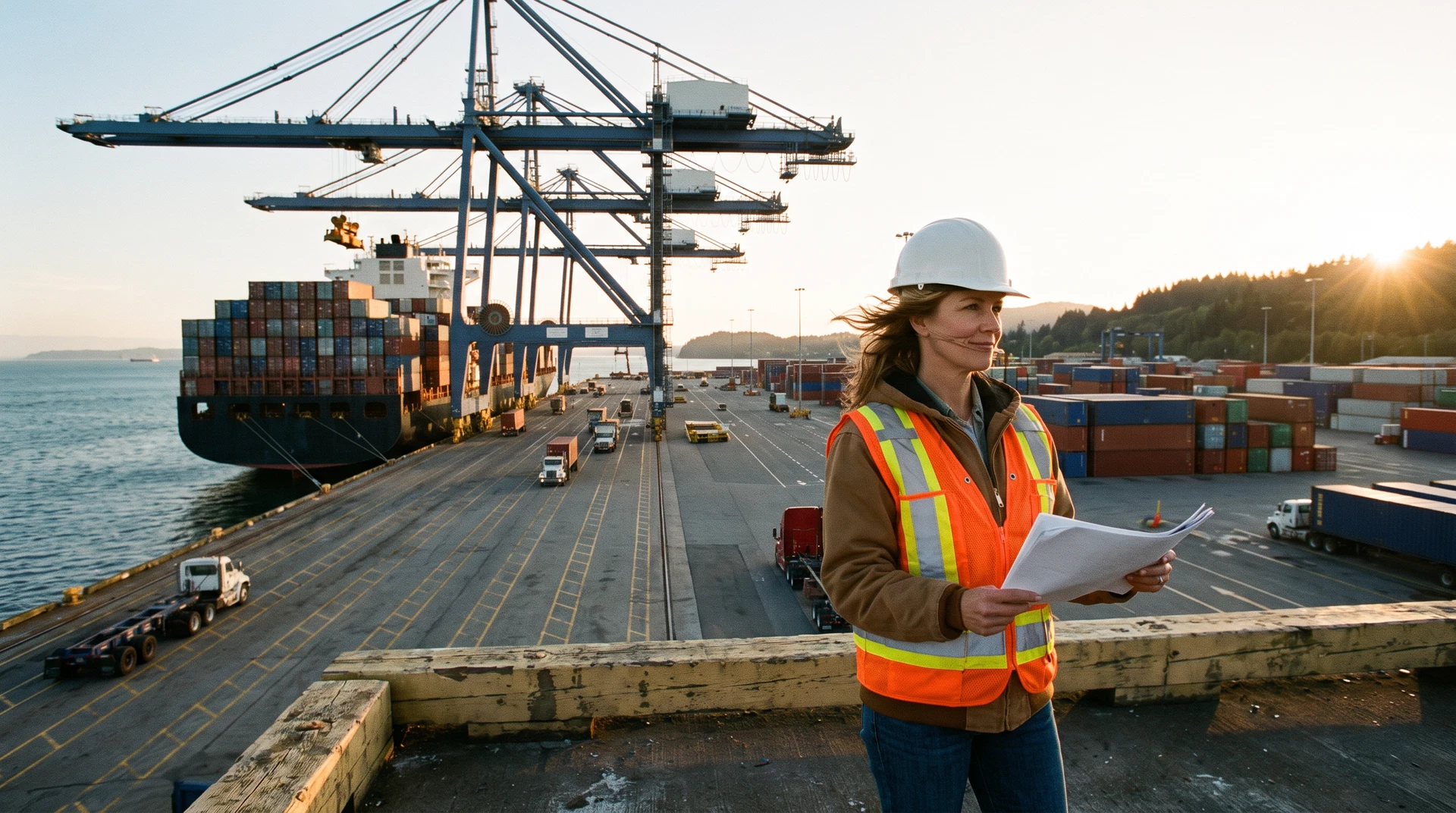
The working waterfronts of the Oregon, Washington, and California coasts are among the most economically vital — and most insurance-complex — business environments in the American West. From the Port of Coos Bay, Oregon's largest deep-draft coastal harbor, to Grays Harbor in Aberdeen, Washington, to the commercial fishing docks of Eureka and Crescent City in Northern California, these industrial waterfronts support thousands of jobs in timber, seafood, manufacturing, and maritime trade. And nearly every business operating on or adjacent to navigable water faces insurance exposures that standard commercial policies are specifically designed to exclude.
This is the coverage nobody talks about — not because it is unimportant, but because most general insurance agents simply do not have access to the specialty markets that write it. Marine General Liability, Terminal Operators Legal Liability, Longshore and Harbor Workers' Compensation (USL&H), railroad liability, marine pollution, and inland marine coverage for waterfront equipment are all specialty lines that require agents with deep expertise in maritime insurance. Gerald Ross Agency's marine insurance team has been placing these coverages for Oregon Coast businesses since 1935 — and this guide explains what every port, railroad, and industrial waterfront operator on the West Coast needs to know.
Get a Marine & Waterfront Insurance Quote
Gerald Ross Agency specializes in marine, port, and industrial waterfront insurance for Oregon Coast businesses. We access specialty markets that most general agents cannot.
Why Standard Commercial Policies Fail Waterfront Businesses
The single most important thing any waterfront business owner needs to understand is this: standard commercial general liability (CGL) policies contain a broad watercraft exclusion. This exclusion eliminates coverage for bodily injury or property damage arising from the ownership, maintenance, use, or entrustment of any watercraft — which, for a port terminal operator, commercial fishing dock, or marine contractor, describes virtually every significant liability exposure the business faces.
The Watercraft Exclusion: What It Means for Your Business
If a vessel is damaged while being loaded or unloaded at your dock, if a worker is injured on a floating platform, if a fuel spill occurs during vessel fueling operations, or if a guest falls on a gangway — a standard CGL policy will likely deny the claim under the watercraft exclusion. For any business operating on or adjacent to navigable water, a Marine General Liability (MGL) policy is not optional. It is the foundation of your coverage program.
Beyond the watercraft exclusion, standard commercial property policies typically exclude property located on or over water, and standard workers' compensation policies do not cover employees working on navigable waters, piers, docks, or terminals — those workers are covered under the federal Longshore and Harbor Workers' Compensation Act (LHWCA), which requires a separate USL&H policy. Understanding these gaps is the starting point for building a proper waterfront insurance program.
The Core Coverages Every Port and Waterfront Business Needs
| Coverage | What It Covers | Who Needs It |
|---|---|---|
| Marine General Liability (MGL) | Third-party bodily injury and property damage arising from marine operations, including vessel loading/unloading, dock operations, and waterfront activities. Replaces the watercraft exclusion in standard CGL. | All port operators, fishing docks, marine contractors, boat yards, marinas |
| Terminal Operators Legal Liability (TOLL) | Covers cargo damage while in the terminal's care, custody, and control — including loading, unloading, storage, and handling. Standard property policies exclude cargo in the terminal's care. | Port terminals, freight stations, cold storage facilities, seafood processors with dock operations |
| Longshore & Harbor Workers' Comp (USL&H) | Federal workers' compensation for employees working on navigable waters, piers, docks, terminals, and wharves. Required by the LHWCA — state workers' comp does not cover these workers. | Any employer with workers on navigable waters or waterfront structures |
| Marine Pollution Liability | Covers cleanup costs, third-party damages, and regulatory fines from fuel spills, chemical releases, and other pollution events. COFR compliance required for vessels over 300 gross tons. | Vessel operators, fuel docks, marine terminals, industrial waterfront facilities |
| Inland Marine / Equipment Floater | Covers cranes, forklifts, mobile equipment, and cargo handling equipment — both on-site and in transit. Standard commercial property policies often exclude mobile equipment over water. | Port terminals, marine contractors, shipyards, industrial waterfront operators |
| Commercial Hull & P&I | Hull coverage for owned vessels; Protection & Indemnity for third-party liability arising from vessel operations, including collision, crew injury, and wreck removal. | Any business owning or operating vessels — tugs, work boats, ferries, charter vessels |
| Cargo / Marine Cargo Insurance | Covers goods in transit by sea, including damage from weather, theft, and handling accidents. Separate from TOLL — covers the cargo owner's interest, not the terminal operator's liability. | Importers, exporters, freight forwarders, cargo owners |
Short-Line Railroad Insurance: Oregon, Washington, and California's Class III Carriers
Short-line railroads — Class III carriers operating fewer than 350 miles of track — are the unsung connectors of the West Coast's coastal economy. The Coos Bay Rail Link serves the Port of Coos Bay, connecting Oregon's largest coastal port to the national rail network. The Puget Sound and Pacific Railroad serves the Port of Grays Harbor in Aberdeen, Washington, hauling autos, forest products, and bulk commodities. The North Coast Railroad Authority historically served Humboldt Bay in Northern California. These short lines are economic lifelines for their communities — and they face insurance exposures that are fundamentally different from any other commercial business.
Railroad liability insurance is a specialty line that covers the unique risks of rail operations: derailments, grade crossing accidents, bridge and trestle failures, environmental contamination from fuel or cargo spills, and third-party property damage from train operations. The Insurance Institute for Highway Safety reports that grade crossing accidents remain a significant source of railroad liability claims — and for short lines operating in coastal communities where crossings are frequent and traffic is heavy, this exposure is particularly acute.
Railroad Liability
Covers bodily injury and property damage arising from train operations, including grade crossing accidents, derailments, and damage to adjacent property. Minimum limits for Class III short lines typically start at $5M per occurrence.
Railroad Protective Liability
Required by contractors working on or near railroad right-of-way. Protects the railroad from liability arising from contractor operations — typically required by the railroad as a condition of any work permit.
Environmental / Pollution Liability
Covers cleanup costs and third-party damages from fuel spills, hazardous cargo releases, and track-bed contamination. Derailments involving tank cars or hazardous materials can generate catastrophic environmental liability.
Inland Marine / Rolling Stock
Covers locomotives, railcars, and maintenance-of-way equipment against physical damage from derailment, collision, fire, and theft. Standard commercial property policies exclude rolling stock.
Workers' Compensation (FELA)
Railroad employees are covered under the Federal Employers Liability Act (FELA), not state workers' comp. FELA claims are fault-based and can be significantly more expensive than state workers' comp claims.
Commercial Auto / Truck
Covers railroad-owned vehicles, maintenance trucks, and hi-rail equipment (vehicles that can operate on both road and rail). Standard commercial auto policies may exclude hi-rail operations.
Longshore and Harbor Workers' Compensation (USL&H): The Federal Coverage Most Employers Miss
The Longshore and Harbor Workers' Compensation Act (LHWCA) is a federal law that provides workers' compensation benefits to maritime workers who are injured on navigable waters or on adjoining piers, docks, terminals, wharves, and marine railways. The key word is "federal" — state workers' compensation policies do not satisfy the LHWCA's requirements, and employers who fail to maintain USL&H coverage face personal liability for all benefits owed under the Act, plus potential civil penalties.
The coverage requirement is broader than most employers realize. It applies not just to longshoremen and dock workers, but to any employee who spends a meaningful portion of their time working on navigable waters or on structures adjoining navigable waters — including forklift operators at marine terminals, workers at seafood processing facilities with dock operations, marine construction workers, and employees of shipyards and boat repair facilities. On the Oregon Coast, where the line between land-based and maritime operations is often blurry, many employers unknowingly operate without the required USL&H coverage.
Benefits under the LHWCA are generally more generous than state workers' comp — and because the Act is fault-based in some circumstances, claims can be significantly more expensive. For employers in the Port of Coos Bay, Port of Brookings, Port of Gold Beach, Grays Harbor, Humboldt Bay, and other West Coast port communities, confirming that your workers' compensation program includes proper USL&H coverage is one of the most important risk management steps you can take. Gerald Ross Agency's marine insurance specialists can review your workforce and operations to determine your USL&H exposure and ensure you have the right coverage in place.
Key West Coast Ports and Their Insurance Landscape
Port of Coos Bay, Oregon
Oregon's largest deep-draft coastal harbor handles timber, wood chips, wind energy components, and bulk commodities. The Coos Bay Rail Link connects the port to the national rail network. Port tenants include marine terminals, seafood processors, industrial manufacturers, and ship repair facilities — each with distinct insurance needs. Gerald Ross Agency's Brookings headquarters gives us direct expertise in Coos Bay port insurance.
Port of Brookings and Port of Gold Beach, Oregon
These smaller Oregon Coast ports serve commercial fishing fleets, charter fishing operations, and recreational boating. Commercial fishing docks face unique exposures — including dock liability for vessels mooring alongside, fuel dock pollution liability, and cold storage product liability for seafood processors. See our dedicated guide to fishing and seafood business insurance for the full picture.
Port of Grays Harbor, Washington
The Port of Grays Harbor in Aberdeen, Washington, is served by the Puget Sound and Pacific Railroad and handles automobiles, forest products, and bulk cargo. The port's industrial tenants — including auto processors, log export facilities, and bulk terminal operators — require comprehensive marine terminal insurance programs including MGL, TOLL, USL&H, and pollution liability.
Humboldt Bay and Crescent City, Northern California
Humboldt Bay in Eureka is Northern California's largest natural bay north of San Francisco and supports a significant commercial fishing fleet, aquaculture operations, and industrial waterfront businesses. The Port of Crescent City serves Del Norte County's fishing and timber industries. California's high litigation environment and strict environmental regulations make proper marine insurance especially critical for Northern California waterfront businesses.
Does Your Waterfront Business Have the Right Coverage?
Gerald Ross Agency serves port businesses, fishing docks, marine contractors, and industrial waterfront operators across the Oregon Coast, Southern Oregon, and Northern California. We access specialty marine markets that most general agents cannot.
Marine Pollution Liability: A Federal Requirement That Standard Policies Exclude
The Oil Pollution Act of 1990 (OPA 90) and the Clean Water Act impose strict liability on vessel operators and facility owners for oil spills into navigable waters. Vessels over 300 gross tons operating in U.S. waters must maintain a Certificate of Financial Responsibility (COFR) — proof that they can pay for cleanup costs up to the statutory limit. Onshore facilities that handle oil or hazardous substances above threshold quantities must maintain financial assurance under SPCC (Spill Prevention, Control, and Countermeasure) regulations.
The critical point for waterfront businesses is that standard CGL and MGL policies typically contain pollution exclusions that eliminate coverage for gradual or sudden pollution events. A dedicated marine pollution liability policy — or a pollution liability endorsement to the MGL — is required to cover fuel spill cleanup costs, third-party damages, and regulatory fines. For fuel docks, marine terminals handling bulk liquids, and industrial facilities adjacent to navigable water, this coverage is not optional. The cost of a single fuel spill cleanup on the Oregon Coast can easily exceed $500,000 — far more than most businesses carry in uninsured reserves. Gerald Ross Agency's marine insurance team can help you assess your pollution exposure and find the right coverage.
Frequently Asked Questions
Does my standard commercial general liability policy cover my dock or marine terminal operations?
Almost certainly not for the most significant exposures. Standard CGL policies contain a broad watercraft exclusion that eliminates coverage for bodily injury and property damage arising from watercraft operations, loading and unloading, and most marine activities. A Marine General Liability (MGL) policy is required for any business operating on or adjacent to navigable water.
What is USL&H insurance and do I need it?
The Longshore and Harbor Workers' Compensation Act (LHWCA) requires employers to maintain a separate federal workers' compensation policy — called USL&H — for employees working on navigable waters, piers, docks, terminals, and wharves. State workers' comp does not satisfy this requirement. Employers who fail to maintain USL&H coverage face personal liability for all LHWCA benefits, plus civil penalties. If any of your employees work on or adjacent to navigable water, you likely need USL&H coverage.
What is Terminal Operators Legal Liability (TOLL) insurance?
TOLL insurance covers the terminal operator's legal liability for loss or damage to cargo while it is in the terminal's care, custody, and control — during loading, unloading, storage, and handling. Standard commercial property policies exclude cargo belonging to others. For any port terminal, freight station, or cold storage facility handling third-party cargo, TOLL is an essential coverage.
What insurance does a short-line railroad need?
Short-line railroads need specialty railroad liability insurance (not standard CGL), rolling stock coverage for locomotives and railcars, environmental/pollution liability for derailment events, Federal Employers Liability Act (FELA) coverage for employee injuries, and commercial auto for road vehicles. Minimum liability limits for Class III short lines typically start at $5M per occurrence. Most standard commercial insurers do not write railroad liability — it requires access to specialty markets.
Does Gerald Ross Agency serve Washington and California waterfront businesses?
Yes. Gerald Ross Agency is licensed in Oregon, Washington, and California and serves port businesses, fishing docks, marine contractors, and industrial waterfront operators throughout the West Coast. Our marine insurance specialists have access to specialty markets for MGL, TOLL, USL&H, railroad liability, and marine pollution coverage.
What is a COFR and who needs one?
A Certificate of Financial Responsibility (COFR) is required under the Oil Pollution Act of 1990 for vessels over 300 gross tons operating in U.S. waters, and for certain offshore facilities. It certifies that the vessel or facility owner can pay for oil spill cleanup costs up to the statutory limit. COFRs are issued by the U.S. Coast Guard and must be renewed periodically. Marine pollution liability insurance is typically used to satisfy the COFR financial responsibility requirement.
Protect Your Port or Waterfront Business with Gerald Ross Agency
Since 1935, Gerald Ross Agency has been the marine insurance specialist for Oregon Coast port businesses, commercial fishing docks, and industrial waterfront operators. We access specialty markets for MGL, TOLL, USL&H, railroad liability, and marine pollution coverage — and we serve businesses across the Oregon Coast, Southern Oregon, Northern California, and the broader Pacific Coast.


