


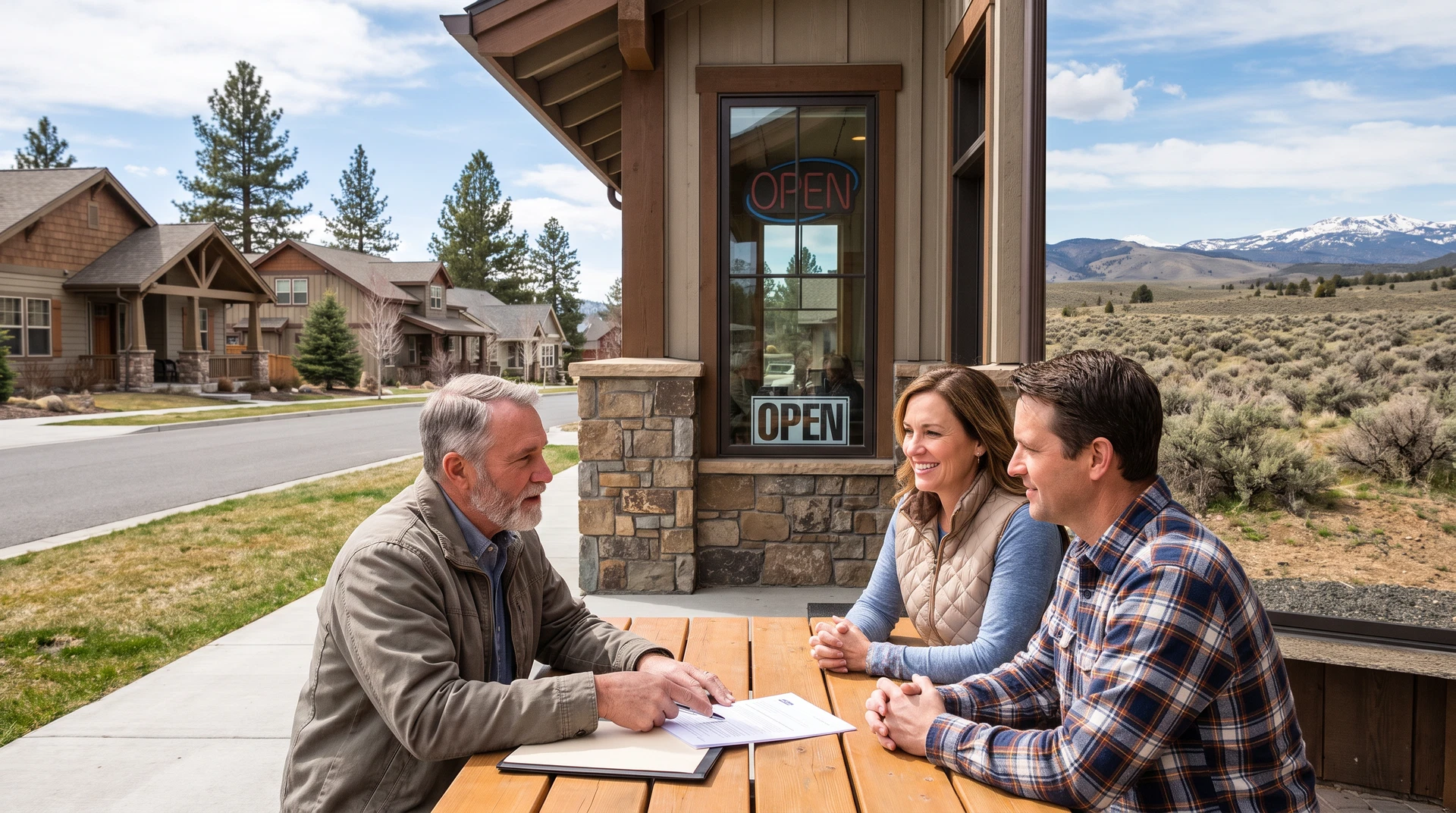

The policy sitting in your filing cabinet — the one you bought when you first started farming, or when you refinanced the property, or when your neighbor recommended a carrier — was written for the farm you had at that moment. But farms evolve. Operations expand. You hired seasonal workers, added a farm stand, started selling at the farmers market, converted the old dairy barn into a venue, or bought a new GPS-guided tractor. The policy almost certainly has not kept up. And in agriculture, the gap between what you think you are covered for and what you are actually covered for can be the difference between recovering from a loss and losing the operation.
Oregon has approximately 38,000 farms, ranging from small coastal market gardens to large Willamette Valley grain and grass seed operations, Rogue Valley vineyards, and Southern Oregon cattle ranches. The diversity of operations means that no two farm policies are identical — and the gaps that matter most depend entirely on how your specific operation has changed. What follows are the six most common coverage gaps we find when we review farm and ranch policies for Oregon families, and what you can do to close them.
When Did You Last Review Your Farm Policy?
If your operation has changed in any way — new equipment, seasonal workers, a farm stand, agritourism activities — your current policy may have gaps you don't know about. Gerald Ross Agency offers free farm policy reviews for Oregon and Northern California farm families.
Gap 1: Equipment Breakdown Is Not the Same as Equipment Damage
This is the most consistently overlooked gap in agricultural insurance, and it catches farm families off guard at the worst possible moments — mid-harvest, during peak irrigation season, when the milking system goes down at 4 a.m. Standard farm property policies cover equipment damaged by external perils: fire, lightning, hail, theft, windstorm. What they do not cover is mechanical or electrical failure — the internal breakdown that stops a piece of equipment from working even when it looks perfectly intact from the outside.
A tractor motor that seizes. An irrigation pump that burns out. A grain dryer electrical system that shorts out. A milking machine mechanical failure. A compressor pressure vessel failure. A GPS guidance system that fails due to an electrical surge. None of these are covered under a standard farm property policy. Equipment breakdown coverage — sometimes called boiler and machinery coverage — is a separate endorsement or policy that specifically addresses sudden, internal failures. It can cover the cost of repair or replacement, lost income during downtime, spoilage of stored goods due to system failure, and even expedited expenses for temporary rental equipment.
Modern farms are far more dependent on sophisticated electronics and automated systems than they were even a decade ago. GPS-guided tractors, automated irrigation controllers, climate-controlled storage, computerized milking systems — all of these represent significant capital investment and significant operational dependency. If any of them fail due to an internal mechanical or electrical cause, the standard farm policy will not respond. The equipment breakdown endorsement is not expensive relative to the exposure it covers, and it is one of the first things we add when reviewing a farm policy.
Gap 2: "Independent Contractors" Who Are Actually Employees
Oregon agriculture depends heavily on seasonal and harvest labor. Many farm operations classify these workers as independent contractors to avoid the administrative burden and cost of workers' compensation coverage. This is one of the most legally and financially dangerous practices in agricultural risk management, and it creates a coverage gap that can be catastrophic.
Oregon law requires workers' compensation coverage for most employees, including agricultural workers, with narrow exemptions for family members and certain very small operations. The critical issue is that the label "independent contractor" does not determine the legal classification — the actual working relationship does. If you control when, where, and how a worker performs their tasks, Oregon law is likely to classify them as an employee regardless of what your contract says. The Oregon Bureau of Labor and Industries and the Workers' Compensation Division both conduct audits and make independent determinations.
The coverage gap works like this: farm liability policies cover bodily injury to third parties — visitors, customers, neighbors — but they explicitly exclude injuries to employees. That exclusion exists because employee injuries are supposed to be covered by workers' compensation. If a worker you have classified as an independent contractor is injured, is deemed an employee, and you have no workers' comp coverage, you face the claim with no insurance backstop at all. You also face potential OSHA penalties, back premium assessments, and personal liability. The solution is straightforward: carry workers' compensation if you have any workers who could be classified as employees, and work with an agent who understands Oregon's agricultural labor classification rules.
Not Sure If Your Workers Are Covered?
Worker classification is one of the most complex areas of agricultural insurance. Gerald Ross Agency can review your current coverage and help you understand your exposure before a claim happens. We serve farm and ranch families across Oregon and Northern California.
Gap 3: Product Liability for What You Sell Off the Farm
Standard farm liability coverage is designed to protect you from bodily injury and property damage that occurs on your farm premises or arises directly from your farming operations. What it typically does not cover — or covers only narrowly — is product liability: the legal exposure that arises when a product you have sold causes harm to someone after it has left your property.
This matters enormously for the growing number of Oregon farms that sell directly to consumers. Farmers market vendors, CSA box operations, farm stands, direct-to-restaurant sales, and value-added product sales — jams, cheeses, cured meats, baked goods, fermented products — all create product liability exposure that a basic farm policy may not address. If a customer becomes ill from your eggs, your raw milk, your smoked salmon, or your homemade preserves, and they file a claim against you, the question of whether your farm policy covers that claim depends entirely on the specific language of your policy and whether you have a product liability endorsement.
Oregon's new Farm Store law (House Bill 4153, effective 2026) expands the ability of eligible farms to conduct retail sales and host agritourism activities on agricultural land. This is a significant opportunity for Oregon farm families — and a significant expansion of product liability exposure. If you are taking advantage of the new law to expand your direct sales, your insurance program needs to keep pace. An independent agent who understands both the commercial and agricultural insurance markets can structure the right combination of farm liability, product liability, and commercial general liability to cover your expanded operations. You can learn more about coverage for direct-to-consumer food producers in our dedicated guide on commercial insurance for Oregon food producers.
Gap 4: The Farm Truck That Is Not Actually Covered
Agricultural vehicle insurance exists in three distinct categories, and the differences between them matter enormously when a claim occurs. Personal auto insurance covers vehicles used for personal transportation — it explicitly excludes business and commercial use. Farm auto insurance covers vehicles used primarily on the farm and occasionally on public roads for farm purposes. Commercial auto insurance covers vehicles used regularly on public roads for business purposes, with higher liability limits and broader coverage for complex commercial use.
The gap emerges when a farm vehicle crosses the line between farm use and regular commercial use without the owner realizing it. A pickup truck used to haul produce to a farmers market every Saturday, deliver eggs to restaurants twice a week, or transport livestock to auction regularly is not a farm vehicle in the eyes of most insurers — it is a commercial vehicle. If that truck is covered under a personal auto policy, the policy will not respond to an accident that occurs during a business delivery. If it is covered under a farm auto policy but the use pattern exceeds what farm auto is designed to cover, the claim may be disputed.
The practical test is straightforward: how often is the vehicle driven on public roads for farm business purposes, and what is the primary use? If the answer is "regularly" and "farm business," you likely need commercial auto coverage. For farm families with multiple vehicles used in different ways, a review of each vehicle's actual use pattern — not just how it is registered or how it was historically insured — is the right starting point. Our guide to commercial auto vs. personal auto insurance in Oregon covers this distinction in detail.
Gap 5: Agritourism Guests Are Not Farm Visitors
The line between a farm operation and a hospitality business has blurred significantly as Oregon farms have diversified into agritourism. U-pick operations, farm tours, farm-to-table dinners, pumpkin patches, lavender festivals, wedding venues, educational programs, and farm stays are all forms of agritourism — and they all create a liability exposure that is fundamentally different from traditional farm liability.
Standard farm liability is designed for the risks of farming: a visitor who falls in a barn, a neighbor whose property is damaged by farm equipment, a customer who is injured by a farm animal. It is not designed for the commercial hospitality exposure of hosting hundreds of paying guests at a harvest festival, running a wedding venue in a converted barn, or operating a farm stay with overnight guests. When you invite the public onto your property for commercial purposes, you have crossed into territory that typically requires an agritourism endorsement or a commercial general liability policy.
Oregon's Agritourism Inherent Risk Law (ORS 30.671 to 30.677) provides some liability protection for operators who comply with its requirements — including posting specific warning signs at entry points. But the law explicitly does not protect against your own negligence, and it does not replace insurance. If a guest is injured because of a condition you knew about or should have known about, the inherent risk law will not shield you. An agritourism endorsement, combined with proper signage and safety practices, is the appropriate risk management approach. Our comprehensive guide to agritourism insurance in Oregon covers this topic in depth.
Gap 6: Structures That Have Changed Their Purpose
Farm policies cover farm structures — barns, equipment sheds, grain storage facilities, livestock housing — at farm replacement cost, but only when those structures are used for farming purposes. When a structure changes its primary use, the farm policy coverage may no longer apply, and the gap can be significant.
The most common scenarios we encounter: an old dairy barn converted to a wedding and event venue; a historic farmhouse converted to a vacation rental or Airbnb; a former equipment shed converted to a farm store or commercial kitchen; a new structure built specifically for agritourism or retail use. In each case, the structure is no longer a farm structure in the functional sense, and the farm policy may not cover it at replacement cost — or at all. A converted barn used as an event venue has commercial property exposure, commercial liability exposure, and potentially liquor liability exposure if alcohol is served. None of these are addressed by a standard farm policy.
The solution requires a conversation about how each structure on the property is actually being used, not how it was originally built or how it is currently classified on the policy. Farm families who have diversified their operations often need a hybrid insurance program that combines a farm policy for the agricultural operations with commercial property and liability coverage for the non-agricultural activities. This is exactly the kind of program that an independent agent — who has access to both agricultural and commercial markets — is positioned to structure correctly.
The Annual Review: The Single Most Important Thing You Can Do
Every one of the gaps described above has a common root cause: a policy that was written for an operation that no longer exists in its original form. Farms evolve constantly — equipment is upgraded, operations are diversified, workers are hired, structures are repurposed, new markets are pursued. Insurance programs, left unreviewed, do not evolve with them.
The standard recommendation in agricultural risk management is an annual policy review — a structured conversation with your agent about what has changed in the past year and what those changes mean for your coverage. The triggers for an immediate review, rather than waiting for the annual renewal, include: purchasing new equipment valued over $25,000; hiring workers for the first time or significantly expanding your workforce; starting any direct-to-consumer sales activity; adding any agritourism component to your operation; converting any structure to a new use; or adding a rental property to the farm.
The review itself does not need to be complicated. It is a conversation about what you have, what you do, and what has changed. An experienced agricultural insurance agent will know the right questions to ask and the right coverage solutions to propose. What it should not be is a passive renewal — signing the same policy year after year without examining whether it still fits your operation.
Gerald Ross Agency has been serving farm and ranch families across Oregon and Northern California since 1935. We understand the diversity of agricultural operations in our region — from coastal market gardens to Rogue Valley vineyards to Southern Oregon cattle ranches — and we have carrier relationships across both the agricultural and commercial insurance markets. If you have questions about your current farm policy, or if your operation has changed in any of the ways described above, we encourage you to reach out for a no-obligation policy review. You can also explore our resources on farm and ranch insurance in Oregon, our guide to agritourism insurance, and our overview of commercial insurance for Oregon businesses.
Frequently Asked Questions
Does my standard farm policy cover equipment breakdown?▼
Are seasonal farm workers covered under my farm policy?▼
Does my farm liability policy cover products I sell at a farmers market?▼
What kind of auto insurance do I need for my farm trucks?▼
Does my farm policy cover guests who visit for agritourism activities?▼
What happens if I convert a barn to an event venue or add a rental cabin?▼
How often should I review my farm insurance policy?▼
Your Farm Has Changed. Has Your Policy Kept Up?
Gerald Ross Agency has served Oregon and Northern California farm and ranch families since 1935. We offer free farm policy reviews — a structured conversation about what you have, what you do, and whether your current coverage actually protects it. No pressure, no obligation. Just honest answers from an independent agent who knows agricultural insurance.


