


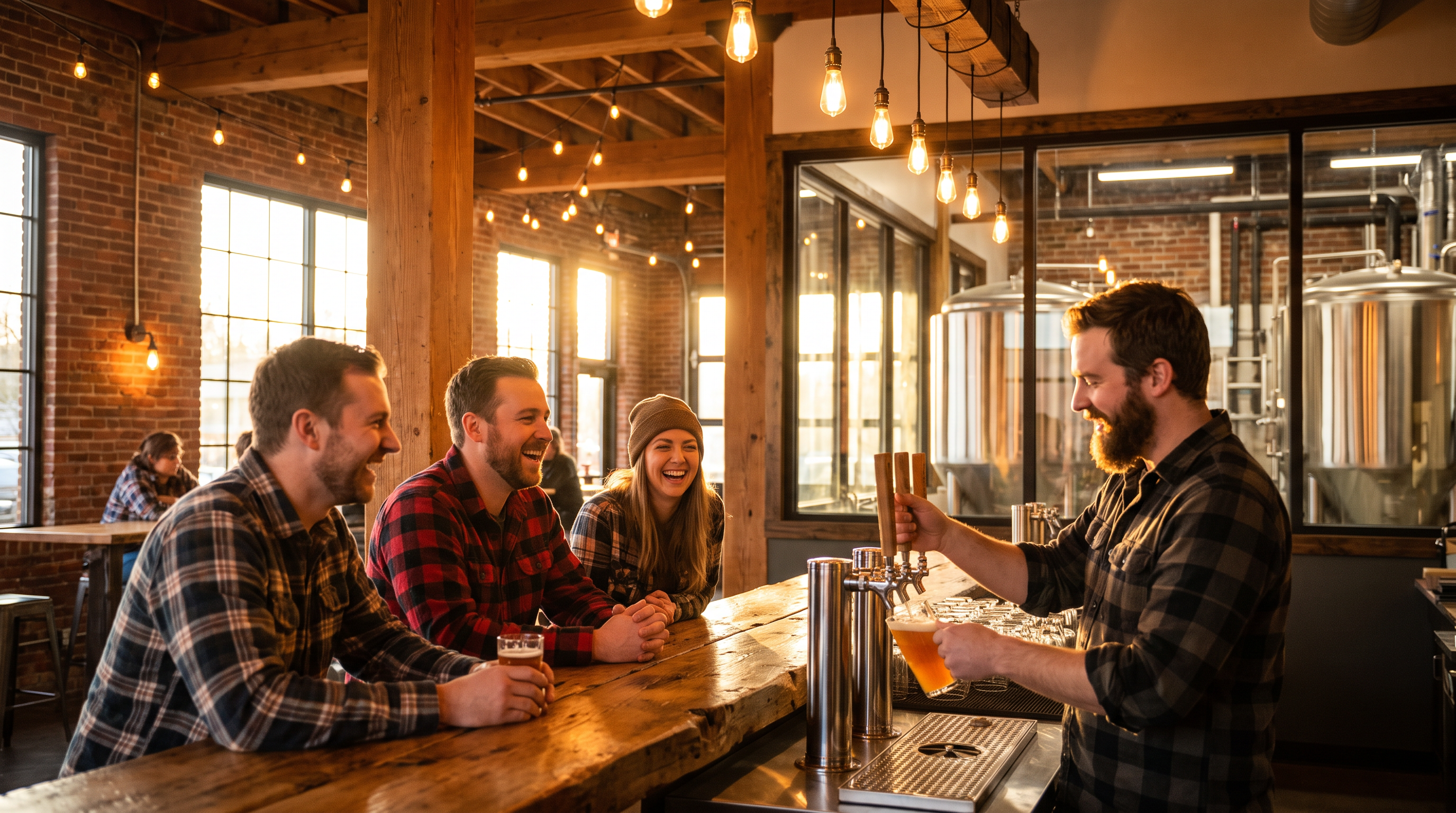

Oregon's craft beverage industry is one of the most vibrant in the country. From the coastal breweries of Lincoln City and Brookings to the Rogue Valley's award-winning wineries, from the taprooms of Coos Bay to the tasting rooms of Humboldt County, alcohol service is woven into the fabric of the region's economy and culture. But every pour carries a legal risk that most business owners — and many event hosts — significantly underestimate. The standard commercial general liability policy that covers your slip-and-fall claims, your property damage disputes, and your product liability exposure almost certainly does not cover alcohol-related claims. Understanding Oregon's dram shop law, California's liability framework, and the insurance products designed to fill the gap is essential for any business or individual that serves alcohol in this region.
Does Your Policy Actually Cover Alcohol-Related Claims?
Most standard GL policies exclude liquor liability entirely. Gerald Ross Agency can review your current coverage, identify the gap, and find the right liquor liability policy for your bar, brewery, winery, restaurant, or event — at competitive rates from multiple carriers.
Part One: The Liquor Exclusion in Your General Liability Policy
The single most important thing to understand about liquor liability is that it is almost certainly excluded from your standard commercial general liability (CGL) policy. The Insurance Services Office (ISO) standard CGL form includes a liquor liability exclusion that removes coverage for bodily injury or property damage arising out of the selling, serving, or furnishing of any alcoholic beverage. This exclusion applies to any business whose operations include causing or contributing to the intoxication of any person, selling or serving alcohol to a person under the legal drinking age, or selling or serving alcohol to a person already under the influence.
The exclusion is broad and intentional. Insurers treat alcohol-related liability as a distinct and quantifiable risk that requires its own underwriting, its own pricing, and its own policy form. For a bar, restaurant, brewery, winery, or caterer, the absence of liquor liability coverage in your CGL is not a gap — it is a complete absence of coverage for one of your most significant liability exposures. A single alcohol-related claim can easily exceed $500,000 in total costs when you factor in medical expenses, lost wages, pain and suffering damages, and legal defense fees.
There is one important exception: host liquor liability. When a business serves alcohol incidentally — not as a primary business activity — the CGL policy may include host liquor liability coverage. A law firm that serves wine at a client appreciation event, a retail store that offers beer at a grand opening, or a hotel that provides complimentary cocktails at a welcome reception may have host liquor liability coverage under their existing CGL. But this coverage is narrow, and any business for which alcohol service is a regular part of operations should not rely on it. Confirming with your independent insurance agent exactly what your CGL covers and excludes is the essential first step.
Who Needs a Separate Liquor Liability Policy?
Any business or individual whose operations regularly involve selling, serving, or distributing alcohol needs a standalone liquor liability policy. The list is longer than most people assume:
Licensed premises — bars, taverns, nightclubs, restaurants, brewpubs, taprooms, winery tasting rooms, distillery tasting rooms, and any other OLCC-licensed or California ABC-licensed establishment that serves alcohol on-premises. For these businesses, liquor liability coverage is not just a good idea — in Oregon, it is a legal requirement for obtaining and maintaining your license.
Caterers and mobile bartenders — businesses that provide alcohol service at off-site events face the same dram shop exposure as fixed-location establishments, often with the added complexity of serving guests in unfamiliar venues with less control over the environment.
Event venues — wedding venues, event centers, resorts, and bed-and-breakfasts that allow or provide alcohol service on their premises. Even if the venue does not directly serve the alcohol, allowing alcohol consumption on your property creates exposure that a standard property and liability policy will not cover.
Festivals and special events — brewfests, wine festivals, food and beverage events, and community celebrations that serve alcohol. Oregon's OLCC Special Event license requires liquor liability coverage, and California's ABC licensing process has similar requirements for temporary event permits.
Private event hosts — individuals hosting weddings, graduation parties, corporate events, or other gatherings where alcohol is served. While the legal exposure for private hosts is more limited than for commercial licensees (particularly in California), the financial risk of an alcohol-related incident at a private event can be devastating. Host liquor liability coverage is available as a standalone event policy and is typically very affordable.
Part Two: Oregon's Dram Shop Law — ORS 471.565
Oregon's dram shop statute — Oregon Revised Statute 471.565 — governs the civil liability of licensed establishments and social hosts when an intoxicated person they served causes injury to a third party. The statute was originally enacted as a limitation on liability (replacing broader common-law claims), but its scope and interpretation have evolved significantly through court decisions, most recently with a 2024 Oregon Supreme Court ruling that found portions of the statute's limitation on patron self-claims to be unconstitutional under Article I, Section 10 of the Oregon Constitution.
Under ORS 471.565(2), a licensed establishment or social host can be held liable for damages caused by an intoxicated patron or guest only if the plaintiff proves by clear and convincing evidence — a higher standard than the usual preponderance of evidence — that the licensee or social host served or provided alcohol to the patron while the patron was visibly intoxicated, and that the plaintiff did not substantially contribute to the patron's intoxication. The "substantially contribute" element is unusual in tort law and has been interpreted broadly by Oregon courts to include providing alcohol, encouraging consumption, or facilitating consumption in any manner.
The statute also includes a notice requirement: a plaintiff must give written notice of a claim to the licensee within 180 days of the injury (or within one year for wrongful death claims). This notice requirement is a procedural hurdle that can bar otherwise valid claims, but it is not a defense that licensees should rely on — the underlying liability exposure remains real and significant.
For Oregon Coast establishments — bars and restaurants in Lincoln City, Newport, Florence, Coos Bay, Gold Beach, and Brookings — the dram shop exposure is amplified by the region's tourism economy. Visitors who are unfamiliar with local roads, who may have traveled from out of state, and who are in a vacation mindset are more likely to drink heavily and less likely to make safe transportation choices. The combination of high tourist volume, limited transportation alternatives, and challenging coastal roads creates a risk environment that demands robust liquor liability coverage.
Oregon OLCC Insurance Requirements
Oregon Administrative Rule 845-005-0400 requires every OLCC licensee that allows on-premises alcohol consumption to maintain liquor liability insurance of not less than $300,000 per occurrence. The OLCC must be listed as a certificate holder on the insurance certificate. The OLCC will not issue a Temporary Letter of Authority to Operate or a final license without proof of compliant coverage, and failure to maintain continuous coverage can result in license suspension or revocation.
The $300,000 minimum is a floor, not a recommendation. For a busy coastal bar or a winery tasting room that serves hundreds of guests on a summer weekend, $300,000 in liquor liability coverage may be insufficient to fully protect the business in a serious incident. Most insurance professionals recommend a minimum of $1,000,000 per occurrence for any establishment with significant alcohol service volume, with a commercial umbrella policy providing additional excess coverage. The commercial umbrella is particularly important for establishments that also have significant assets — real property, equipment, inventory — that could be at risk in a large judgment.
Liquor Liability Coverage Summary by Business Type
| Business / Situation | Coverage Needed | Oregon Requirement | GL Covers It? |
|---|---|---|---|
| Bar / Tavern / Nightclub | Commercial Liquor Liability | $300,000 min (OLCC) | No — excluded |
| Restaurant with Full Bar | Commercial Liquor Liability | $300,000 min (OLCC) | No — excluded |
| Brewery / Taproom | Commercial Liquor Liability | $300,000 min (OLCC) | No — excluded |
| Winery Tasting Room | Commercial Liquor Liability | $300,000 min (OLCC) | No — excluded |
| Distillery Tasting Room | Commercial Liquor Liability | $300,000 min (OLCC) | No — excluded |
| Caterer / Mobile Bartender | Commercial Liquor Liability | OLCC license required | No — excluded |
| Event Venue (alcohol allowed) | Host Liquor Liability or Commercial LL | Varies by license type | Often excluded |
| Festival / Special Event | Event Liquor Liability | $300,000 min (OLCC Special Event) | No — excluded |
| Private Event Host | Host Liquor Liability (event policy) | None (private) | Sometimes included |
| Corporate Event / Office Party | Host Liquor Liability endorsement | None (private) | Sometimes included |
Is Your OLCC Minimum Enough?
Oregon's $300,000 minimum is a legal floor, not a recommendation. Gerald Ross Agency can review your alcohol service volume, venue capacity, and existing coverage to determine the right limits — and find competitive pricing from multiple carriers.
Part Three: California's Dram Shop Framework — BPC §25602 and Common Law
California's approach to alcohol liability is fundamentally different from Oregon's — and in some ways more complex. California Civil Code §1714 explicitly states that furnishing alcohol is not the proximate cause of injuries resulting from intoxication; rather, the consumption of alcohol is the proximate cause. This provision effectively shields California bars, restaurants, and social hosts from most civil dram shop liability for serving alcohol to adult patrons.
However, there are two important exceptions. Under Business and Professions Code §25602.1, a licensed establishment can be held civilly liable if it serves alcohol to an obviously intoxicated minor — a person under 21 — and that minor then causes injury to another person. The liability extends to both the injuries suffered by the minor and the injuries the minor inflicts on others. This exception applies to licensed businesses and, in some circumstances, to unlicensed individuals who sell alcohol to obviously intoxicated minors.
The second exception is common law negligence. Even where statutory dram shop liability does not apply, a California licensee has a common law duty to exercise reasonable care for the safety of patrons. Reckless conduct — serving alcohol in a manner that shows conscious indifference to the consequences — can give rise to civil liability regardless of the patron's age. For Northern California establishments in Humboldt, Mendocino, Del Norte, and Siskiyou counties, where the Emerald Triangle's unique risk environment includes remote roads and limited transportation alternatives, the practical exposure from alcohol-related incidents remains significant even under California's more limited statutory framework.
California's Department of Alcoholic Beverage Control (ABC) does not mandate liquor liability insurance as a condition of licensing in the same way Oregon's OLCC does. However, many California venues, landlords, and event organizers require proof of liquor liability coverage as a condition of their own contracts. And regardless of statutory requirements, the financial exposure from a single alcohol-related incident — particularly one involving an injured minor — makes liquor liability coverage essential for any California establishment that serves alcohol.
Part Four: What a Liquor Liability Policy Actually Covers
A standalone liquor liability policy is designed to cover the specific exposures created by alcohol service. Understanding what it covers — and what it does not — is essential for making sure your business is fully protected.
Third-Party Bodily Injury and Property Damage
The core coverage of a liquor liability policy is third-party bodily injury and property damage arising from the service of alcohol. If a patron you served becomes intoxicated and causes a car accident, injures another person in a fight, or damages property, your liquor liability policy pays for the resulting claims. This includes medical expenses, lost wages, pain and suffering damages, property repair or replacement costs, and legal defense fees — which can be substantial even in cases that are ultimately resolved in your favor.
Assault and Battery Coverage
For bars, nightclubs, and other establishments where alcohol service can contribute to altercations, assault and battery coverage is a critical component of a comprehensive liquor liability program. Standard CGL policies typically exclude intentional acts, and many liquor liability policies also exclude assault and battery unless it is specifically added. For establishments with late-night operations, live music, or high-volume alcohol service, assault and battery coverage should be explicitly confirmed in the policy.
Legal Defense Costs
One of the most valuable components of any liability policy is the insurer's duty to defend. When a claim is made against your establishment, the insurer assigns defense counsel and pays attorney fees, court costs, and expert witness fees — regardless of whether the claim is ultimately valid. For a small coastal bar or a family-owned winery, the cost of defending a single lawsuit can easily exceed $50,000 even if you win. Without insurance, these costs come directly out of your business.
What Liquor Liability Does Not Cover
Liquor liability insurance covers third-party claims — claims made by people other than the intoxicated patron. It does not cover the patron's own injuries resulting from their own intoxication (though Oregon's 2024 Supreme Court ruling has complicated this for licensed establishments). It does not cover property damage to your own premises. It does not cover workers' compensation claims for employees injured by intoxicated patrons — those require a separate workers' compensation policy. And it does not cover criminal fines or penalties resulting from OLCC or ABC license violations.
For a comprehensive protection program, liquor liability should be part of a broader commercial insurance package that includes commercial property, general liability, workers' compensation, commercial auto, and — for establishments with significant assets — a commercial umbrella. The complete guide to restaurant and bar insurance in Oregon covers the full range of coverages that food and beverage businesses need.
Part Five: Regional Considerations for Oregon and Northern California
The Oregon Coast and Northern California present a distinctive risk environment for alcohol-serving businesses. The combination of a strong tourism economy, limited public transportation, challenging roads, and a vibrant craft beverage culture creates a liquor liability exposure that is higher than the national average for comparable businesses.
Along the Oregon Coast — from Astoria through Lincoln City, Newport, Florence, Coos Bay, and Brookings — coastal breweries, wine bars, and restaurants serve large numbers of tourists during the summer season. Many of these visitors are driving Highway 101, a two-lane coastal highway with limited passing opportunities, sharp curves, and significant pedestrian and bicycle traffic in tourist areas. The combination of alcohol service and challenging driving conditions amplifies the dram shop exposure for coastal establishments. Adequate liquor liability limits — well above the OLCC minimum — are essential for any high-volume coastal establishment.
In Southern Oregon's Rogue Valley — Medford, Ashland, Jacksonville, Grants Pass — the region's growing wine industry has created dozens of winery tasting rooms and wine bars that attract visitors from across the Pacific Northwest. The Rogue Valley's wine tourism economy is a significant asset, but it also creates concentrated alcohol service exposure in a region where wildfire risk has already made commercial insurance more challenging. Wineries and tasting rooms in the Rogue Valley should review their liquor liability coverage as part of their broader winery and vineyard insurance program.
In Northern California's Humboldt, Mendocino, Del Norte, and Siskiyou counties, the craft beverage industry has grown significantly over the past decade, with breweries, cideries, and cannabis-adjacent beverage businesses serving a mix of local and tourist customers. California's more limited dram shop statute provides somewhat less exposure for licensed establishments than Oregon's, but the common-law negligence exposure remains real, and the financial consequences of an uninsured alcohol-related claim can be catastrophic for a small business. An independent agent with experience in Northern California's unique risk environment can help businesses find the right coverage at competitive rates.
Part Six: Choosing the Right Liquor Liability Policy
Not all liquor liability policies are created equal, and the differences matter significantly when a claim occurs. When evaluating liquor liability coverage, there are several key factors to consider beyond the premium.
Per-occurrence vs. aggregate limits — The per-occurrence limit is the maximum the insurer will pay for any single claim. The aggregate limit is the maximum for all claims during the policy period. For a busy establishment, a single incident can generate multiple claimants — for example, a drunk driver who injures several people in an accident. Make sure both limits are adequate for your exposure.
Assault and battery inclusion — As noted above, assault and battery is often excluded from standard liquor liability policies. For any establishment with late-night operations or high-volume alcohol service, confirming that assault and battery coverage is included — or adding it as an endorsement — is essential.
Defense inside vs. outside limits — Some policies pay defense costs inside the policy limits, meaning that attorney fees reduce the amount available for settlements or judgments. Others pay defense costs outside the limits, preserving the full policy limit for claims. Outside-limits defense coverage is significantly more valuable and is worth paying a higher premium to obtain.
Claims-made vs. occurrence form — Most liquor liability policies are written on an occurrence form, meaning coverage applies to incidents that occur during the policy period regardless of when the claim is filed. Some are written on a claims-made form, which only covers claims filed during the policy period. Understanding which form your policy uses is important when you change carriers or allow coverage to lapse.
Working with an independent agent who has access to multiple liquor liability carriers — including specialty markets for high-risk establishments, late-night venues, and businesses in challenging geographic areas — is the most effective way to find the right combination of coverage terms and competitive pricing. Gerald Ross Agency works with both admitted and surplus lines markets to find solutions for establishments that standard carriers may decline or surcharge heavily. For more information on the full range of commercial insurance options available through our agency, or to explore related topics such as what to do when your carrier drops you or the insurance risks of hosting public events on private property, visit our blog or contact us directly.
Frequently Asked Questions
Does Oregon require bars and restaurants to carry liquor liability insurance?▼
What is the difference between liquor liability and host liquor liability insurance?▼
Can a bar or restaurant in Oregon be sued if a customer causes an accident after leaving?▼
Does California have dram shop liability for bars and restaurants?▼
Does my general liability policy cover alcohol-related claims?▼
What does liquor liability insurance actually pay for?▼
Do I need liquor liability insurance for a one-day event where alcohol is served?▼
Close the Liquor Liability Gap Before a Claim Does It for You
Whether you operate a coastal brewery, a Rogue Valley winery, a Northern California bar, or you are hosting a private event where alcohol will be served, Gerald Ross Agency has the carrier relationships and local expertise to find the right liquor liability coverage at competitive rates. Do not wait for a claim to discover your GL policy does not cover it.


