


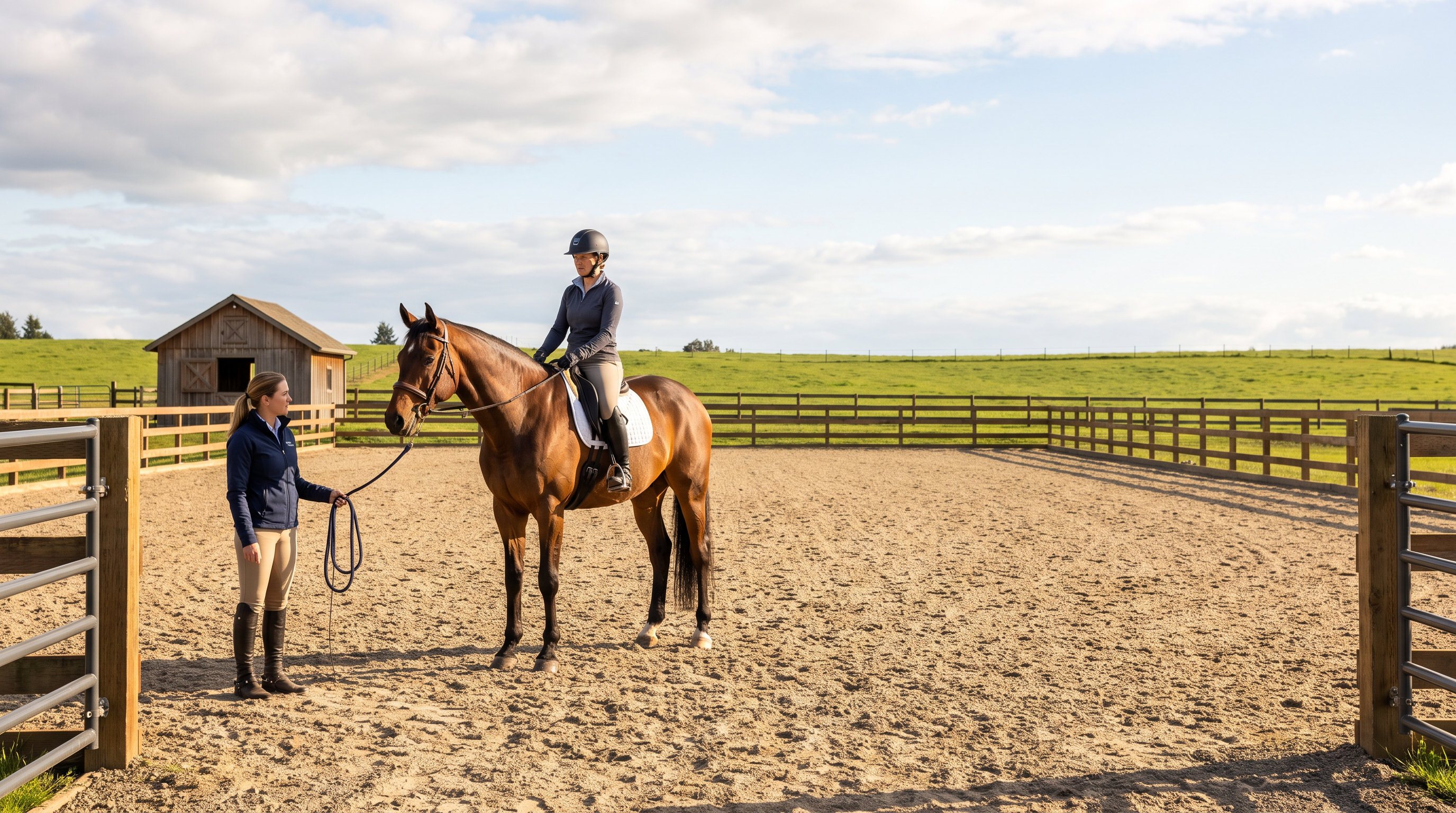

A horse business is rarely just a barn. It may board client-owned horses, keep a school string, train young horses, give beginner lessons, host clinics, haul to shows, breed or foal mares, lease arena time, employ barn help, and carry hay, tack and equipment worth far more than visitors realize. That mix can change the insurance conversation dramatically. The practical question is not simply “Do I have horse insurance?” It is “Does the current program describe every horse, person, service and location involved in this operation?”
Start with the real operation
A boarding barn can become three or four businesses without changing its address
An operation that adds lessons, takes a horse into training, agrees to arrange emergency veterinary care, breeds a client mare, starts trailering to shows or rents its arena can add new custody, professional-service, automobile, property, employment and contract questions. A release, stable rulebook or a farm policy name does not answer those questions by itself.
Map the equine operation before discussing a policy
An accurate review begins with how the facility truly operates—not the shorter description it may have used when the policy was first written. A farm and ranch insurance program can be an important base, but a commercial boarding or training service may need the details of its premises, client-horse care, instructor roles and revenue-producing activities described separately. Ask whether the named insured, legal entity, DBA, landowner, barn manager, trainer and any separate lesson business are correctly identified.
Next, list every income-producing service. Full care, pasture board, layup, rehabilitation coordination, training rides, ground lessons, mounted lessons, school-horse leases, breeding handling, foaling observation, stallion services, sales consignment, clinics, camps, arena rental and show hosting are not interchangeable. A simple change in responsibility—such as accepting a horse for training rather than providing a stall—may matter to a carrier even if the horse remains in the same barn.
The operation map
Three lanes to review beyond the barn doors
Use the lanes to organize a policy review; they do not promise a particular coverage response.
The facility
Barns, arenas, fencing, hay, tack, tractors, irrigation, gates, parking, fire response and the business-income questions that follow a covered physical loss.
The people
Owners, students, visitors, trainers, grooms, farriers, volunteers, contractors and staff—each creates a different premises, employment or professional-services question.
The horses
Owned breeding stock, lesson horses, client horses, foals, horses in training and horses in transit must be discussed by ownership, value, custody and location.
Client horses: care, custody and control is a conversation, not a label
Boarding, training and breeding operations may take physical charge of horses owned by other people. That can mean feeding, stall cleaning, turnout, blanketing, administering care under a veterinarian’s direction, holding a horse for the farrier, exercising, loading a trailer or responding to an emergency when the owner is away. The ownership of the horse, the period of custody, the particular service and the contract should all be discussed. A boarding, breeding and training exposure review is useful when a business moves beyond renting a stall to accepting operational responsibility for animals.
Penn State Extension distinguishes commercial liability from care, custody and control questions and recommends boarding contracts that set expectations for special care and emergency decision-making.[7] That is a helpful business-management framework, not a universal policy description. Ask the agent to compare the actual declarations and endorsements with who owns the horses, the total and peak values in the facility, the activities performed, applicable exclusions, valuation provisions, deductibles, notice requirements and any mortality or animal-bailee terms.
Lessons, trainers and clinics change who is exposed
A lesson program combines horses, riders, instructors, parents, spectators and often minors. The right questions include who selects school horses; how students are matched; whether instructors are employees or independent contractors; whether lessons occur in an arena, on roads or trails; and whether the facility provides tack, jumps, transportation or supervision. A general liability review can help organize premises and third-party injury or property-damage allegations, while the actual policy terms control whether, how and to whom an allegation may be covered.
US Equestrian’s regulatory materials demonstrate that safety, welfare, medication, reporting and participant-protection expectations are distinct operational topics.[9] For an independent facility, safety standards, helmet and footwear rules, emergency procedures, instructor qualifications and incident documentation are practical business controls—not evidence that a particular loss is insured. If an instructor gives individualized training, diagnosis, advice or other professional services, ask whether those activities require a separate discussion of professional liability insurance rather than assuming a premises policy answers every claim.
Adding lessons, training rides or a clinic?
Bring the program outline, contracts, staff roles, school-horse list and event calendar to a policy-specific review before the change begins.
Request an equine operation reviewProperty is more than the main barn
Equine property may include the barn, indoor arena, stalls, fencing, gates, run-ins, hay and feed storage, irrigation, lighting, cameras, footing, jumps, tack, tools, tractors, compact equipment, water systems and computer or booking equipment. A commercial property insurance discussion should identify each location and what is actually owned, leased or borrowed. Check values, detached structures, improvements, stock, business personal property, equipment away from the premises, deductibles, cause-of-loss wording, flood/earthquake/wildfire considerations and the effect of a building being vacant or used differently than stated.
Facility upkeep is risk control, not a coverage guarantee. Rutgers Equine Science Center highlights clear aisles, maintained electrical systems, fire extinguishers, protected hay storage, safe tie and wash areas, turnout fencing, secure gates, arena footing and emergency access.[6] Consider an annual property walk-through that separates what needs maintenance from what needs to be scheduled or described on an insurance application.
Breeding, foaling and higher-value horses require a separate value conversation
Breeding and foaling can increase the concentration of value and the number of decisions made on behalf of an owner. The operation may manage a stallion’s handling, a mare’s arrival, semen storage or shipment, foaling observation, veterinary communications, neonatal care coordination and a client’s emergency authority. Those facts should be reflected in written agreements and in a detailed coverage conversation. Do not assume a breeding-service agreement determines whether property, liability, professional service, custody or animal mortality terms apply.
Separate owned breeding stock, client-owned mares, foals, recipient mares, school horses and sale horses by ownership, current location and value. For each group, ask what records, appraisals, registration papers or veterinary information are needed if a claim occurs. A schedule is helpful evidence, but it does not replace the policy’s definitions, limits or valuation clauses.
Employees, independent contractors and volunteers need clear roles
Barn staff may muck stalls, handle horses, maintain fencing, operate machinery, give lessons, drive trailers or assist at shows. Oregon says most employers that employ workers need workers’ compensation insurance.[8] A workers’ compensation review should focus on the actual role, payroll, location, travel and employment relationship—not merely a title in a contract. Worker status can be fact-specific, and an informal contractor label does not itself resolve labor, insurance or tax questions.
For trainers, instructors, farriers, veterinarians, hay suppliers, arena contractors and transporters, collect current agreements and ask what certificates of insurance or additional-insured provisions are actually required. A certificate is evidence of information at a point in time; it does not amend the policy or prove every contractual promise. Review the insurance requirements with qualified counsel and the issuing agents before relying on them.
Trailers, off-site training and shows extend the operation beyond the gates
Trailering a school horse to a clinic, hauling client horses to a show or moving breeding stock to a veterinarian adds driver, vehicle, trailer, livestock-in-transit and location questions. A commercial auto insurance review is distinct from insurance on horses, tack or equipment inside the trailer. Discuss the titled owner, driver list, vehicle and trailer schedules, business use, radius, hired or non-owned arrangements, loading/unloading, overnight storage and whether an employee or contractor uses their own vehicle.
For interstate trips, separate insurance from animal-health paperwork. USDA APHIS says most states require individually identified horses and a Certificate of Veterinary Inspection for interstate movement, with receiving-state requirements and disease restrictions varying.[3] CDFA says horses and other equidae entering California require a CVI even though they do not require an entry permit, subject to current rules and exceptions.[2] Check current origin, destination and event requirements with the relevant agencies and an accredited veterinarian; a policy is not a movement document.
Biosecurity and continuity deserve a place in the insurance file
Busy barns bring arrivals, departures, shared equipment, visiting professionals and horses returning from events. The AAEP describes biosecurity as practices designed to prevent the introduction and minimize the spread of infectious disease; its guidelines address entry practices, monitoring, isolation planning, responsible personnel, communication and movement records.[4][5] Discuss whether a temporary closure, canceled lessons, off-site isolation, equipment cleaning, lost income or relocation would create a coverage question under the forms actually issued.
A written biosecurity and continuity plan also makes an operation easier to explain to a carrier, client and employee. Identify who can pause new arrivals, who contacts owners, where records live, who calls the veterinarian, how staff are paid during a disruption and where horses could be moved. If severe weather, fire or a longer closure affects operations, an commercial umbrella discussion may be relevant to liability limits, but it is not a substitute for property, animal, income or disease-related policy terms.
Releases and equine activity laws do not replace a policy review
Oregon’s statute limits certain liability for injuries or death arising from specified equine activities, while also stating exceptions, including willful or wanton disregard for participant safety.[1] Legal documents, notices, releases and operating practices should be written and reviewed by qualified counsel for the actual jurisdiction and business. They are not insurance endorsements, do not make an excluded activity covered and do not decide every claim.
For a new lease, arena rental or boarding contract, identify the parties, role, time period, indemnity wording, insurance requirement, additional-insured request, limits, waiver language, emergency decision authority and dispute-resolution language. Then have legal counsel and the insurance professionals compare those requirements with the actual policy. The goal is to discover gaps before the first lesson, foaling season or outside event—not to promise that every risk can be transferred.
Before the renewal or operational change
Eight items for an equine-operation review file
A practical information packet for a conversation with the right insurance, legal and veterinary professionals.
Current boarding, training, lesson, breeding, foaling, lease, clinic and arena-use agreements—plus any release or waiver forms for counsel to review.
A current census of owned horses, client horses, school horses, stallions, broodmares, foals, sale horses and their usual or peak values.
Every location: barn, indoor and outdoor arenas, turnout, leased pasture, showgrounds, trails, feed/hay storage, off-site training grounds and trailer parking.
Services performed and by whom: feeding, medications under veterinary direction, turnout, blanketing, grooming, exercising, training, lessons, breeding handling and emergency coordination.
Staff and contractor roles, payroll, certificates requested from vendors, and who supplies equipment, vehicles and trailers.
Horse health-entry procedures, isolation plan, veterinarian and emergency contacts, movement records, vaccination/CVI practices, and outbreak communication plan.
Property schedules for barns, fencing, arenas, footing, jumps, tack, feed, hay, machinery, electronics, tools and business records.
Current declarations, endorsements, exclusions, deductibles, loss histories, lease requirements and requested additional-insured or certificate language.
Changing the services your barn provides?
Tell the agency what is new: a lesson program, trainer, breeding activity, staff member, off-site service, client-horse duty or new location. We can help organize the questions for the available forms.
Discuss your horse business changesFrequently asked questions
Does a farm policy automatically cover horses owned by boarding clients?
Not necessarily. Horses owned by others, care custody and control allegations, professional services, lessons, premises, employees and horse trailers are distinct insurance questions. The boarding agreement and the actual policy forms, definitions, exclusions, limits and endorsements should be reviewed together.
Do Oregon equine activity laws replace insurance for a riding stable?
No. Oregon law addresses certain inherent risks and has stated exceptions. A statute, release, posted notice or participant acknowledgment does not create insurance, determine a claim outcome, or replace a policy-specific liability review. Ask qualified legal counsel about operating documents and a licensed insurance professional about actual policy terms.
What insurance questions should a riding instructor ask before adding lessons?
Discuss the instructor's legal entity, employees or contractors, ages and experience of riders, school horses, owned versus client horses, off-premises rides, clinics, arena use, trailers, premises, safety requirements and any professional or care-custody-control terms. There is no universal lesson-program policy.
Does general liability insure a horse that is injured while boarded?
General liability often addresses third-party bodily injury or property-damage allegations subject to its terms, but an injury to an animal in the facility's care can raise separate care, custody and control, animal bailee, mortality or contractual questions. Never assume a label alone describes a covered loss.
What changes should a boarding barn report to its insurer?
Before a change, discuss new lesson programs, breeding or foaling activity, training, clinics, show or event dates, trailering, new locations, additional horses, hired staff, indoor arena improvements, hay storage, additional named insureds and materially different care arrangements. Policy availability and underwriting decisions vary.
Sources and further reading
Official state and federal sources, university extension resources, professional equine guidance and association materials informed this article. Laws, animal-health orders, rules, underwriting appetite, policy availability and policy wording can change. The sources below do not determine the terms of any insurer’s policy.
- [1] Oregon Revised Statutes: ORS 30.691 — Limitations on Liability; Exceptions
- [2] California Department of Food and Agriculture: Entry Requirements & Information About Livestock & Pet Movement
- [3] USDA APHIS: Interstate Movement of Cattle, Horses, Swine, Sheep and Goats
- [4] American Association of Equine Practitioners: General Biosecurity Guidelines
- [5] California Department of Food and Agriculture / AAEP: AAEP Biosecurity Guidelines
- [6] Rutgers Equine Science Center: Safety Recommendations for the Stable, Barn Yard, and Horse/Livestock Structures
- [7] Penn State Extension: Boarding Horses
- [8] Oregon Workers' Compensation Division: Do You Need Workers' Compensation Insurance?
- [9] US Equestrian: Regulation of the Sport
Make the policy description match the work done at the barn
Bring your horse list, services, contracts, locations, property schedule and current declarations to Gerald Ross Agency for a practical, policy-specific conversation.
Request a farm and ranch quoteImportant: General educational information only; not legal, veterinary, regulatory, employment, or insurance-coverage advice. Nothing here promises availability or payment. Coverage, eligibility, premiums, limits, exclusions, deductibles, named insureds, locations, animals, values, policy terms, contracts, underwriting and claim facts determine outcomes. A release, statute, certificate, facility procedure, health document, contract or inventory does not create insurance. Consult current state agencies and qualified veterinary or legal advisers on health, transportation and contract requirements and discuss the actual issued policy with a licensed insurance producer.


