


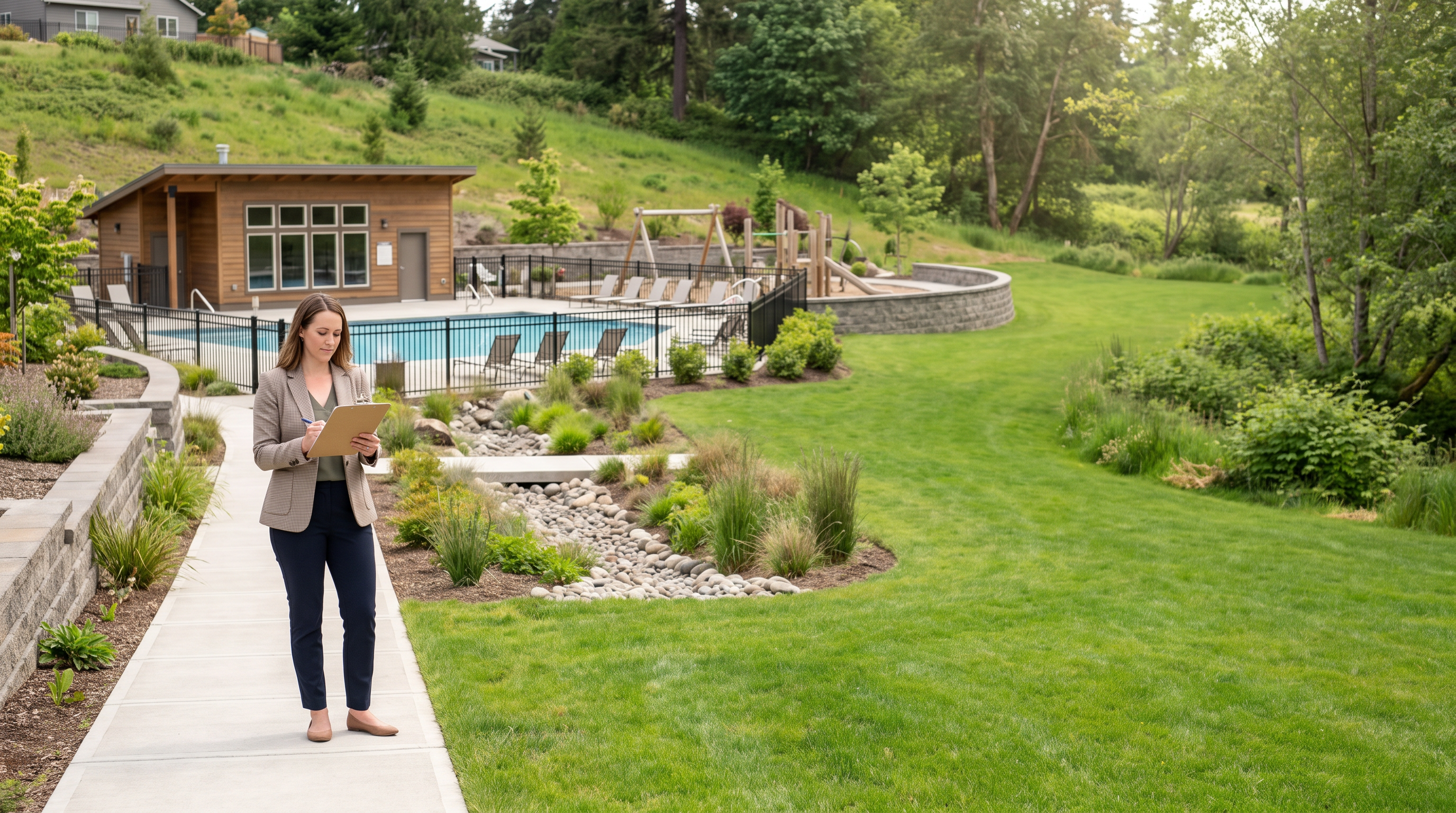

A community pool, clubhouse, playground, retaining wall, drainage system or trail is more than a nice feature. It is shared property with a use pattern, a maintenance history, an ownership question and a risk profile. The strongest HOA insurance review begins with a clear picture of what the association owns or maintains, who uses it, how it is inspected and what the issued policy actually says.
Think beyond the master policy label
Shared amenities are a property portfolio, a premises operation and an infrastructure system at the same time
A policy label alone does not identify a forgotten culvert, an aging deck, a leased fitness unit, a changed clubhouse rental practice or a trail crossing that sits in an easement. Inventory, responsibility, inspection, maintenance, contracts, reserves and a policy-specific conversation all work together.
Start with a common-property map, not an insurance assumption
Before renewal, a board or manager can map every building, amenity and shared system. The map should show the pool, spa, equipment room, clubhouse, furniture, playground, trail, gate, stair, walkway, bridge, retaining wall, catch basin, culvert, swale, detention area, outlet and access route. It should also identify whether the association owns, controls, inspects, maintains or merely has access to each item.
An HOA insurance review is most useful when it begins with the declaration, plats, easements, maintenance agreements, reserve study and current property schedule. A related community association insurance conversation can help organize questions around board responsibilities, common property, management arrangements and the association's actual operations. Neither page means an asset or event is automatically covered; policy wording and the facts of a loss control.
Build the complete inventory
Four shared-property lanes to map before an insurance review
An association may own or maintain assets in all four. A complete list makes gaps, changed uses and deferred work easier to identify.
Water amenities
Pools, spas, splash areas, pool decks, drains, pumps, filters, heaters, barriers, gates, covers and chemical rooms.
Shared buildings
Clubhouses, kitchens, fitness rooms, meeting space, restrooms, storage, access-control systems, furniture and event use.
Recreation & access
Playgrounds, outdoor fitness equipment, fences, paths, trailheads, gates, signs, boardwalks, bridges and shared parking.
Water & structural systems
Retaining walls, stairs, decks, railings, culverts, catch basins, pipes, swales, detention areas and drainage access.
Pools, spas, splash areas and pool decks need an operating record—not just a seasonal opening checklist
Shared aquatic amenities combine water access, barriers, drains, pumps, filtration, heating, deck surfaces, chemical handling, guest use and contractor work. CDC guidance addresses trained operation, water testing, equipment maintenance, preventive replacement, hot-tub controls and recordkeeping for public pools, hot tubs and splash pads.[1] The U.S. Consumer Product Safety Commission also points to barriers, self-closing and self-latching gates, alarms, covers and attention to drain and suction-outlet safety.[3]
For an Oregon community, confirm with the authority having jurisdiction whether the actual facility is regulated as a public or limited-use aquatic venue. Oregon rules describe limited-use venues associated with residential housing in certain circumstances and address maintenance plans, documentation, safety planning and closure/reopening practices.[2] That is a jurisdictional question, not a coverage conclusion. A swimming pool insurance discussion should use the real amenity design, operator arrangement, staffing, seasonal rules, water feature type, maintenance records and policy terms—not a generic assumption about a neighborhood pool.
Pool management contracts deserve their own review. Identify who tests water, maintains drains, cleans the deck, services equipment, secures chemicals, closes the venue after a problem, documents reopening, handles an incident and communicates with the board. The contract, actual scope, insurance evidence and issued policy may all matter. The association should also retain inspection, water-testing, repair, closure, incident and contractor records in a location the board can access after a loss or inquiry.
Opening, upgrading or changing how a community pool is used?
Bring the asset list, operating rules, vendor agreements, maintenance records and current declarations to a policy-specific HOA insurance review.
Request an HOA amenities reviewClubhouses and event spaces are both buildings and operating venues
A clubhouse can include the building, roof, plumbing, electrical equipment, HVAC, furniture, shared kitchen, fitness room, restrooms, storage, access controls, alarm systems, meeting space, parking and exterior paths. It may also host board meetings, private rentals, parties, food service, contractors or events. California Department of Real Estate operating-cost guidance lists insurance, inspections, custodial work, access control, HVAC and fire-protection systems among common association budgeting considerations.[5]
A commercial property insurance review can help identify the building, permanent installations, contents, improvements and recent upgrades that should be discussed with the insurance professional. It should also distinguish property value questions from the separate issues created by rentals, occupancy, food, alcohol, vendors, security or a changed event practice. Review any applicable accessibility, building, fire, health or local requirements with the qualified authority or professional; this article does not determine applicability.
When a clubhouse is rented or used by outside groups, the board should work from written rules and a repeatable file. That file can include the use agreement, event details, setup and cleanup duties, capacity, food or alcohol plans, vendor lists, incident-reporting instructions and insurance requirements. A general liability conversation can then follow the actual premises, activities and contracts. It does not replace counsel, safety planning, local permits or a complete review of the issued policy.
Playgrounds and outdoor fitness areas benefit from condition checks that are specific to the equipment
Playground risk is not limited to a visible broken swing. CPSC guidance discusses protective surfacing, use zones, drainage, anchors, sharp edges, protrusions, entrapment openings, pinch points, corrosion, moving parts and the importance of documented inspections, repairs and injury records.[3] Weather, high use, vandalism, settling, standing water and delayed repair can also change the condition of a shared recreation area between annual budgets.
Use the equipment maker's instructions and the actual site conditions to create an inspection routine. A board may want an owner for routine checks, post-storm reviews, repairs, closure authority and reopening confirmation. Record the surface condition, hardware, spacing, drainage, warning information and work performed instead of relying on memory. Outdoor fitness equipment has its own installation, maintenance and user-warning questions; it should not be treated as ordinary landscaping.
Simple control, clearer record
Give someone the authority to close a shared amenity when its condition changes
A dated inspection and a clear closure process can be more useful than an informal assumption that someone will notice a damaged deck, blocked drain, loose play component or unsafe path. The process does not decide liability or coverage, but it creates a practical operating record.
Retaining walls, stairs, decks, walkways and railings are shared structural property—not simply landscaping
Common structural elements can involve water intrusion, drainage, corrosion, wood decay, connectors, uneven surfaces, railings, lighting, soil pressure, erosion and access. California Department of Real Estate reserve-study guidance identifies decks and retaining walls among common components and describes stairs and walkways as items that may be overlooked in association planning.[4] Responsibility can differ between common property and exclusive-use areas, so the declaration and maintenance provisions matter.
For a retaining wall, deck, exterior stair or walkway, the board should be able to identify the location, ownership, maintenance allocation, recent work, inspection findings, known deficiencies, engineering needs, permits, reserve-plan assumptions and closure measures if a condition becomes unsafe. This is also the time to determine whether a vendor, owner, manager, neighbor or public agency has a role under a contract or easement. An asset may raise separate questions involving flood, earth movement, water, construction work, property scheduling and premises liability; one policy label does not resolve each question.
Stormwater systems and drainage assets should be treated as infrastructure, not background landscaping
Catch basins, inlets, culverts, pipes, swales, detention areas, outlets, spillways, pumps, grates, slopes, fences and access roads can be easy to overlook because they are out of sight or only visible during heavy rain. Oregon transportation guidance calls for inspection, cleaning, maintenance, records and attention to inlets, sediment, outlet pipes, vegetation, access and related stormwater-pond components.[6] Oregon DEQ material likewise illustrates how a written plan can connect inspection, maintenance, debris, sediment, vegetation and documentation.[7]
The board should locate the design drawings, easements, permits, turnover records and emergency contacts for every drainage asset before a rainy season. It should know which party can access the site, who inspects and cleans it, what material is removed, where that work is recorded and what happens when an inlet is blocked or an area overtops. Do not treat an example maintenance trigger from a public plan as a universal HOA requirement. Local drainage, public-works, water-quality, building and property conditions can differ.
A flood insurance review can identify questions around structures, contents, water exposure, mapping and current policies. It cannot decide an individual claim or replace a civil engineer, surveyor, contractor, public-works authority or property-specific drainage review. If the community is in a wildfire-prone area, a wildfire insurance and readiness conversation can complement the seasonal plan, but it does not guarantee underwriting, pricing, renewal, mitigation results or claim payment.
Trails, paths, small bridges, gates and signs work best when the HOA manages them as one connected route system
A trail is not just a strip of open space. It can include tread condition, slopes, drainage, vegetation, signage, gates, bollards, trailheads, parking, boardwalks, small bridges, railings, abutments and crossings. Oregon trail guidance addresses sustainable design, erosion and drainage, debris and vegetation clearance, maintained structures, trailhead condition and wayfinding.[9] The U.S. Forest Service explains that trail-bridge inspections can identify and document structural maintenance problems and preserve reports, photographs, findings and repair recommendations as permanent records.[8]
For a shared route, document where the association's responsibility starts and stops. A path may cross association property, an easement, a neighboring parcel or public land. Date inspections, photograph concerns, record work orders, preserve closure notices and clarify who can close a route after storm damage or a structural concern. A property management insurance discussion can help organize the management, contractor and records questions when a professional manager is part of the association's operations.
Vendor contracts and management files should match the real work being done
Pool operators, landscapers, drainage contractors, arborists, playground installers, inspectors, engineers, trail crews, security vendors, cleaners, HVAC technicians and event vendors all bring different work to common property. The association should use a written scope that explains inspection, maintenance, reporting, repair, emergency response, closure, access and subcontractor responsibilities. It should retain current insurance evidence, but a certificate alone does not establish all policy terms or contractual protections.
Ask qualified counsel and the insurance professional to review what is needed for the actual contract. Depending on the work, that conversation may include licensing, workers' compensation, automobile liability, additional-insured wording where appropriate, indemnity terms, completed operations, subcontractors, limits, incident reporting and evidence of renewal. A commercial umbrella insurance discussion can help identify underlying policies and limits worth reviewing together. It does not replace adequate underlying coverage, careful contracting or property-specific safety controls.
Prepare before renewal or an incident
Eight items for an annual HOA amenities and infrastructure review
A current operating file makes it easier to have a focused discussion with a broker, carrier, manager, engineer, contractor or local authority. It does not establish coverage, value, legal duty or compliance by itself.
A current, dated map and asset register that marks every amenity, structural feature, drainage asset, trail segment, easement, access route and responsibility boundary.
A building and equipment record that lists construction, installed systems, furniture, pumps, filters, safety equipment, access controls, recent upgrades, photos and replacement information.
Governing documents, plats, easements, maintenance agreements, reserve studies, turnover records, engineering reports and permits that help explain who owns and maintains what.
Inspection, maintenance, repair, closure, reopening, water-testing, cleaning, drainage, weather-response and incident records with dates, photos and responsible parties.
Current vendor contracts, scopes of work, certificates of insurance, licensing information, workers' compensation documentation, automobile liability evidence and subcontractor requirements.
A seasonal calendar for pre-opening pool work, rainy-season drainage checks, post-storm inspections, playground and trail checks, fire-season planning and reserve-project decisions.
Current declarations, schedules, endorsements, deductibles, loss runs and a list of new amenities, major repairs, changed operations, rentals, events, open deficiencies and pending projects.
An emergency contact sheet for the property manager, board contacts, vendors, local authorities, restoration resources, engineers, contractors and the insurance producer.
Review the amenity portfolio when the community changes—not only when the policy renews
Put the insurance and property review on the calendar when the association adds a pool feature, renovates a clubhouse, changes rental rules, installs new recreation equipment, rebuilds a deck, finds drainage damage, assumes a private trail, takes over developer-built infrastructure, signs a new management agreement or begins a major capital project. Review after a major storm, water event, injury, contractor dispute, structural finding, fire, theft or change in the way residents and guests use the property.
Gerald Ross Agency can help organize the insurance side of that conversation around the assets, records, planned work, current operations and actual policy documents. Use the right professional for each other subject: an engineer or qualified inspector for structure and drainage, an authority having jurisdiction for regulations, counsel for governing documents and contracts, and a licensed insurance producer for a policy-specific review.
Need to map the community's amenities before renewal or a capital project?
Bring the asset list, governing documents, vendor agreements, inspection records, planned improvements and declarations for a practical HOA insurance conversation.
Talk through the HOA property planFrequently asked questions
Are HOA pools, playgrounds, clubhouses and trails automatically covered by an association policy?
Do not assume so. Whether an asset or incident is addressed depends on ownership, the governing documents, the complete issued policy, schedules, endorsements, definitions, exclusions, limits, deductibles, conditions, maintenance, contracts and loss facts. A board should show its actual amenities and current operations to its insurance professional for a policy-specific review.
What should an HOA inventory before its insurance renewal?
A useful inventory can identify every building, pool, spa, playground, fitness area, fence, gate, retaining wall, stair, deck, path, bridge, trailhead, drainage asset, equipment room, stormwater structure, furniture and system the association owns or maintains. It should also record location, condition, use, responsibility, replacement information, contracts, inspection records and planned projects. The inventory supports a review; it does not create coverage.
Why do drainage, retaining walls and trails need their own HOA insurance questions?
These assets can involve distinct ownership, maintenance, access, water, earth movement, flood, structural condition, injury and contract questions. A culvert, path, bridge, retaining wall or drainage facility may also be subject to an easement, public-agency agreement or separate maintenance obligation. The declaration, plats, easements, permits, inspection findings and actual policy wording should be reviewed together.
Can a vendor certificate of insurance replace an HOA's own insurance review?
No. A certificate can be one part of a vendor file, but it does not by itself establish all policy terms, additional-insured status, indemnity protection, completed-operations protection or a contractual allocation of responsibility. Review the actual contract, the vendor's insurance evidence and the association's own policy questions with the appropriate broker and counsel.
What records can help an HOA after an amenity incident or property loss?
Keep dated asset inventories, photographs, inspection logs, maintenance and repair records, closure and reopening records, incident reports, vendor agreements, certificates, permits, engineering or reserve-study records, correspondence and current policy documents. Records can make a review or notice-of-loss conversation more specific, but they do not determine liability or claim payment.
Sources and further reading
Government and public-safety resources informed this article. Association documents, local rules, facility design, weather, maintenance conditions, permits, management agreements, vendor contracts, policy forms and loss facts can change the discussion for a particular community. The resources below do not determine an individual policy, claim, legal obligation, valuation, regulatory outcome or inspection result.
- [1] Centers for Disease Control and Prevention: Operating and Managing Public Pools, Hot Tubs and Splash Pads
- [2] Oregon Health Authority: OAR 333-062-1000: Oregon Public Aquatic Facility Rules
- [3] U.S. Consumer Product Safety Commission: Public Playground Safety Handbook
- [4] California Department of Real Estate: Reserve Study Guidelines for Homeowner Association Budgets
- [5] California Department of Real Estate: Operating Cost Manual for Homeowners Associations
- [6] Oregon Department of Transportation: Stormwater Ponds Facility-Specific Operations and Maintenance Manual
- [7] Oregon Department of Environmental Quality: Post-Construction Stormwater Management Plan
- [8] USDA Forest Service: Trail Bridge Inspection Quick Reference Guide
- [9] Oregon Parks and Recreation Department: Oregon Recreation Trails Designation Program Handbook
Make the insurance review match the community you manage today
Before the next renewal, capital project, amenity opening or major repair, bring the current asset inventory, records, contracts and declarations to Gerald Ross Agency for a policy-specific HOA review.
Request an HOA insurance quoteImportant: General educational information only; not legal, insurance-coverage, claims, underwriting, valuation, reserve-study, engineering, inspection, pool-operation, drainage, construction, accessibility, safety, employment, tax or regulatory advice. Nothing here promises coverage, availability, eligibility, acceptance, a discount, compliance, legal responsibility, a claim outcome or payment. The issued policy, forms, endorsements, definitions, exclusions, limits, deductibles, declarations, named insureds, property schedule, governing documents, contracts, maintenance, applicable law, underwriting, cause of loss and loss facts determine outcomes. A proposal, certificate, inspection, reserve study, source summary or this article does not create coverage. Confirm current requirements with appropriate authorities and discuss the actual issued policy with a licensed insurance producer.


