


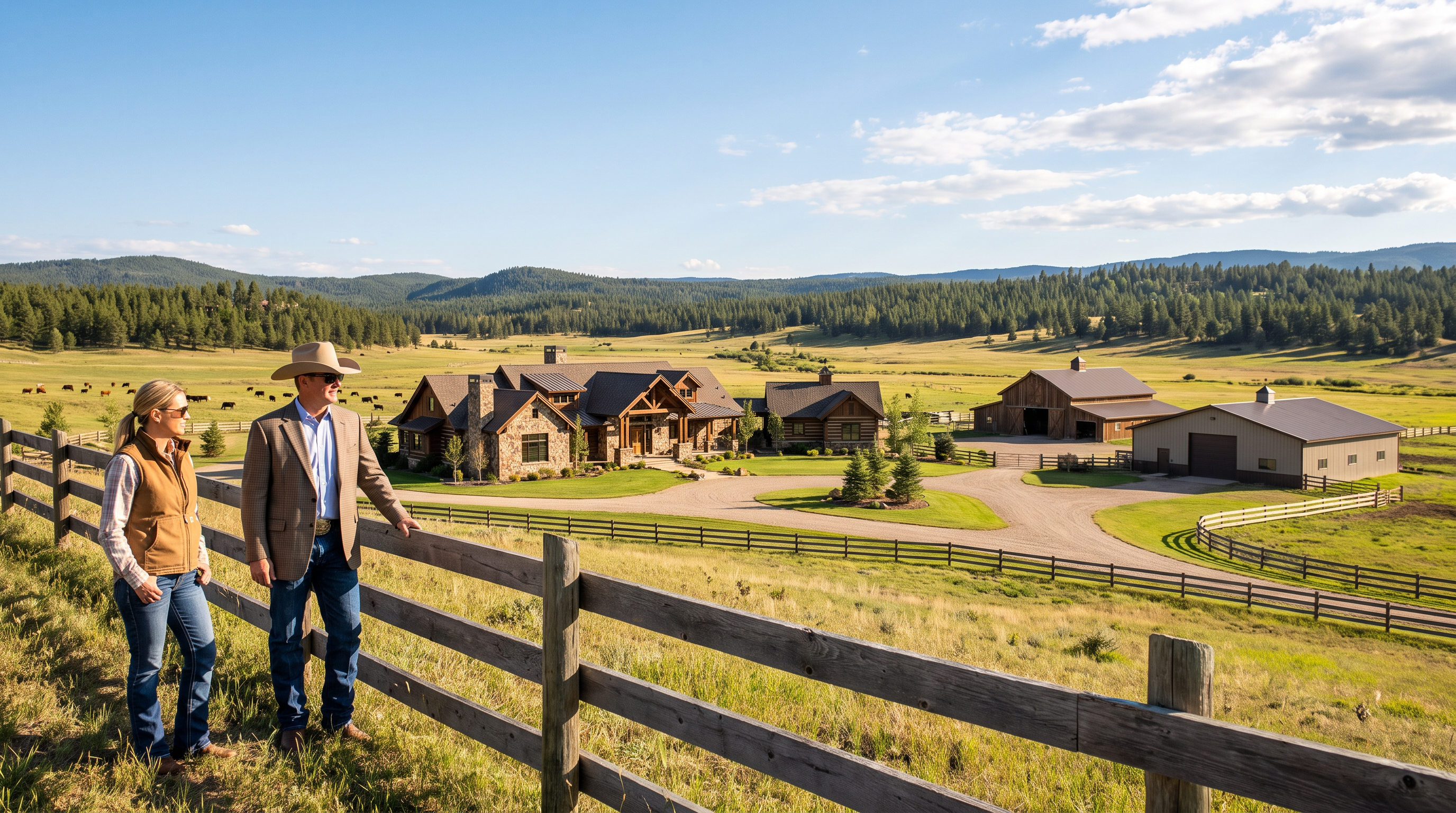

A high-value ranch is rarely one building with one purpose. It may include a custom residence, guest house, lodge, barn, shop, equipment building, remote cabin, water system, private road, fencing, gates, working acreage and a business operation—often spread across terrain that makes rebuilding, access and valuation more complicated. The most useful insurance review starts with the property as it is actually owned, used and maintained today.
Start with the whole property
A ranch can be a residence, a workplace, a destination and an infrastructure system at the same time
That mix is why a carry-forward policy description may become less useful as a guest house is remodeled, a barn changes use, a shop gains expensive tools, a caretaker moves in, a lodge opens to visitors, equipment values grow or a remote building becomes more important to the operation. The issued policy and facts—not an article or a broad policy label—determine outcomes.
Begin with a ranch profile, not a policy nickname
“Ranch insurance,” “homeowners,” “farm package” and “commercial property” are starting phrases, not a full property description. Before discussing coverage, write down who owns each structure; whether it is personal, agricultural, business, rental, employee, guest or public-facing space; where it sits; what it contains; and what would be required to repair or rebuild it after a covered loss.
A ranch-insurance conversation can organize the operation as a whole. A separate high-value home insurance review can help focus the residence, higher-value finishes, collections, guest use and rebuilding questions. Neither link means one policy automatically covers the other side of the property. The actual declarations, definitions, endorsements, limits, exclusions, named insureds, locations, building uses and loss facts control.
Map what is really there
Four property zones to separate before an insurance review
The same ranch may have all four. Mapping them makes it easier to identify which building, contract, value or use needs its own question.
Residence & guest use
Map the ranch home, guest house, lodge, caretaker residence and any short-term, employee, family, retreat, event or public-facing use. A building’s actual use can matter as much as its address.
Working structures
List barns, hay storage, tack rooms, shops, machinery buildings, corrals, feed rooms, utility sheds, greenhouses, cold storage and any other structure with a different construction, value or function.
Remote property & access
Record remote cabins, pump houses, gates, bridges, private roads, driveway crossings, water systems, fencing and locations where fire, weather, access or maintenance can make repair more complex.
Contents & operations
Separate furnishings, tools, spare parts, equipment, generators, business personal property, tenant property and property used in a ranch operation from the building itself.
Replacement cost, market value and a ranch’s real rebuilding challenge are not the same question
Ranch owners may know a tax value, purchase price, appraisal, market estimate or loan balance. Those figures can all be useful for their own purpose, but they do not automatically answer what it would take to rebuild a custom home, lodge, barn, shop or remote structure with current labor, materials, permitting, engineering, delivery and access conditions. Oregon’s Division of Financial Regulation distinguishes replacement-cost coverage from actual cash value, which reflects depreciation.[1]
A commercial property insurance review should identify building values, business personal property, improvements, contents, building use and any new construction or renovation. Ask where a particular building is shown, whether it is scheduled, which value method applies, how coinsurance or reporting provisions work if applicable, and whether the description still matches the actual structure. Do not assume a carrier, policy form, valuation tool, contractor bid or appraisal will answer every question the same way.
Added a guest house, rebuilt a barn or upgraded a ranch home?
Bring the location map, photos, building changes, construction records, valuations and current declarations to a policy-specific ranch property review.
Request a ranch property reviewWorking buildings, equipment and contents deserve their own inventory
A barn can be a livestock facility, hay storage, event space, boarding barn, equipment shelter or a combination. A shop can hold tools, a generator, parts, service equipment, chemicals, office equipment, vehicles or customer property. A remote building may house a pump, water system, communications gear, supplies or a caretaker. A building-only list can miss the property inside and the way the building is actually used.
For tractors, implements, generators, trailers, tools and other movable property, a farm equipment insurance discussion can distinguish equipment questions from fixed-building questions. List ownership, serial number, value, usual location, seasonal storage, security, transport and whether the equipment is hired, borrowed, leased or used away from the ranch. The item schedule and issued policy, not the inventory list alone, determine the response to a loss.
Guest houses, lodges and public-facing ranch activity can change the conversation
Guest houses and lodges are often more than overflow bedrooms. They may be used by family, ranch workers, paying guests, retreat participants, event attendees, hunters, boarders, contractors or tenants. The change can affect the building description, contents, liability, contract, tax, licensing, accessibility and safety questions. Describe how the space is actually used, including any planned seasonal, short-term, event or business use, before assuming a residence-only description remains accurate.
A general liability review should follow the people, activities and agreements on the property: guests, vendors, contractors, events, animals, parking, roads, rentals, food, recreation and operations. It does not replace contracts, legal advice, local permits, safety planning or property-specific underwriting. An attorney can advise on agreements and a local authority can address requirements for the actual activity.
Remote buildings, access and land improvements should not be left out of the map
On a large ranch, distance changes practical risk. A remote pump house, storage shed, generator enclosure, well, bridge, private road, water crossing, gate or fence can be hard to access, inspect, secure or rebuild after a storm, fire or other event. It may also be owned differently from the residence, shared with a neighboring parcel, subject to an easement, maintained by a tenant or tied to a working operation.
USDA’s 2026 Oregon drought and wildfire recovery guidance discusses the importance of records, receipts and damage photographs and describes separate program pathways that may address fencing, gates, water systems, irrigation or forest roads when eligibility criteria are met.[4] That does not make an infrastructure item automatically insured or eligible for assistance. It is a reason to record ownership, maintenance responsibility, location, values, photographs and the policy or program questions before a loss.
Ranch vehicles, trailers and employee or contractor driving are another distinct discussion. A commercial auto insurance review should reflect the actual ownership, drivers, trailers, travel territory, equipment transport and ranch use. The vehicle policy, operator status, contracts and facts determine the outcome.
Wildfire readiness is a property question, not a coverage promise
Wildfire planning on a ranch can include more than the main house. Oregon Department of Forestry resources point owners to current restrictions, wildfire-readiness information, defensible-space resources, Firewise resources, Community Wildfire Protection Plans and fire-siting standards.[2] California’s Safer from Wildfires guidance similarly frames mitigation across the structure, the immediate surroundings and the community, including roofs, ember-resistant zones, vents, eaves, windows, cleared vegetation and outbuilding placement.[3]
Use those sources as practical prompts: Is there reliable access for emergency response? Are gates, driveway widths, address markers, bridges, water sources and remote-building locations documented? What are the roof, vent, deck, siding, vegetation and storage conditions for each building? How would operations pause if a shop, lodge, barn, guest house or water system became unavailable? A wildfire protection technology review can support a preparedness conversation, but it does not guarantee protection, insurance acceptance, pricing, renewal or claim payment.
Rural-building review prompt
Review the access, water, vegetation and building condition around every structure—not only the ranch home
A property’s real resilience is a mix of people, structure condition, maintenance, access, local conditions and response planning. Those steps can be responsible risk management without becoming a promise about insurance or disaster outcomes.
Flood, earth movement and water damage require separate questions
Water is not one insurance question. Surface flooding, a burst pipe, backed-up drain, roof leak, irrigation failure, seepage, groundwater, storm runoff, erosion and a damaged culvert can involve different facts and policy language. Oregon DFR notes that flood is typically handled through the National Flood Insurance Program, while earthquake and landslide also need separate attention.[1] FloodSmart and FEMA materials show why detached structures and agricultural or accessory structures can deserve their own review rather than being treated as identical to a primary residence.[5][6]
A flood insurance review can identify the building use, flood-zone information, contents, detached structures and current policy questions. It cannot decide an individual claim or replace an engineer, surveyor, water-rights professional, lender, contractor or local authority. Document the real drainage, crossings, structures and water systems before a weather event—not after one.
Liability and umbrella limits should follow the ranch’s full activity
A high-value ranch may have visitors, workers, ranch hands, family, guests, vendors, event contractors, animal activity, equipment, vehicles, trails, private roads and seasonal operations. The liability review should identify each activity and contract, the owner and operator of each space, the people who drive or work, and the organizations or additional-insured requirements involved. The same analysis matters when a ranch grows from private use into a more active business or hospitality setting.
A commercial umbrella insurance discussion can help identify which underlying policies, operations and limits need to be considered together. It is not a substitute for adequate underlying coverage, a review of exclusions, legal advice, safety controls or a complete statement of the ranch’s activities.
Create the record before a loss
Eight items for a high-value ranch property review
A current property record makes it easier to have a specific conversation with an insurance producer, carrier, lender, contractor or recovery program. It does not create coverage or establish value by itself.
A current property map showing every home, guest structure, lodge, barn, shop, storage building, corral, shed, pump house, water feature, gate, road, bridge, fencing segment and remote location.
A building-by-building profile with construction type, roof age and material, square footage, utilities, use, occupancy, last renovation, fire-protection features, access constraints, photos and approximate rebuild considerations.
Current declarations, schedules, endorsements, appraisals, valuation worksheets, estimates, invoices, contractor records and policy forms—not just a certificate or premium invoice.
A dated video and photo inventory of interiors, contents, tools, equipment, furnishings, art, collectibles, ranch supplies, utility rooms, mechanical systems and exterior improvements.
Guest, caretaker, employee, tenant, ranch-stay, event, agritourism, hunting, boarding, lease or public-access agreements that affect who uses each structure and how.
A wildfire-readiness record describing access routes, gates, hydrants or water sources, vegetation work, roof and vent details, building clearances, equipment staging and any local or agency guidance being followed.
Flood, earth movement, wildfire, wind, water, drainage, septic, well, irrigation, bridge, slope and road information relevant to the particular buildings and their locations.
A post-loss contact file with contractor, engineer, restoration, utility, security, veterinarian, lender, accountant, attorney, property manager and insurance-producer contacts as applicable.
Review the property when the ranch changes, not only at renewal
Put a review on the calendar when a building is added, remodeled, converted, occupied differently, rented, opened to guests, left vacant, damaged, hard to access, filled with new equipment or connected to a new operation. Also review after a wildfire, flood, windstorm, theft, major construction change, inheritance, ownership transfer, lease, lender change or valuation update. A renewal declaration may not tell the complete story of what changed on the ground.
Use the right expert for each subject: a contractor, architect or engineer for construction scope; a local authority for permits and code questions; a safety professional for operations; legal counsel for contracts and ownership; and a licensed insurance producer for a policy-specific insurance discussion. Gerald Ross Agency can help organize the insurance side around the real buildings, property values, operations and documents the ranch has today.
Ready to map every building and improvement on the ranch?
Bring the property map, photos, building uses, records and current policy documents for a practical conversation about the questions worth reviewing before the next renewal or project.
Talk through the ranch property planFrequently asked questions
Does a high-value ranch property need more than one insurance policy?
Possibly. A ranch can combine a personal residence, guest accommodations, agricultural or commercial operations, barns, shops, equipment, vehicles, employees, livestock, land improvements and public-facing activity. The ownership, use, policy forms, endorsements, limits, exclusions, locations, contracts and loss facts determine the available response. A policy-specific review is more useful than assuming one label fits the entire property.
Are barns, shops, guest houses and remote buildings valued the same way as a ranch home?
Not necessarily. Each structure can have a different construction type, age, roof, systems, use, access, occupancy, code issue, contents, distance from other structures and rebuilding challenge. Replacement cost and actual cash value are different concepts, and an appraised market value is not automatically an insurance limit. Review the issued policy and every scheduled or unscheduled structure with a licensed insurance producer.
Will defensible space or building hardening guarantee ranch-property insurance?
No. Property hardening and defensible-space work can be sensible risk-management steps, but they do not promise eligibility, acceptance, pricing, a discount, renewal or claim payment. Underwriting rules, local requirements, wildfire conditions, property facts and the insurer's current guidelines vary. Confirm what applies to the particular property with the appropriate authority and insurer or producer.
Are fences, gates, access roads, wells and irrigation systems automatically covered after a disaster?
Do not assume so. A fence, gate, road, water system, irrigation component or other land improvement can raise distinct questions about ownership, maintenance, location, the cause of loss, policy definition, flood or earth-movement exclusions, schedule, deductibles and endorsements. USDA disaster programs can also have separate eligibility and documentation rules. Review the actual policy and any applicable program requirements before relying on either.
What records should a ranch owner keep for an insurance review or post-loss conversation?
Maintain a dated photo and video inventory, a map of buildings and improvements, construction and repair records, appraisals or valuations where used, invoices, receipts, equipment lists, access information, contractor contacts, current declarations and a list of operating changes. Documentation can make a review or notice-of-loss conversation more specific, but it does not determine coverage, eligibility or claim payment.
Sources and further reading
Government and disaster-readiness resources informed this article. Building use, wildfire conditions, local requirements, water, flood mapping, construction cost, program eligibility, underwriting and policy forms can change and depend on the specific property. The resources below do not determine an individual policy, claim, legal obligation, valuation, regulatory outcome or eligibility decision.
- [1] Oregon Division of Financial Regulation: Help with Home Insurance
- [2] Oregon Department of Forestry: Fire Prevention
- [3] California Department of Insurance: Safer from Wildfires
- [4] USDA Risk Management Agency: USDA Offers Disaster Assistance to Agricultural Producers in Oregon Impacted by Drought and Wildfire
- [5] National Flood Insurance Program / FloodSmart: What Is Covered by a Flood Insurance Policy for Homeowners
- [6] Federal Emergency Management Agency: Floodplain Management Requirements for Agricultural and Accessory Structures
Make the insurance review match the ranch you own today
Before your next project, renewal or loss, bring the ranch map, building uses, property record, operating changes and declarations to Gerald Ross Agency for a policy-specific review.
Request a ranch property insurance quoteImportant: General educational information only; not legal, insurance-coverage, claims, underwriting, valuation, appraisal, construction, engineering, wildfire, disaster-recovery, flood, water, land-use, agricultural, safety, employment, tax or regulatory advice. Nothing here promises coverage, availability, eligibility, acceptance, a discount, compliance, legal responsibility, disaster assistance or claim payment. The issued policy, forms, endorsements, definitions, exclusions, limits, deductibles, declarations, named insureds, property schedule, location, building use, operations, construction, maintenance, contracts, applicable law, program terms, underwriting, cause of loss and loss facts determine outcomes. A proposal, certificate, valuation, source summary or this article does not create coverage. Confirm current requirements with appropriate authorities and discuss the actual issued policy with a licensed insurance producer.


