


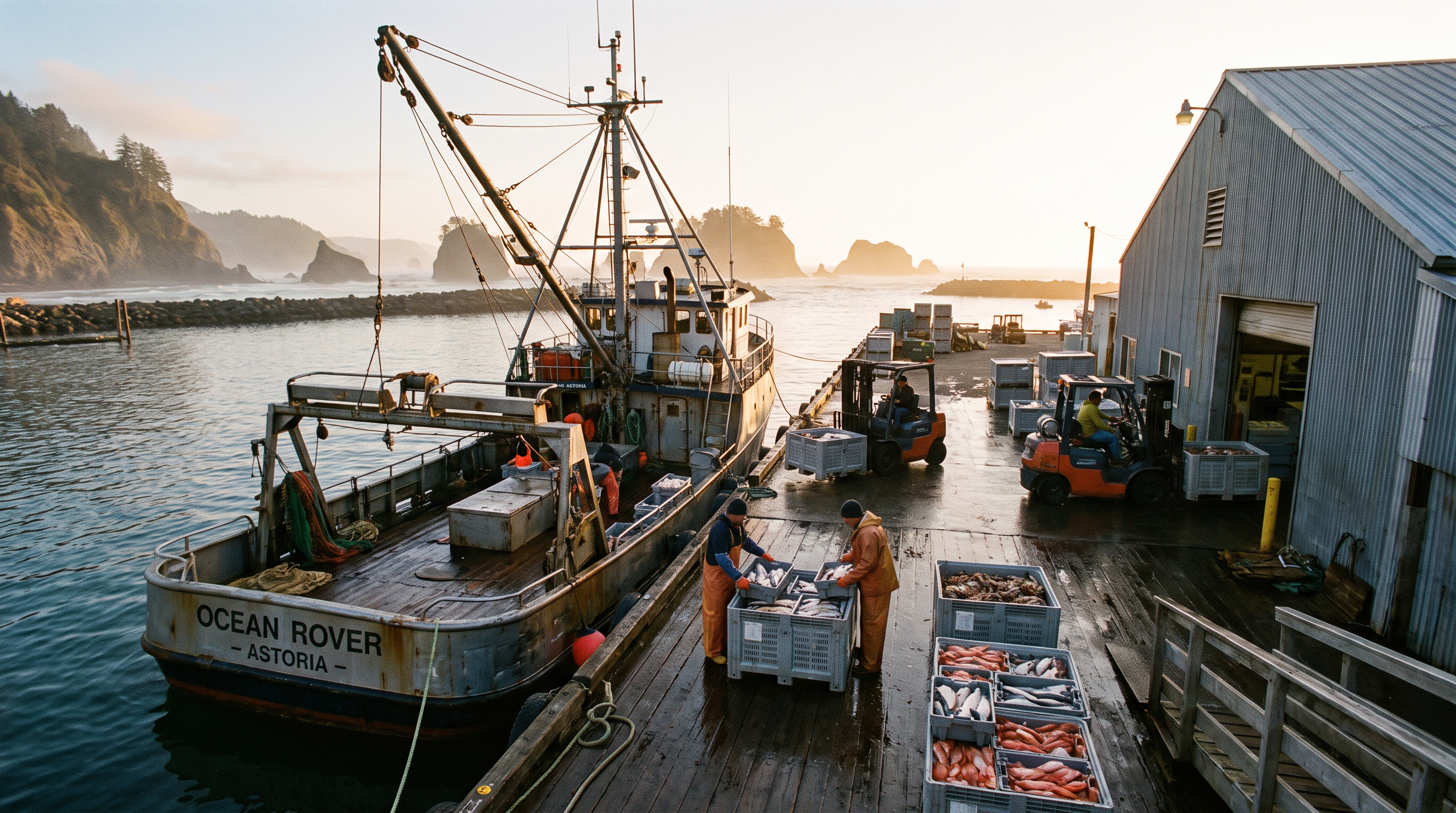

Commercial fishing, shellfish harvesting, and seafood processing remain among the most economically important industries on the Oregon Coast. According to the Oregon Coastal Management Program, these sectors contribute hundreds of millions of dollars annually to coastal communities from Astoria to Brookings — supporting fishing families, processing workers, dock operators, and the restaurants and markets that bring Oregon's seafood to the table.
But the Oregon Coast seafood industry also operates under some of the most complex insurance requirements of any business sector. A commercial fishing vessel owner faces a completely different set of risks than a seafood processor or a cold storage operator — and the coverage gaps that exist between standard commercial policies and the specialized marine and food industry coverages these businesses actually need can be financially catastrophic. At Gerald Ross Agency, we have been insuring Oregon Coast fishing and seafood businesses since 1937. This guide covers every link in the coastal seafood supply chain.
Independent Marine Insurance Specialists Since 1937
Our licensed agents compare 50+ carriers — including specialized marine and food industry insurers — to find the right coverage for your Oregon Coast fishing or seafood business at no extra cost to you.
Insurance Coverage by Business Type
The Oregon Coast seafood supply chain involves many distinct business types, each with its own specialized insurance requirements. Below is a comprehensive breakdown of the coverages that matter most for each segment — from the vessel at sea to the market counter.
Commercial Fishing Vessels
Covers physical damage to your vessel from collision, sinking, fire, grounding, and other perils. Written on an agreed value basis so you receive the full insured amount — not a depreciated value — after a total loss.
The liability backbone of any commercial fishing vessel policy. Covers crew injuries, third-party property damage, wreck removal, and pollution liability. The Port of Newport requires a minimum of $250,000 P&I for all commercial vessels.
Crew members on commercial fishing vessels have special legal rights under the Jones Act and General Maritime Law that go far beyond standard workers' compensation. Proper crew coverage under your P&I policy is essential.
Covers nets, crab pots, longlines, trawl gear, and other fishing equipment lost or damaged at sea. Standard hull policies often exclude gear — a separate equipment floater is frequently required.
Covers fuel spills, bilge water discharge, and other pollution events. Required by the U.S. Coast Guard for vessels over a certain size and by most Oregon port authorities.
Pays lost fishing income while your vessel is out of service for covered repairs. A single major repair can sideline a vessel for months during peak season.
Charter Fishing Operations
The most critical coverage for any charter operator. A single passenger injury claim can be financially devastating. Oregon's Charter Vessel License requires a minimum of $500,000 combined single limit — but Gerald Ross Agency recommends $1 million or more.
Covers physical damage to your charter vessel. Agreed value basis is essential for charter operators who depend on their vessel for their livelihood — you cannot afford to be underinsured.
Covers injuries to your mates and deckhands under maritime law. Crew members have special legal rights that differ significantly from standard workers' compensation.
Six-Pack operators (≤6 passengers) need OUPV license coverage. Operations carrying 7+ passengers require an Inspected Passenger Vessel policy with additional safety and insurance requirements.
Covers vehicles used to transport clients, gear, and bait. Standard personal auto policies exclude commercial use — a gap that creates serious exposure for charter operators.
Marinas and Docks
The single most important specialized coverage for any marina. When a customer entrusts their vessel to your facility, you assume legal responsibility for it. MOLL covers damage to customers' vessels while in your care, custody, or control.
Tailored for pier and dock operators who provide mooring and berthing services. Covers bailee liability for moored vessels, slip-and-fall liability on docks, and liability from dock operations.
Fuel spills are excluded from standard CGL policies. On the Oregon Coast, a single dock fuel spill can trigger EPA and Oregon DEQ cleanup requirements costing $500,000 or more. Port of Newport requires minimum $300,000 pollution liability.
Essential for marinas with on-site boat yards. Covers damage to customer vessels during repair or service work — a separate exposure from MOLL that requires its own specialized policy.
Federal workers' compensation for dock workers, marine mechanics, and others working on or adjacent to navigable waters. Benefits are dramatically higher than Oregon state WC, and employers without LHWCA coverage face unlimited personal liability.
Seafood Processors
Oregon seafood processing has one of the highest workplace injury rates in the state — approximately 24 disabling claims per 1,000 workers annually. Proper workers' comp is both legally required and financially essential.
Covers claims arising from illness or injury caused by contaminated or defective seafood products. A single foodborne illness outbreak traced to your facility can generate claims far exceeding your general liability limits.
Covers the direct costs of a product recall — including the recall itself, business interruption during the recall period, and reputation management costs. Standard CGL policies do not cover recall expenses.
Covers your processing facility, equipment, and inventory. Oregon Coast processors face elevated risks from Pacific storms, flooding near river mouths, and the accelerated corrosion caused by salt air.
Covers sudden mechanical or electrical breakdown of processing equipment, conveyor systems, and other machinery critical to your operation.
Cold Storage Facilities
The most critical specialized coverage for cold storage operations. Pays for spoilage of perishable seafood inventory when a refrigeration system fails suddenly and accidentally. Standard property policies exclude spoilage unless caused by a covered equipment breakdown.
Broader coverage for perishable inventory losses from temperature deviation, power failure, and other causes. Essential for facilities holding large inventories of fresh or frozen fish and shellfish.
Covers the cost to repair or replace refrigeration compressors, condensers, and other mechanical systems. Includes expediting expenses to rush emergency repairs and minimize spoilage time.
Covers lost income and continuing expenses while your facility is out of operation after a covered equipment breakdown or property loss. A refrigeration failure during peak season can be catastrophic without this coverage.
Covers spoilage losses caused by interruption of electrical service from an off-premises utility — a common cause of cold storage losses not covered by standard property policies.
Fish Markets and Wholesalers
Covers claims from customers who become ill from contaminated seafood. Under Oregon product liability law, a fish market or wholesaler can be held liable even if the contamination occurred earlier in the supply chain.
Covers the costs of recalling contaminated or mislabeled seafood products, including the recall logistics, business interruption, and the cost of replacing recalled inventory.
Covers your retail or wholesale facility, display cases, refrigeration equipment, and inventory against fire, theft, and other covered perils.
Covers your refrigerated delivery trucks and vans. Standard personal auto policies exclude commercial delivery use — and a refrigerated vehicle accident can result in both vehicle damage and cargo spoilage claims.
Covers slip-and-fall accidents in your market, third-party property damage, and other general liability exposures. A baseline requirement for any retail seafood operation.
Workers' Compensation: The Most Complex Coverage in the Seafood Industry
Workers' compensation in the Oregon Coast seafood industry is uniquely complicated because three different legal frameworks can apply to the same workforce — sometimes simultaneously. Understanding which framework applies to each employee is critical to avoiding catastrophic uninsured liability.
| Framework | Applies To | Key Benefit | Uninsured Employer Liability |
|---|---|---|---|
| Oregon State Workers' Comp | Shore-based employees not near navigable waters | Oregon statutory schedule | State penalties + civil liability |
| Longshore & Harbor Workers' Act (LHWCA) | Dock workers, processors near navigable waters, marine mechanics | No cap — based on national AWW; lifetime disability benefits | Unlimited personal liability — no cap |
| Jones Act | Vessel crew members (seamen) | Negligence-based recovery + unseaworthiness claims + maintenance & cure | Unlimited personal liability |
The LHWCA Gap Most Oregon Employers Miss
Oregon seafood processors located near the waterfront — even those who do not operate vessels — may have employees covered under the LHWCA rather than Oregon state workers' comp. An employer who fails to carry LHWCA coverage faces unlimited personal liability for an injured employee's medical expenses, lost wages, and disability benefits. Learn more about workers' compensation insurance options.
Seafood Contamination, Spoilage, and Product Recall
Foodborne illness outbreaks traced to seafood products are among the most financially damaging events a fish market, wholesaler, or processor can face. A single contamination event can trigger product liability claims, a mandatory recall, health department closure, and lasting reputational damage — all simultaneously. Yet most standard commercial policies leave significant gaps in this area.
Standard commercial general liability policies cover bodily injury and property damage claims from contaminated products — but they do not cover the cost of the recall itself, the business interruption during the recall period, or the expense of replacing recalled inventory. Product recall insurance fills these gaps and is increasingly considered essential for any Oregon Coast seafood business that sells direct to consumers or to restaurants and retailers.
Product Liability
Covers bodily injury and property damage claims from customers who become ill from contaminated seafood. Included in most CGL policies but often with limits too low for a serious outbreak.
Product Recall Insurance
Covers the direct costs of recalling contaminated or mislabeled products — recall logistics, replacement inventory, business interruption, and reputation management. NOT included in standard CGL.
Spoilage / Contamination Coverage
Covers inventory losses from contamination events, temperature failures, and power outages. Requires specific endorsements — standard property policies exclude most spoilage scenarios.
Oregon Port Insurance Requirements
Oregon's major commercial fishing ports — Newport, Coos Bay, Astoria, Brookings, and others — each have their own insurance requirements for vessels, dock operators, and commercial tenants. The Port of Newport, one of the busiest commercial fishing ports on the West Coast, sets some of the most detailed requirements. Operators at any Oregon port should confirm the specific requirements with their port authority before purchasing coverage.
| Coverage | Port of Newport Minimum | GRA Recommended Minimum |
|---|---|---|
| Protection & Indemnity (P&I) | $250,000 | $1,000,000+ |
| Pollution Liability | $300,000 | $1,000,000+ |
| Combined P&I + Pollution | $600,000 | $2,000,000+ |
| Charter Vessel General Liability | $500,000 CSL (state minimum) | $1,000,000+ with umbrella |
Port requirements are minimums only. Gerald Ross Agency recommends higher limits based on the actual liability exposure of each operation.
Shellfish Harvesting and Aquaculture: A Specialized Insurance Niche
Oregon's shellfish industry — oysters, clams, mussels, and Dungeness crab — operates under a unique set of regulatory and insurance requirements. Commercial shellfish harvesters need ODFW licenses, and aquaculture operations require permits from NOAA and the Oregon Department of Agriculture. The insurance requirements are equally specialized.
Aquaculture operations face risks that standard marine and farm policies were not designed to address: biotoxin closures that can halt harvesting for weeks, disease events that can devastate an entire oyster bed, and the unique liability exposure of selling live shellfish directly to consumers and restaurants. A specialty aquaculture policy — typically written through surplus lines carriers — is the only way to properly cover these risks.
For shellfish harvesters who also operate vessels, the full suite of commercial marine insurance coverages applies — hull, P&I, crew coverage, and pollution liability. For shore-based aquaculture operations, a combination of commercial property, product liability, and specialty aquaculture stock coverage is typically required.
Protect Your Oregon Coast Seafood Business
Gerald Ross Agency has specialized in Oregon Coast marine and commercial insurance since 1937. We work with specialized marine carriers, food industry insurers, and surplus lines markets to access coverages that standard commercial agents cannot place. Our agents understand the Port of Newport requirements, the Jones Act, the LHWCA, and the product liability exposures of the Oregon Coast seafood supply chain.
Building a Complete Insurance Program for Your Oregon Coast Seafood Business
The complexity of Oregon Coast fishing and seafood business insurance — with its mix of specialized marine policies, federal workers' compensation requirements, food industry product liability, and standard commercial lines — makes it essential to work with an independent agent who has genuine expertise in both the marine sector and the food industry. A standard commercial lines agent who does not specialize in marine and food industry insurance may be able to place your general liability and commercial property coverage, but they are unlikely to recognize the MOLL, LHWCA, product recall, and refrigeration breakdown gaps that create the most serious financial exposures.
Not every seafood business needs every coverage on this list. A small charter fishing operation has very different needs than a large seafood processor with cold storage and a wholesale distribution arm. The right program depends on your specific operations, the number and classification of your employees, the value of your vessels and equipment, and the requirements of your port authority and lenders. We also offer related coverages including marina and boatyard insurance, charter fishing insurance, and commercial auto coverage for coastal delivery fleets.
Frequently Asked Questions
Does a standard boat policy cover a commercial fishing vessel in Oregon?
No. Standard recreational boat policies explicitly exclude commercial use. If you use your vessel for commercial fishing, crabbing, or any other commercial purpose, you need a dedicated commercial marine policy. Operating under a recreational policy while engaged in commercial activity means you have no hull coverage, no liability coverage, and no crew coverage.
What insurance does a seafood processor in Oregon need?
Oregon seafood processors need workers' compensation (the injury rate is among the highest in the state), commercial property, equipment breakdown with refrigeration breakdown coverage, product liability, and product recall insurance. Business interruption coverage is also critical — a refrigeration failure or health department closure can halt operations for weeks.
What is the Longshore and Harbor Workers' Compensation Act and does it apply to my Oregon dock workers?
The LHWCA is a federal workers' compensation law that applies to employees who work on or adjacent to navigable waters — including dock workers, seafood processors near the waterfront, crane operators, and marine mechanics. LHWCA benefits are dramatically higher than Oregon state workers' comp, and employers without LHWCA coverage face unlimited personal liability. Oregon Coast marine employers should have their employee classifications reviewed by a marine insurance specialist.
What does refrigeration breakdown coverage protect against for seafood businesses?
Refrigeration breakdown coverage pays for the spoilage of perishable seafood inventory when a refrigeration system fails suddenly and accidentally. Standard commercial property policies exclude spoilage losses unless caused by a covered equipment breakdown. For cold storage facilities and seafood processors holding large inventories of fresh or frozen fish and shellfish, this coverage can be the difference between a manageable loss and a business-ending event.
How much liability insurance does an Oregon charter fishing operation need?
Oregon's Charter Vessel License requires a minimum of $500,000 combined single limit general liability. However, given the actual liability exposure of carrying paying passengers offshore, Gerald Ross Agency recommends significantly higher limits — typically $1 million or more in P&I coverage, with a commercial umbrella above that. Minimum state requirements are not adequate protection for a serious passenger injury claim.
Talk to an Independent Marine Insurance Agent Today
Gerald Ross Agency has served Oregon and Northern California since 1937. We work with 50+ carriers — including specialized marine and food industry insurers — to find coverage that actually protects your fishing or seafood business.
Serving Newport, Coos Bay, Astoria, Brookings, Gold Beach, Crescent City, Eureka, and communities throughout Oregon and Northern California.


