


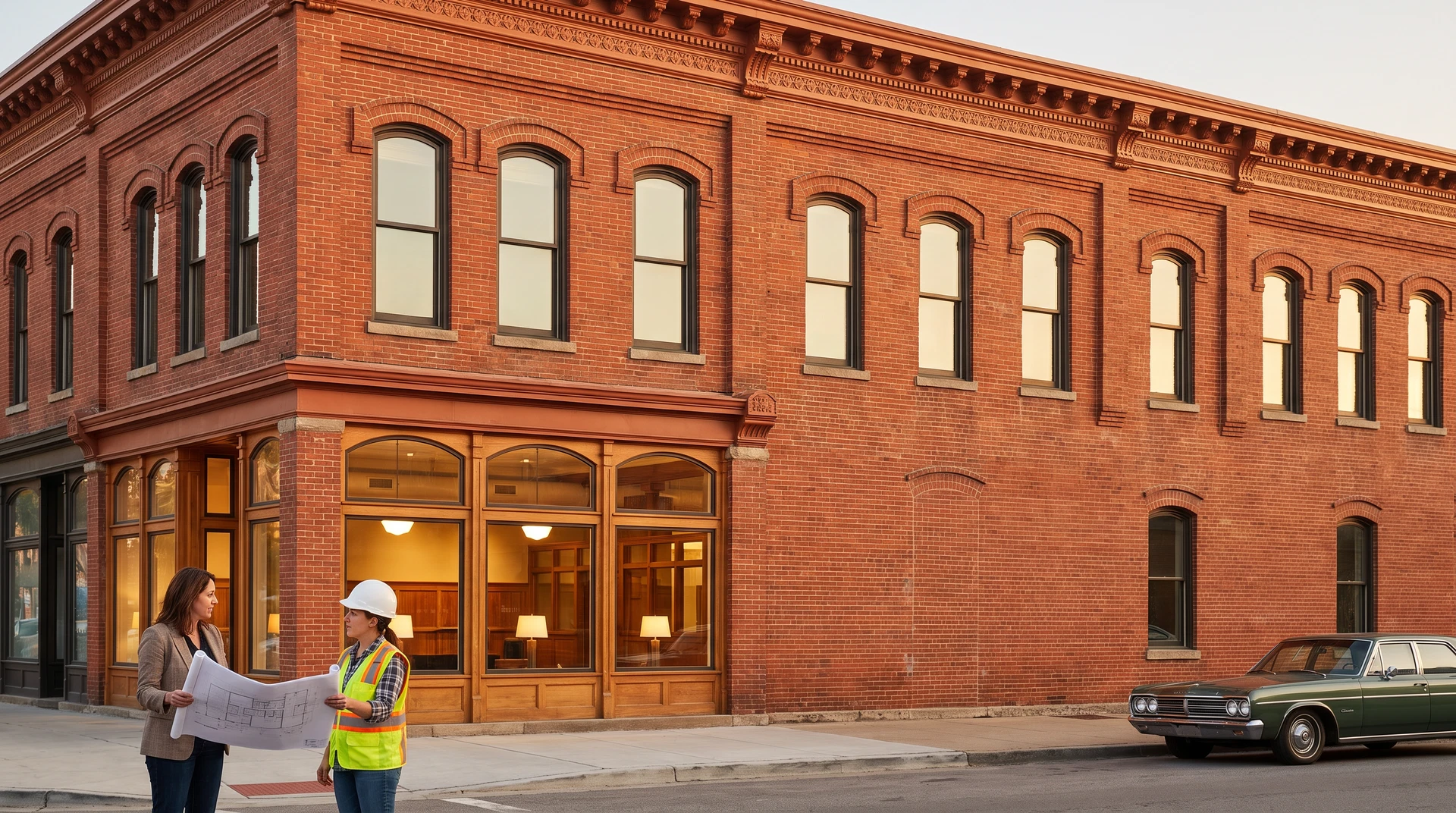

Historic downtown buildings can be some of a community's most valuable commercial assets. A century-old brick storefront may contain retail below and offices, apartments, studios, or storage above. A modest renovation can uncover original materials, aging wiring, plumbing behind plaster, unexpected water intrusion, outdated fire separations, and questions about access, occupancy, and local historic review. For owners and tenants in Oregon, Washington, and Northern California, the insurance conversation should begin before a contractor starts work—not after a renovation scope, lease, or construction contract has already assigned obligations. A thoughtful review does not guarantee coverage; it helps identify questions to resolve with the policy, project team, contracts, and local authorities.
Key takeaways
- Historic status, local review, code requirements, and the actual renovation scope can affect costs and timing; they are not interchangeable with insurance requirements.
- Property values should account for the building's particular construction, improvements, equipment, and a realistic reconstruction conversation—not only the purchase price or tax assessment.
- Construction contracts, leases, tenant operations, vacancy, business-income needs, and certificates of insurance deserve coordinated review before work begins.
Why an older downtown building needs a more detailed review
A standard description such as “main-street retail building” can hide significant differences. A three-story masonry building with original windows, a basement, an upper-floor apartment, and a restaurant tenant does not present the same property, liability, life-safety, or continuity questions as a one-story modern retail suite. Renovation can add another layer: sections may be vacant, temporary barriers may shift customer access, utilities may be shut down, equipment may be stored on site, and multiple contractors can work around tenants who remain open.
The National Park Service describes rehabilitation as making compatible use possible through repair, alterations, and additions while preserving character-defining portions or features. It recommends involving preservation professionals early in the project.[1] That preservation framework is not an insurance rule, but it is a useful reason to assemble accurate building information before discussing a business owners policy, commercial property values, or renovation-related endorsements.
Before work begins
Map the building, project, and people separately
This simple framework keeps a project from treating preservation, construction, property values, tenant obligations, and insurance as one undefined issue.
The building
Document masonry, roof, electrical, plumbing, fire protection, historic finishes, upper floors, basements, utilities, and existing damage before work begins.
The project
Map the scope, phasing, vacant areas, contractor access, temporary protections, hot work, storage, permits, and expected reopening dates.
The people
Review owner, tenant, visitor, contractor, employee, lender, and vendor responsibilities instead of relying on a single broad description of the property.
Property values, special materials, and the rebuild question
The most useful property discussion is specific. List the building's age, square footage, construction type, roof, heating and electrical systems, fire protection, storefront systems, masonry, stairs, elevators if any, built-in finishes, decorative work, equipment, detached structures, and recent upgrades. Photograph exterior and interior conditions before demolition or construction changes the record. For a mixed-use building, distinguish owner-owned fixtures from tenant improvements and business personal property.
Property insurance valuation has important definitions and conditions. Replacement cost, actual cash value, coinsurance, agreed value, deductibles, limits, and exclusions can materially change the result of a loss. A historic look or local designation does not automatically establish the amount available after a claim. An owner should ask what information an insurer needs to evaluate a building's value and whether the limit reflects the intended post-loss structure, not merely the current market sale price.
Renovation also creates opportunities to identify related liability exposure. Slippery sidewalks, exterior scaffolding, temporary entrances, vacant spaces, public events, tenant foot traffic, deliveries, and building tours can all change the premises picture. A commercial general liability insurance review should use the actual site conditions and operations rather than assume that property coverage addresses injury or damage claims made by others.
Code upgrades, historic review, and ordinance-or-law questions
Building and preservation requirements come from multiple sources. Oregon's Structural Specialty Code establishes minimum requirements for construction, reconstruction, alteration, and repair of commercial structures, and the state publishes tenant-improvement guidance for repairs, alterations, and changes of occupancy.[2] Washington's historic-preservation office notes that jurisdictions use building and existing-building codes, that local amendments can vary, and that historic projects commonly involve issues such as exits, fire separation, stairs, and fire ratings.[3] California's preservation guidance similarly points owners to methods for improving historic buildings while preserving their character.[4]
Those public resources do not tell an owner what an insurance policy will pay. They do make one point clear: the scope and cost of a post-loss rebuild or an alteration can be influenced by rules beyond the damaged component itself. Ask your insurer or broker how the policy handles ordinance or law, demolition, increased cost of construction, undamaged portions of the building, and the particular limits, exclusions, deductibles, and triggers that apply. Discuss building-code and preservation questions with the local building official, historic-review staff, architect, contractor, and qualified counsel—not with an insurance blog alone.
Document organizer
Keep the project file ready before renewal or a loss
Start with current declarations and endorsements, a building condition file, photographs, plans, permits, historic-review correspondence, contractor and design agreements, certificates of insurance, tenant leases, rent roll, equipment and improvement lists, budgets, and a phased construction schedule. These records can help owners, tenants, counsel, lenders, contractors, and insurance advisers discuss responsibilities from the same information.
Construction, contractors, and work that changes the risk
Renovation projects can create exposures that do not exist during normal operations. Water may be shut off and restored. Openings may be created in walls or roofs. Materials may be delivered and stored. Welding, soldering, roofing, demolition, electrical, structural, or plumbing work can introduce equipment and fire-prevention questions. One tenant may remain open while another suite is vacant or under construction. The project team should decide who controls access, keys, security, fire watch, housekeeping, temporary protections, and emergency communications.
Contracts are central, but contracts do not replace insurance. Review the agreement's indemnity, additional-insured, waiver, insurance-limit, certificate, subcontractor, completed-operations, and damage-to-work provisions with appropriate legal and risk advisers. A contractor's certificate confirms only certain information as of a moment in time; it should not be treated as a substitute for reading the underlying agreement or verifying requirements. If the renovation involves a commercial tenancy, a lessors risk insurance conversation can help clarify the building owner's property and premises concerns alongside the tenant's own operations.
Have the insurance conversation before construction starts
Bring the renovation scope, timeline, contracts, building details, tenant information, values, and current policies to a focused review.
Request a commercial property reviewOwners, tenants, and mixed-use buildings: coordinate the separate roles
Many historic downtown buildings are mixed use. The owner may insure the structure and common areas while retail, professional office, hospitality, or service tenants insure their own contents, improvements, operations, and employees. A lease might assign repair obligations, insurance limits, indemnity responsibilities, additional-insured status, waiver of subrogation requirements, or a percentage of rent during a restoration. The wording matters, so owners and tenants should review it with counsel and their advisers instead of assuming that another party's policy fills every gap.
Tenant turnover can be a key trigger for review. A new bakery, gallery, salon, restaurant, event space, brewery, medical office, or retail use may affect occupancy, equipment, cooking, customer traffic, storage, fire protection, and loss-of-income considerations. The Oregon commercial-structures program notes that repairs, alterations, and changes of occupancy can be subject to technical guidance.[2] If an owner's building hosts community events, tours, or a business association, the governance record and decision-making process may also support a directors and officers insurance conversation where it fits the organization's actual role.
Business income, rents, temporary relocation, and access
A building can be physically intact yet difficult to use after a covered event, extended repair, utility interruption, fire-department action, smoke condition, road closure, or other operational problem. Owners should understand their own financial dependence on rents, while tenants should map payroll, revenue, inventory, lease obligations, extra expense, alternate locations, customer communications, and the time required to reopen. Policy conditions, waiting periods, exclusions, and definitions determine whether and how business-income or extra-expense coverage may respond; a projected restoration period is not a promise of payment.
For businesses that operate delivery vehicles, service vans, or company cars during construction or a temporary move, a commercial auto insurance review should distinguish company-owned vehicles, rented vehicles, hired transport, and employee use. If the project requires temporary technology, remote work, payment changes, digital plan sharing, or customer contact lists, a cyber liability insurance discussion may also help identify payment-fraud and data-security issues that property coverage does not address.
People working in an older building
Historic properties can create operational conditions that deserve attention: narrow stairs, uneven floors, wet basements, limited loading areas, aging mechanical spaces, shared corridors, temporary access routes, overhead work, or older materials that require qualified handling. The practical priority is safe planning, not assuming that insurance is the safety plan. Document job duties, payroll, subcontractor relationships, training, equipment, incident reporting, and return-to-work practices. A workers' compensation insurance review should reflect the business's actual employees and duties, while contractor labor should be addressed through project controls and contracts.
Renovation insurance worksheet
Questions to organize before a historic-building review
What is the building's present use, square footage, construction, condition, and historic or district designation, if any?
What renovation work, phasing, vacant space, access restriction, storage, and temporary protection is planned?
Which party owns the building, tenant improvements, equipment, fixtures, stock, and records?
What do leases, loan documents, preservation conditions, contractor agreements, and design agreements require?
How do the policy's property valuation, deductible, ordinance-or-law, business-income, and extra-expense terms work?
What property values, rent, revenue, payroll, inventory, equipment, and building records should be updated?
Who handles certificates, safety coordination, site access, emergency contacts, and incident reporting?
What local building, fire, accessibility, preservation, or zoning questions should go to the proper authority or adviser?
Wildfire, weather, and downtown continuity
In Oregon, Washington, and Northern California, an older downtown building may also be affected by wind, rain, water intrusion, freezing conditions, wildfire smoke, evacuation restrictions, utility interruptions, or access problems. Those conditions call for a continuity plan that addresses tenant communication, key contacts, photographs, physical protection, document backups, temporary operations, vendor coordination, and how the property will be secured if the area is temporarily inaccessible. Review the local hazard context and mitigation steps with qualified property and emergency professionals.
A wildfire property-readiness resource can help owners frame questions about documentation, alerts, access, water supply, and seasonal planning. It is not a replacement for official emergency guidance, building requirements, fire-protection advice, or the terms of an insurance policy.
Put the building and renovation details in one insurance conversation
Gerald Ross Agency can help commercial property owners and tenants organize the coverage questions connected to a historic downtown renovation.
Frequently asked questions
Will historic designation make a commercial-property claim more complicated?
It can introduce additional project, documentation, and rebuild questions, but the answer depends on the designation, local requirements, cause of loss, policy language, building condition, and proposed work. Discuss preservation and local-review questions with the appropriate officials and professionals, and ask your insurance adviser to explain the policy's applicable terms.
Can a tenant rely on the building owner's policy during renovation?
Not automatically. Owner and tenant policies often address different property and liability interests, and the lease can allocate responsibilities. Tenants should review their own property, business-income, liability, equipment, and operations needs rather than rely on an assumption about the owner's coverage.
When should an owner update building values?
Review values before renewal, before a substantial renovation, after improvements, after occupancy changes, and when construction costs or building details materially change. The appropriate valuation method and limit depend on the policy and property, so a professional valuation conversation may be useful.
Is renovation insurance the same as a contractor's insurance?
No. An owner's property and liability interests can differ from a contractor's operations, equipment, employees, and contractual duties. Contract requirements, certificates, project controls, and each party's policy should be reviewed together without assuming one policy substitutes for another.
References
- National Park Service, Secretary of the Interior's Standards for the Treatment of Historic Properties
- Oregon Building Codes Division, Commercial Structures Code Program
- Washington State Department of Archaeology & Historic Preservation, Building Codes
- California Office of Historic Preservation, Sustainable Guidelines and Publications