


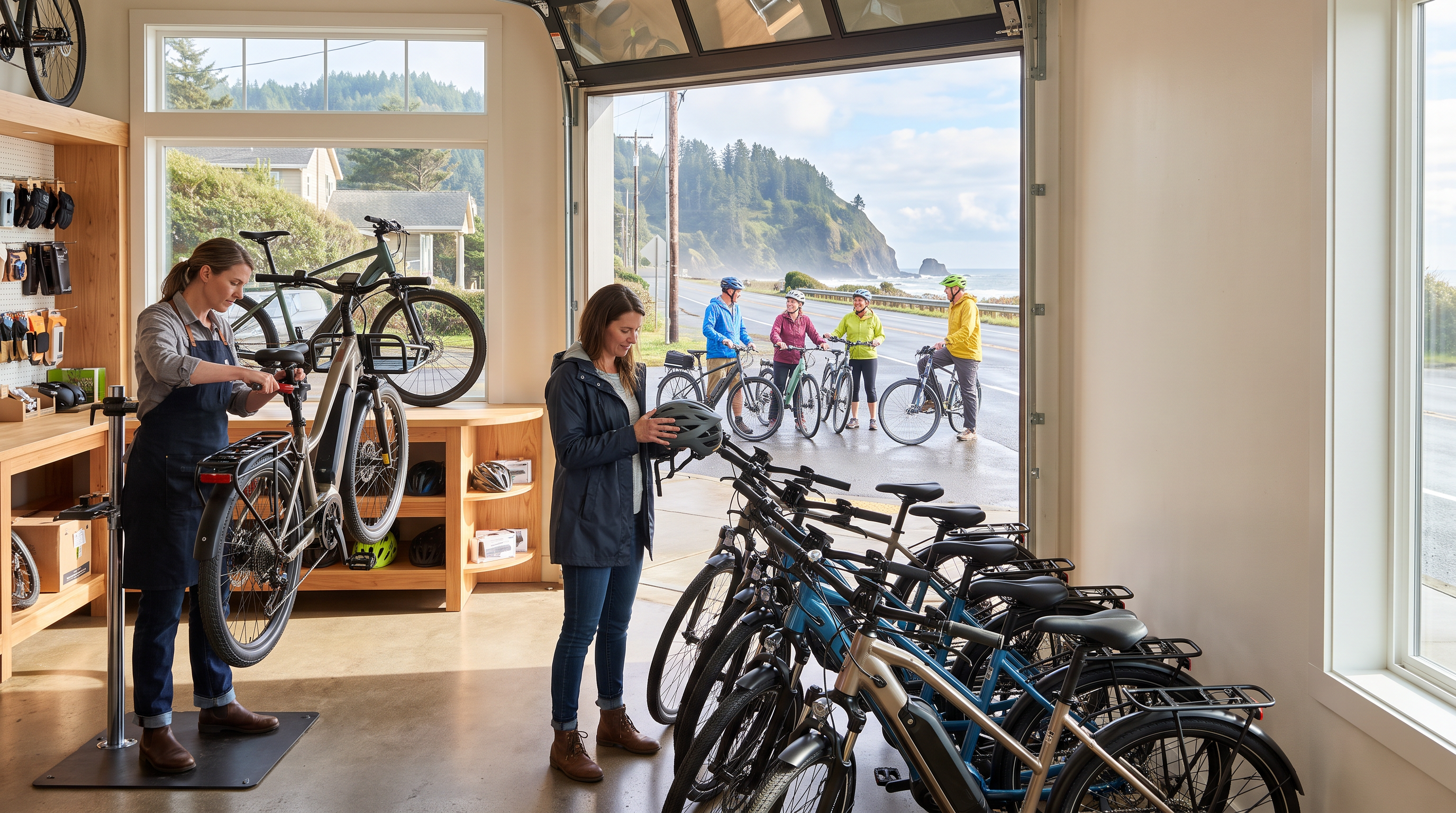

A neighborhood bike shop can now be a retailer, e-bike rental operator, repair facility, guided-tour organizer and online booking business at the same time. Each operating lane changes the insurance questions. The product mix, fleet, route, riders, customer property, batteries, contracts, employees, transport equipment and actual policy wording all matter more than a broad business label such as “bike shop.”
Start with operations
A bike business is not one risk just because every service has two wheels
A sales floor, service counter, rental fleet and guided ride can involve different property, injury, vehicle, employee, customer-data and contract questions. Begin a policy-specific review with a current map of what the business actually does, rather than a carry-forward description from a previous season.
Why bike businesses need a closer insurance conversation
A retailer may hold inventory, accessories, tools and customer bikes at a fixed address. A rental operator may have property on the road, at a hotel, on a trailer or in a rider’s possession. A tour operator may have guides, changing weather, road crossings, route closures, support vehicles and contracts with venues or land managers. A repair shop may take custody of expensive customer property and authorize test rides or work on e-bike electrical systems.
The existing bicycle-shop insurance page is a helpful starting point for the retail operation. A dedicated e-bike insurance review can then make the fleet, classification, rider, charging and storage questions more concrete. Neither page creates coverage. The declarations, endorsements, definitions, limits, exclusions, contracts, locations, equipment schedule and loss facts control.
Map the real business
Four operating lanes to put on the insurance review
A business may use one or all four. Separating them makes it easier to identify where a contract, policy form, safety protocol or operating change deserves closer attention.
Retail floor
Inventory, demo bikes, helmets, accessories, point-of-sale systems, customer foot traffic, leased space, glass, tools, stock values and seasonal spikes all belong in the business description.
Rental fleet
List each rental category, including e-bikes, cargo bikes, tandems, trailers, child seats and accessories. Document where they ride, who may rent them, how damage is inspected and where they are stored overnight.
Guided tours
Describe routes, guide-to-rider ratio, group size, terrain, road crossings, weather limits, rider experience, emergency contacts, permits, transportation and whether the operator supplies bikes.
Repair bench
Identify customer property, test rides, service scope, parts, work orders, battery handling, employee training, tool values, security and the difference between customer bikes and shop-owned inventory.
Rental fleets: define what leaves the shop and where it can go
For a bike rental business, the rental counter is only the beginning. Create a live fleet record of bicycles, e-bikes, cargo bikes, trailers, child seats, helmets, locks, chargers and spare batteries. Identify ownership, serial number, value, age, repair history, rental territory, overnight storage, pickup and return process, and the customer agreement attached to each handoff.
CPSC advises users to inspect a micromobility device’s handlebars, brakes, throttle, lights, tires, cables and frame before riding, and to follow the manufacturer’s directions for the device’s age and weight limits.[1] An inspection process is a sound operational practice; it does not decide a claim, prove an inspection occurred or replace the manufacturer’s instructions. Clear records can nevertheless make a later conversation more specific.
Do not use the word “e-bike” as if every product creates the same operating question. The City of Eugene explains that Oregon treats qualifying electric bicycles as bicycles, while higher-powered or throttle-only products may be treated differently.[4] Equipment classification, local rules, rider age, path restrictions, public-road use and the exact rental territory should be verified before a business adds a model to a fleet.
Adding e-bikes, cargo bikes or a rental program this season?
Bring the fleet schedule, rental agreement, route plan, storage details and current policy documents to a review before the first customer handoff.
Request a bike-business insurance reviewGuided bike tours need route and rider details, not just a waiver
Guided rides can range from a short urban tasting route to a multiday coastal itinerary. State the actual territory, road crossings, shoulder conditions, terrain, weather limits, group size, ride pace, guide-to-rider ratio, rider experience expectations, emergency plan, bike supply, support vehicle, trailer, luggage or hydration support and the line between instruction and independent travel.
ODOT describes the Oregon Coast Bike Route as a 365-mile corridor that shares roads and shoulders with traffic in many places. The agency emphasizes visibility, weather awareness, lights, route planning and following the rules of the road. It also states that Class 1, 2 and 3 e-bikes are allowed on public roads, but not sidewalks.[3] That route information does not determine the suitability of a specific tour or the terms of an insurance policy. It is a useful prompt for operators to document their route, road conditions and alternate plans.
An adventure-tour insurance discussion can help organize questions around guides, participants, equipment, emergency procedures and provider agreements. A general liability review should reflect the actual activities, locations and contracts. A waiver, reservation confirmation or website disclaimer is not a substitute for a route plan, legal review or the issued policy.
Customer bikes at the repair counter create their own set of questions
A repair ticket can involve more than a tune-up. It may identify a customer’s make and model, condition at intake, accessories, battery, lock, damage already present, requested work, approval limit, parts source, test-ride procedure, technician, estimated pickup date and overnight storage. Make the records consistent whether the shop is repairing a standard bicycle, cargo bike, e-bike, adaptive bike or high-value customer build.
A repair-shop insurance conversation should use the actual property and work in the business’s care, custody or control. Ask how the business handles service errors, customer property, test rides, keys or access codes, new parts, used parts, storage, third-party repair subcontractors and specialized electrical or battery work. An article or policy label does not resolve responsibility for an individual repair dispute.
Battery safety is an operating question and a property-protection question
E-bike batteries and chargers add a separate layer to inventory, rental and repair operations. OSHA’s lithium-battery bulletin explains that improper charging, physical damage and temperature can contribute to failures, and it recommends compatible tested equipment, manufacturer instructions, inspection for damage, removal from service and worker training.[2] CPSC similarly advises using manufacturer-recommended chargers and approved batteries, remaining present while charging and removing recalled or modified batteries from use.[1]
Translate that guidance into a practical shop file: which battery and charger combinations are allowed; who inspects incoming units; where charging occurs; where damaged or swollen batteries are isolated; who can perform work; how recalls are checked; how a rental unit is placed out of service; and what the emergency and disposal process is. Those actions do not guarantee safety, compliance or coverage. They help the business explain its actual operation to safety professionals, landlords, carriers and insurers.
Battery-handling review prompt
Ask where every battery is received, charged, stored, repaired and removed from service
If the answer is unclear, the operation may not yet have a reliable inventory or safety story. Include batteries and chargers in property values, continuity planning, employee responsibilities, landlord conversations and insurance submissions as appropriate.
Storefront property, fleet transport and stolen equipment can overlap
A bicycle business can have a fixed retail address, a mobile fitting event, a trailer full of rental bikes, a support van, a guide’s vehicle, bikes on a roof rack, a pop-up booth and equipment stored at a hotel or partner venue. Inventory and tools may be at the shop while the highest-value fleet is away with customers. Document the location, ownership, value, storage, locks, tracking, transportation and handoff process instead of assuming all property is handled the same way.
A commercial property insurance review can help identify fixed-location values such as inventory, fixtures, tools, furnishings and improvements. A commercial auto insurance review should include vans, trailers, bike racks, drivers, deliveries and support vehicles actually used by the business. Each policy may have separate terms for ownership, use, territory, value, physical damage and liability.
Workers, tour guides and seasonal staff should be described as they are actually used
A team may include sales employees, mechanics, delivery drivers, rental attendants, guides, seasonal crew, independent instructors, content creators, repair subcontractors and event staff. The business should know who supervises work, who works off premises, who handles batteries, who performs test rides, who drives, which tasks happen after hours and whether the organization’s contractor labels match the facts.
A workers’ compensation review needs current payroll, job classifications, locations and job duties. It should be updated when a retailer begins tours, adds mobile repair, sends staff to events or expands the e-bike service department. The proper classification and policy response depend on the actual facts and issued forms, not a job title alone.
Bookings, payments and digital waivers make cyber planning relevant
Online bookings and digital waivers can hold customer names, contact information, payment data, emergency contacts, bike assignments, route details and access credentials. A booking system interruption can also stop reservations, rental releases and customer communication during the busiest weekend of the season. CISA recommends multifactor authentication, software patching, tested backups and a documented incident-response plan as part of a small business cybersecurity program.[6]
A cyber liability insurance conversation can help connect the booking system, point-of-sale device, emailed repair estimates, digital waivers, fleet-tracking platform and vendor access to the business’s broader continuity plan. Cybersecurity measures and insurance each have limits; neither eliminates the need for sound access controls, training, backups and incident response.
Bring the operating record
Eight items to bring to a bike-business insurance review
A specific file lets the conversation match what happens in the shop, on the route, in the rental fleet and in the booking system. It does not replace policy forms, contract advice, manufacturer instructions, safety training or regulator guidance.
A current operations map showing retail sales, repair work, rentals, guided rides, delivery, bike transport, events, online orders and any seasonal or pop-up locations.
A rental-fleet schedule listing each bike, e-bike, cargo bike, trailer, child seat, battery, charger, rack and accessory, including serial number, value, ownership and storage address.
The actual customer rental agreement, tour terms, waiver or acknowledgement, repair authorization, reservation flow, cancellation policy and any venue, land-manager or event contract.
A route and transportation file: ride territory, public-road and path use, guide plans, support vehicle, bike rack or trailer, driver list, emergency contacts and weather or closure protocol.
Battery and charger records covering the approved models, manufacturer instructions, inspection process, charging location, employee responsibilities, damaged-battery isolation, recall process and disposal path.
Current declarations, endorsements and policy forms for property, liability, customer property, commercial auto, workers’ compensation, cyber, equipment and other applicable coverage discussions.
Employee and contractor information, including roles, payroll, training, repair certifications, guide responsibilities, background or driving screening where used, and any subcontracted tour or repair work.
A continuity and data file covering booking records, payment systems, customer contact information, backups, point-of-sale access, key vendors, repair estimates and a response plan for a disruption.
Review the next season before the fleet is booked
Before the next season, expansion or event, write down what will change: new e-bike model, battery system, higher-value inventory, rental territory, self-guided route, guided tour, employee role, trailer, support vehicle, mobile repair service, delivery option, third-party guide, storefront, event venue, customer agreement or booking platform. Compare that list against the actual policy—not an assumption based on last year’s operation.
Use the right professional for each question. A manufacturer or qualified service provider can address product and repair procedures. A land manager, city or transportation authority can address routes and permits. An attorney can advise on customer contracts and waivers. A safety professional can address workplace and emergency controls. A licensed insurance producer can explain the issued policy and the underwriting questions created by the actual business.
Expanding from bike sales into rentals, tours or e-bike repair?
Gerald Ross Agency can help organize a practical, policy-specific review around the bikes, routes, riders, employees, property, vehicle plan and technology your business actually uses.
Talk through the bike-business planFrequently asked questions
Does a bike shop policy automatically cover rented e-bikes?
Do not assume it does. A rental fleet can introduce different questions about property away from premises, riders, theft, damage, transportation, customer agreements, battery charging, territory, seasonality, valuation and liability. The issued policy, endorsements, limits, exclusions, contract terms and loss facts control. Review the actual rental operation before the first rental season or fleet expansion.
Are waiver forms enough for a guided bike tour?
A waiver, acknowledgement or rental agreement is not an insurance policy and does not decide every responsibility or claim outcome. Tour routes, guide training, rider screening, bicycles, e-bikes, helmets, weather, transportation, permits, contracts, emergency planning and the actual policy wording can all matter. Have legal counsel review agreements and discuss the actual tour operation with a licensed insurance producer before departure.
What should an e-bike rental or repair business review about batteries?
The review should identify battery types, manufacturer instructions, approved chargers, charging and storage location, damage inspection, recall process, employee training, customer handoff, disposal, fire plan, property values and continuity needs. Safety guidance is not a coverage guarantee, and insurance wording does not replace manufacturer instructions, local fire requirements or workplace safety obligations.
What if a customer bike is damaged while it is being repaired?
Customer property in a repair shop’s possession can raise distinct questions about custody, repair authorization, storage, security, test rides, parts, workmanship allegations and the issued policy. Photograph the condition, record the work authorized, use clear intake and pickup records, and review the actual coverage with the insurance carrier or producer. The policy and facts determine whether and how a loss is addressed.
Do bike-tour vehicles and trailers need to be included in the review?
Yes. A tour van, pickup, trailer, bike rack, cargo e-bike or hired vehicle can create separate ownership, driver, passenger, physical-damage, loading, securement and territory questions. Review the actual transport plan and issued policy before using a vehicle or trailer in the business.
Sources and further reading
Government and safety resources informed this article. Bike classifications, traffic rules, route restrictions, workplace obligations, manufacturer instructions, product recalls, rental terms, permits, land-manager requirements and insurance forms can change and often depend on the specific equipment, location, contract and facts. The resources below do not determine an individual policy, claim result, legal obligation or compliance outcome.
- [1] U.S. Consumer Product Safety Commission: Micromobility: E-Bikes, E-Scooters and Hoverboards
- [2] Occupational Safety and Health Administration: Preventing Fire and/or Explosion Injury from Small and Wearable Lithium Battery Powered Devices
- [3] Oregon Department of Transportation: Oregon Coast Bike Route
- [4] City of Eugene: Safety and Laws
- [5] California Department of Transportation: Bicycle Commuting & Safety
- [6] Cybersecurity and Infrastructure Security Agency: Cyber Guidance for Small Businesses
Make the insurance review match every way your bikes leave the shop
Bring the fleet schedule, repair intake process, route file, customer agreements, vehicle plan, current declarations and operating changes to Gerald Ross Agency for a policy-specific conversation before the next handoff.
Request a bike-business insurance quoteImportant: General educational information only; not legal, insurance-coverage, claims, safety, traffic, transportation, product, battery-handling, repair, permit, waiver, employment, cybersecurity or regulatory advice. Nothing here promises coverage, availability, eligibility, acceptance, compliance, legal responsibility or claim payment. The issued policy, forms, endorsements, definitions, exclusions, limits, deductibles, declarations, named insureds, listed property, locations, business operations, equipment, vehicles, contracts, customer agreements, manufacturers’ instructions, safety practices, applicable law, regulator requirements, underwriting and loss facts determine outcomes. A proposal, certificate, waiver, source summary or this article does not create coverage. Confirm current requirements with appropriate authorities and discuss the actual issued policy with a licensed insurance producer.


