


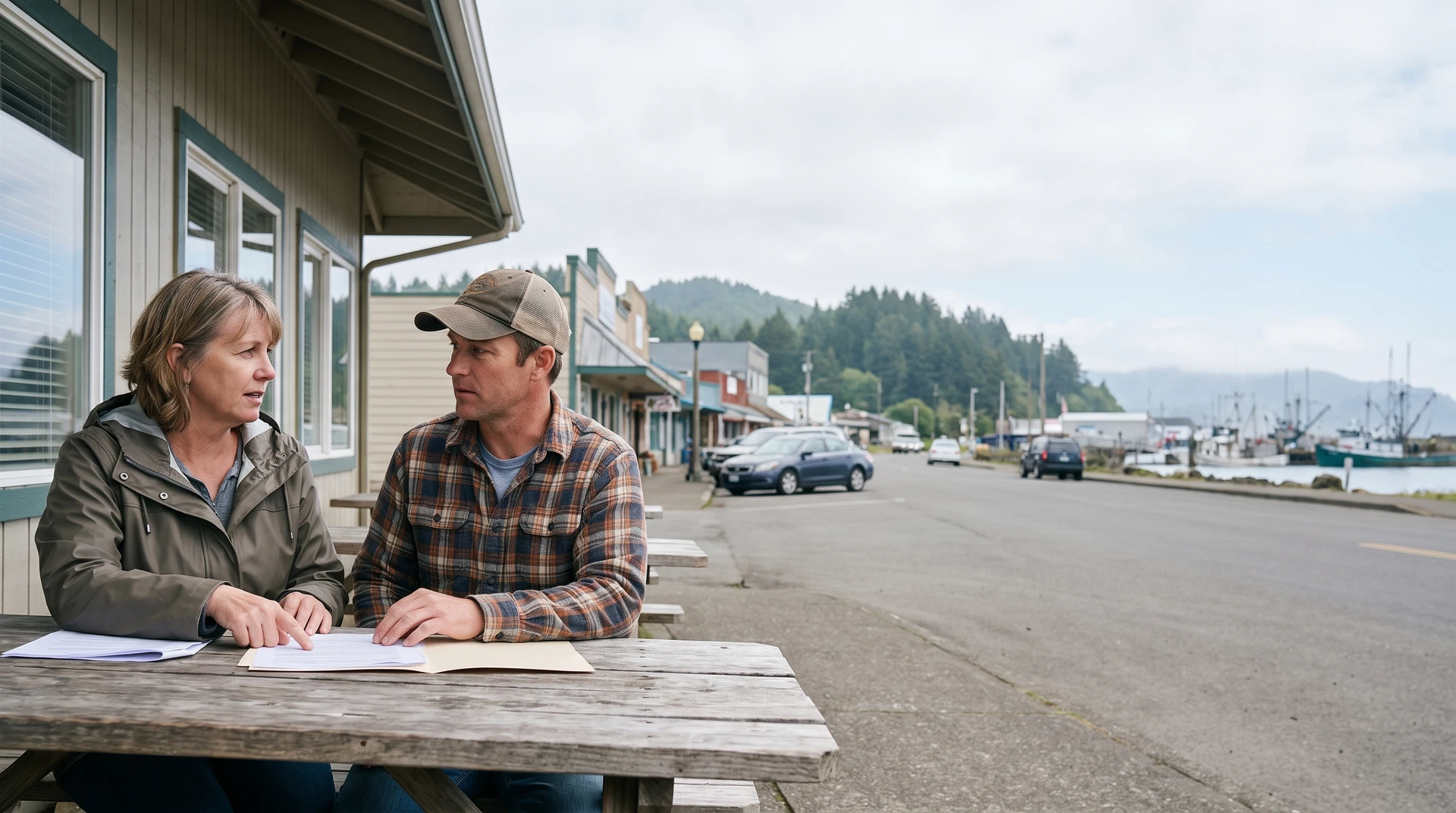

The Oregon Coast is going electric. From Newport to Brookings, hotels are installing EV charging stations in their parking lots, bike shops are renting Class 3 e-bikes to tourists, marinas are offering electric skiff rentals, campgrounds are deploying golf cart fleets for guest transportation, and vacation rental hosts are stocking garages with e-scooters. Every one of these decisions is great for business — and every single one creates an insurance question that most standard policies were not designed to answer.
This guide is written specifically for Oregon Coast and Southern Oregon coastal tourism businesses: hotels, resorts, marinas, campgrounds, vacation rentals, bike shops, restaurants, and any business that is adding electric-powered equipment, rental fleets, or charging infrastructure to serve the growing wave of eco-conscious visitors. The insurance landscape for battery-powered equipment is evolving fast, and the gaps between what business owners assume is covered and what their policy actually says can be financially devastating.
Not sure if your current policy covers e-bikes, EV chargers, or golf carts?
Gerald Ross Agency specializes in Oregon Coast tourism and hospitality businesses. We'll review your current coverage and identify gaps before a claim happens.
Why the Oregon Coast Is Going Electric — and Why It Matters for Insurance
Oregon has consistently ranked among the top states for EV adoption, and the coast is no exception. The combination of scenic bike trails, state parks, and a tourism economy built on outdoor recreation has made the Oregon Coast a natural fit for electric mobility. The Three Capes Scenic Route, the Oregon Coast Trail, and dozens of coastal state parks attract visitors who increasingly arrive in EVs and expect charging infrastructure at their destination.
For businesses, the calculus is straightforward: guests with EVs need to charge, e-bike rentals command premium prices, and golf cart fleets reduce wear on resort grounds while improving the guest experience. The problem is that most commercial insurance policies were written before this technology became mainstream. The standard Business Owners Policy (BOP) and Commercial General Liability (CGL) forms that most coastal businesses carry were designed for a world of gasoline engines, not lithium-ion battery packs.
The result is a growing set of coverage gaps that insurance agents — and business owners — are only beginning to fully map. Understanding these gaps is the first step to closing them.
EV Charging Stations: Five Insurance Questions Every Business Owner Must Answer
Installing an EV charging station at your hotel, restaurant, marina, or vacation rental complex seems straightforward — but it introduces several distinct insurance considerations that your current policy may not address.
1. Who Owns the Charger — and Who Bears the Risk?
Many businesses install EV chargers through third-party network operators (ChargePoint, Blink, EVgo) under lease or revenue-sharing agreements. In these arrangements, the network operator typically owns the hardware and carries product liability insurance for the equipment itself. However, the business owner remains responsible for the premises — meaning slip-and-fall injuries near the charger, electrical fires caused by faulty wiring in your building, and property damage to vehicles parked at your charger can still land on your policy. Read your lease agreement carefully and confirm with your insurer how liability is allocated.
2. Is the Charger Hardware Covered as Business Property?
Level 2 commercial EV chargers cost $2,000–$10,000 installed. DC fast chargers can run $30,000–$150,000. If your charger is vandalized, damaged by a vehicle, or destroyed in a fire, is it covered under your commercial property policy? The answer depends on whether your policy covers "business personal property" at the location and whether the charger is classified as a fixture (part of the building) or equipment. Confirm this with your insurer before installation.
3. What Happens If a Customer's Car Is Damaged While Charging?
If a power surge, faulty charger, or electrical fire damages a guest's vehicle while it is plugged into your charger, you may face a property damage liability claim. Standard CGL policies cover property damage to third parties, but the "care, custody, and control" exclusion may apply if the vehicle was in your possession. This is a gray area that varies by policy and circumstance — and it is exactly the kind of ambiguity that leads to denied claims.
4. Does Your Policy Cover Electrical Fire From the Charging Infrastructure?
EV chargers draw significant electrical loads. If improper installation, a wiring defect, or a power surge causes a fire in your building, your commercial property policy should cover the fire damage — but your insurer may investigate whether the fire resulted from "faulty workmanship" or "mechanical breakdown," both of which are common exclusions. Ensure your charger is installed by a licensed electrician, obtain permits, and keep documentation. This protects both your safety and your claim.
5. Cyber Liability for Networked Chargers
Networked EV chargers collect payment data, user accounts, and vehicle information. They are connected to the internet and have been demonstrated to be vulnerable to cyberattacks. If your charger network is breached and customer payment data is stolen, you may face notification costs, regulatory fines, and civil liability. A cyber liability policy is increasingly important for any business operating networked charging infrastructure.
E-Bike Rental Insurance: The Coverage Gaps That Catch Oregon Coast Businesses Off Guard
E-bike rentals are booming on the Oregon Coast. Bike shops in Seaside, Lincoln City, Newport, Coos Bay, and Brookings are adding e-bike fleets, and coastal hotels and vacation rental complexes are offering e-bikes as an amenity. The revenue potential is significant — but the insurance picture is more complicated than most operators realize.
The Motorized Vehicle Exclusion Problem
Here is the core issue: standard Commercial General Liability (CGL) policies typically exclude bodily injury and property damage arising from the use of "motorized vehicles." Oregon classifies e-bikes by class — Class 1 (pedal-assist up to 20 mph), Class 2 (throttle-assist up to 20 mph), and Class 3 (pedal-assist up to 28 mph). Class 2 and Class 3 e-bikes, and any e-bike with a throttle, may be treated as motorized vehicles under your CGL policy's exclusion language, leaving you without liability coverage if a renter is injured or injures a third party.
This is not a theoretical risk. E-bike accidents are increasing as adoption grows. A renter who crashes into a pedestrian on a coastal trail, or who is injured when a battery malfunctions, can generate a six-figure liability claim. If your CGL policy excludes the incident because the e-bike is classified as a motorized vehicle, you are personally exposed.
What E-Bike Rental Businesses Actually Need
| Coverage Type | What It Covers | Why It Matters |
|---|---|---|
| Commercial General Liability (with e-bike endorsement) | Third-party bodily injury and property damage from rental operations | Core coverage — must explicitly cover e-bike rentals |
| Inland Marine / Rental Equipment | Physical damage to your e-bike fleet (theft, crash, vandalism) | E-bikes cost $2,000–$8,000 each; fleet replacement is expensive |
| Products-Completed Operations | Liability for injuries caused by a defective bike or battery | Battery malfunctions can injure riders; retailers can be sued |
| Bailee's Customer Coverage | Damage to customer property left with your business | Covers bags, helmets, personal items left with rented bikes |
| Workers' Compensation | Employee injuries during bike maintenance, delivery, or demo rides | Required by Oregon law for all employees |
For businesses offering e-bike tours (guided rides), additional coverage for professional liability and participant accident insurance may be required. Oregon's outdoor recreation businesses face a unique set of liability exposures that standard policies often fail to address.
Golf Cart Insurance for Oregon Coast Resorts, Campgrounds, and Marinas
Golf carts are ubiquitous at Oregon Coast resorts, RV parks, campgrounds, and marinas. They are used for guest transportation, luggage delivery, grounds maintenance, and increasingly as rental vehicles for guests to explore large resort properties. Modern golf carts are electric, quiet, and popular — and they are also a significant liability exposure that many businesses are underinsured for.
The Commercial Auto vs. Premises Liability Question
Whether a golf cart injury is covered under your commercial auto policy or your general liability policy depends on how and where the cart is used. Golf carts operated exclusively on private property (your resort grounds) may be covered under a premises liability endorsement. Golf carts that cross public roads, are driven by guests off-property, or are used on public paths may require commercial auto coverage. Many businesses assume their general liability covers all golf cart incidents — and discover the hard way that it does not.
Rental Golf Carts: A Special Case
If you rent golf carts to guests — a common practice at coastal resorts and campgrounds — you are operating a rental vehicle business. This typically requires a commercial auto policy with a rental endorsement, not just general liability. The liability limits matter: a golf cart accident that injures a guest or a third party can easily generate a $500,000+ claim. Standard BOP policies with $1 million general liability limits may be inadequate for businesses with active golf cart rental operations.
Oregon resort and timeshare operators and RV resort operators should work with an agent who understands the specific liability exposures of golf cart fleets and can structure coverage that addresses both on-premises and off-premises use.
Is Your Golf Cart Fleet Properly Insured?
Many Oregon Coast resorts and campgrounds discover their golf cart coverage gaps only after an accident. Gerald Ross Agency can review your current policy and structure coverage that actually protects your business — including rental operations, employee use, and guest transportation.
Lithium Battery Fire Risk: What Oregon Coast Business Owners Must Know
Lithium-ion batteries power e-bikes, golf carts, EV charging systems, e-scooters, and a growing range of commercial equipment. They are also the source of a rapidly growing category of commercial property claims. Understanding why lithium batteries catch fire — and how your insurance policy responds — is essential for any business that stores, charges, or rents battery-powered equipment.
Thermal Runaway: The Fire Risk You Need to Understand
Lithium-ion battery fires are caused by a phenomenon called "thermal runaway" — a chain reaction in which heat causes the battery to release more heat, which causes more chemical reactions, which generate more heat, until the battery catches fire or explodes. Thermal runaway can be triggered by physical damage (a crash), overcharging, manufacturing defects, extreme temperatures, or simply age and wear. Once started, lithium battery fires are extremely difficult to extinguish and can reignite hours after appearing to be out.
For businesses that store multiple e-bikes, golf carts, or e-scooters in a charging room or garage, a single battery fire can destroy an entire fleet and potentially the building itself. The Oregon Coast's wooden hotel and resort structures are particularly vulnerable.
How Commercial Property Insurance Responds to Battery Fires
Most standard commercial property policies cover fire damage regardless of cause — including lithium battery fires. However, there are important caveats. Some policies contain exclusions for "mechanical breakdown" or "electrical malfunction" that insurers may attempt to apply to battery fires. Additionally, if you store large quantities of lithium batteries (a charging room with 20+ e-bikes, for example), your insurer may classify this as a special hazard that requires disclosure and potentially a higher premium or specific endorsement.
The most important step is full disclosure to your insurer. If you add an e-bike fleet, install a battery charging room, or significantly increase the amount of lithium battery equipment on your premises, notify your insurer immediately. Failure to disclose material changes in your operations can give an insurer grounds to deny a claim.
Business Interruption and Lithium Battery Fires
A lithium battery fire that damages your hotel, resort, or marina can put you out of business for weeks or months during repairs. Business interruption insurance covers lost revenue and ongoing expenses (payroll, rent, utilities) during the period your business is unable to operate due to a covered property loss. For seasonal Oregon Coast businesses, a fire during peak summer season without business interruption coverage can be financially catastrophic.
Insurance Checklist by Business Type
Different types of Oregon Coast businesses face different combinations of EV-related risks. Here is a practical breakdown of what each business type should verify with their insurance agent.
| Business Type | Key EV/Battery Exposures | Coverage to Verify |
|---|---|---|
| Hotels & Motels | EV chargers in parking lot, guest e-bike rentals, battery storage | CGL with EV charger endorsement, property coverage for charger hardware, cyber liability |
| Resorts & Campgrounds | Golf cart fleets (rental & staff), EV chargers, e-bike amenities | Commercial auto or golf cart liability, rental vehicle endorsement, inland marine for fleet |
| Marinas & Boatyards | Electric boat/skiff rentals, EV chargers, battery storage near water | Marine liability, inland marine for electric vessels, property coverage for charging infrastructure |
| Bike Shops & Rental Operators | E-bike rental fleet, battery charging room, tour operations | CGL with e-bike endorsement, inland marine for fleet, products liability, bailee's coverage |
| Vacation Rentals | EV charger for guests, e-bikes/scooters as amenities, golf cart on property | Vacation rental liability policy (not homeowners), equipment coverage, guest injury liability |
| Restaurants & Cafés | EV chargers in parking lot, delivery e-bikes, employee e-scooters | CGL with EV charger coverage, commercial auto for delivery vehicles, cyber liability |
| Tour Operators | Guided e-bike tours, e-scooter tours, participant injury | Adventure/recreation liability, participant accident insurance, professional liability |
Don't Forget Workers' Compensation for Electric Fleet Operations
Employees who maintain, charge, repair, or operate e-bikes, golf carts, and EV charging equipment face real workplace injury risks. Battery maintenance involves electrical hazards. E-bike repair involves mechanical injury risks. Golf cart operation involves collision risk. Oregon law requires workers' compensation insurance for all employees, and the classification codes for your workers' comp policy must accurately reflect the work your employees perform.
If you add an e-bike rental operation or golf cart fleet to your business, notify your workers' comp carrier. Misclassified employees — workers performing higher-risk tasks under a lower-risk classification code — can result in coverage disputes when claims are filed, and can expose you to significant penalties during an audit.
Product Liability: When the Battery Is the Problem
E-bike and e-scooter battery recalls are not uncommon. Lithium battery packs from certain manufacturers have been recalled due to fire risk, and the Consumer Product Safety Commission has issued multiple warnings about substandard batteries in imported e-bikes. If you sell or rent e-bikes and a customer is injured because of a battery defect — even one you had no knowledge of — you can be named in a product liability lawsuit.
Retailers and rental operators are part of the distribution chain, and product liability law in Oregon allows injured parties to sue any member of that chain. Your commercial general liability policy's "products-completed operations" coverage is your primary defense, but you should verify that your policy limits are adequate for the volume of equipment you sell or rent, and that the policy does not contain exclusions for recalled products.
Vacation Rental Hosts: EV Chargers and E-Bikes Are Not Covered by Your Homeowners Policy
Many Oregon Coast vacation rental hosts have added EV chargers and e-bikes as amenities to attract eco-conscious guests. This is a smart marketing move — but it creates a serious insurance gap. Standard homeowners insurance policies exclude business activities, and renting your property on Airbnb or VRBO is a business activity. Adding EV chargers and e-bikes as rental amenities amplifies the commercial nature of the operation.
A guest who is injured while using your EV charger, or who crashes an e-bike you provided as an amenity, can generate a liability claim that your homeowners policy will deny. You need a dedicated vacation rental insurance policy that explicitly covers guest injuries, equipment liability, and property damage. The insurance requirements for Airbnb and VRBO hosts in Oregon are more complex than most hosts realize, and adding electric equipment to the mix makes proper coverage even more important.
Related Coverage Areas for Oregon Coast Tourism Businesses
The insurance needs of Oregon Coast tourism businesses extend well beyond EV and battery-related risks. A comprehensive commercial insurance program for a coastal hotel, resort, or marina typically includes:
- Commercial General Liability — the foundation of any business insurance program, covering third-party bodily injury and property damage
- Commercial Umbrella Insurance — excess liability coverage that kicks in when your underlying policy limits are exhausted
- Marine Insurance — for businesses with watercraft, docks, or maritime operations
- Coastal Weather Risk Coverage — wind, flood, and storm surge coverage for Oregon Coast properties
- Oregon Coast Business Insurance Guide — a comprehensive overview of the unique risks facing coastal businesses
Frequently Asked Questions
Does my general liability policy cover injuries from e-bike rentals?▼
Not automatically. Standard commercial general liability (CGL) policies often exclude or limit coverage for motorized vehicles, which can include Class 2 and Class 3 e-bikes. You need a policy that explicitly covers e-bike rental operations, or a separate inland marine/rental equipment endorsement. Always verify with your agent before renting e-bikes to customers.
What insurance do I need for an EV charging station at my business?▼
At minimum, you need commercial general liability (for slip-and-fall and equipment malfunction claims), commercial property coverage (for the charger hardware itself), and you should verify your policy covers fire damage from electrical equipment. If the charger is networked and collects payment data, cyber liability coverage is also recommended.
Are golf carts covered under my business property insurance?▼
Golf carts used on private property may be covered under your commercial property or inland marine policy for physical damage. However, liability for injuries caused by golf carts — especially when rented to guests — typically requires a separate commercial auto or specialty golf cart liability endorsement.
Does my commercial property insurance cover a lithium battery fire?▼
Most standard commercial property policies cover fire damage regardless of cause, including lithium battery fires. However, some policies have exclusions for 'mechanical breakdown' or 'electrical malfunction' that could complicate a claim. Always disclose battery storage operations to your insurer.
Do I need product liability insurance if I sell or rent e-bikes?▼
Yes. If you sell or rent e-bikes and a customer is injured due to a defect in the bike or battery, you could face a product liability claim even if you didn't manufacture the bike. Retailers and rental operators can be named in product liability lawsuits.
Are waivers enough to protect my rental business from lawsuits?▼
Waivers provide some protection but are not foolproof. Oregon courts have upheld rental waivers in many cases, but waivers can be invalidated if they are poorly written, if the business was grossly negligent, or if the injured party is a minor. Waivers are a risk management tool — not a substitute for proper insurance.
What is 'care, custody, and control' and why does it matter for rental businesses?▼
The 'care, custody, and control' exclusion in standard CGL policies means your liability coverage does NOT apply to property in your possession that belongs to others. For rental businesses, you need a bailee's customer coverage endorsement or inland marine policy to cover customer property in your care.
Ready to Protect Your Battery-Powered Business?
Gerald Ross Agency has been protecting Oregon Coast businesses for decades. We understand the unique risks of coastal tourism operations — including the fast-evolving world of electric equipment, rental fleets, and charging infrastructure. Let us review your current coverage and build a program that keeps pace with your business.


