
Key Takeaways
- Auto-parts, tire, wheel, mobile-service, and distribution businesses should be insured for their actual operations—not a generic retail description.
- Inventory, product allegations, customer vehicles, completed work, service trucks, employee safety, and waste-tire practices can each affect a coverage review.
- General liability, property, business income, garage operations, commercial auto, workers’ compensation, cyber, and umbrella coverage address different exposures.
- Bring inventory values, service procedures, vehicle schedules, contracts, and loss history to a renewal or quote review.
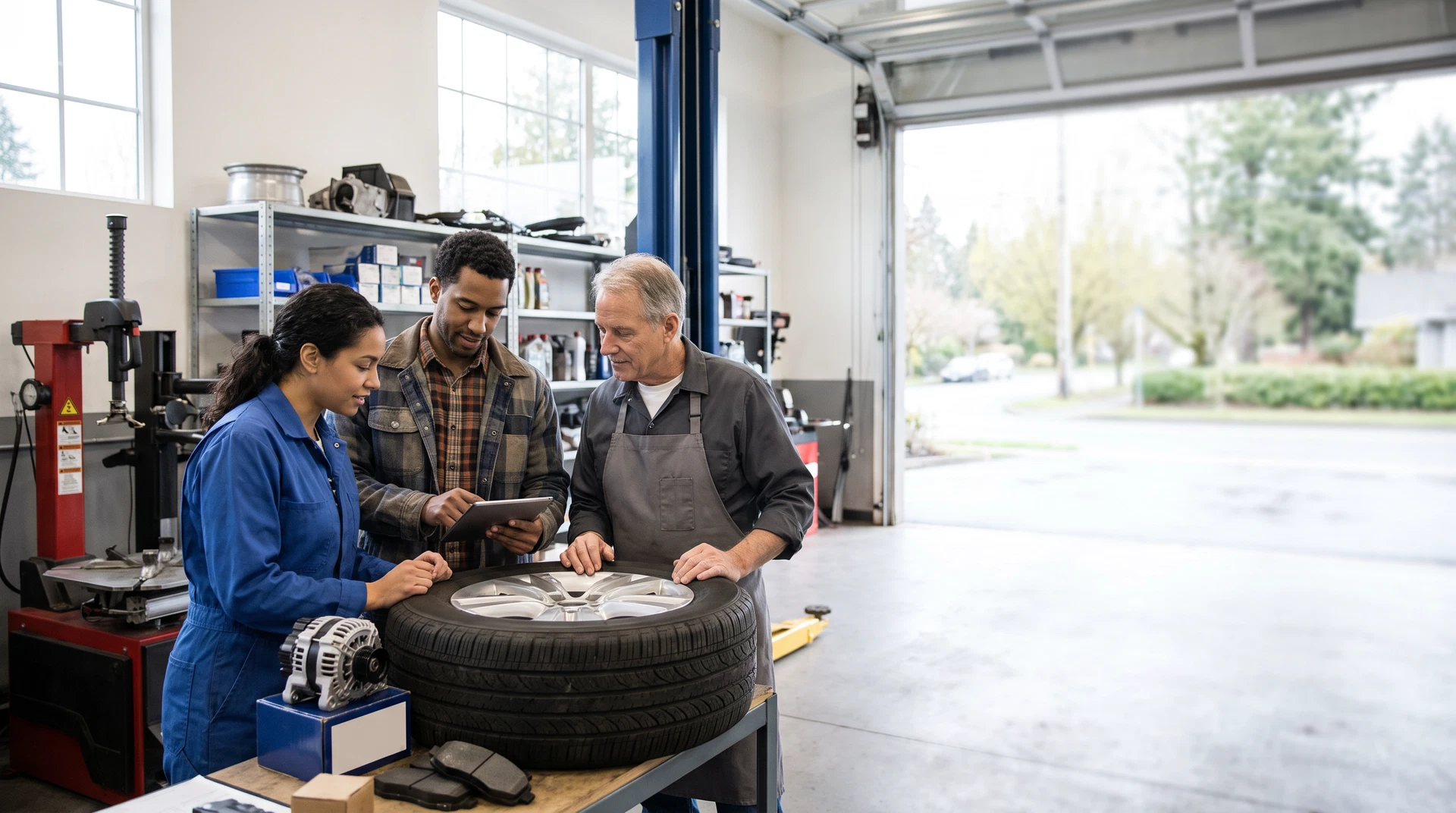
An auto-parts counter, tire bay, mobile tire truck, and wheel warehouse can all create different insurance questions. A practical program should consider customer premises, inventory, product allegations, service work, employee safety, vehicles, and the handling of waste tires—not simply a generic business-owner policy.
Gerald Ross Agency helps independent businesses across Oregon and Northern California coordinate commercial property coverage, general liability, commercial auto, workers’ compensation, and cyber coverage around the way the shop actually operates.
Why auto parts and tire businesses need a tailored review
A retail-only parts store may have a different exposure profile than a tire dealer that mounts wheels, stores customer vehicles, performs roadside service, sells used tires, or operates delivery vans. Inventory concentrations, lifts and air tools, customer waiting areas, service work, and vendor contracts all deserve a line-by-line insurance conversation.
Property and inventory
Parts, tires, wheels, tools, shelving, point-of-sale equipment, and tenant improvements can be damaged by a covered fire, theft, wind, or water event.
General and product liability
Customer injuries, premises incidents, and allegations tied to a sold part, tire, wheel, or completed service may trigger defense and liability questions.
Garage operations and customer vehicles
If you move, test-drive, or keep customer vehicles, ask whether garage liability or garagekeepers coverage is relevant.
Business income
A fire, storm, or equipment loss can interrupt sales and service. Business-income coverage should be reviewed with realistic restoration timelines.
Equipment breakdown
Compressors, tire machines, alignment equipment, HVAC, and refrigeration or electronics can have sudden mechanical or electrical failure exposures.
Workers’ compensation
Tire lifting, tools, slips, repetitive tasks, and service-bay work can create employee injury exposure.
Build coverage around your actual shop operations
Bring your leases, service mix, vehicle list, inventory values, and any customer-vehicle procedures to a coverage review.
Request a commercial insurance reviewTire service safety and the insurance conversation
For shops servicing larger vehicle rim wheels, OSHA’s rim-wheel rule requires employee training, safe procedures, and specified safeguards such as restraining devices or barriers in applicable situations.[1] Insurance does not replace a safety program, but documented training, equipment maintenance, and clear service procedures can help a business manage loss frequency and support a stronger risk narrative.
Discuss tire-service operations with your broker alongside auto insurance and commercial insurance needs. If your business has delivery, mobile service, or roadside work, review employee driving rules, hired/non-owned auto exposure, tools in transit, and contractual requirements.
Waste tires, storage, and environmental responsibility
Oregon DEQ explains that waste tires can create environmental, health, and safety issues when not managed properly. The agency notes that facilities storing more than 100 waste tires may need a storage permit, while tire retailers may store up to 1,500 waste tires without that particular permit; separate carrier, recordkeeping, and disposal obligations can apply depending on activity.[2] These rules are not insurance advice, but they matter to risk control and to conversations about pollution, property, and contractual exposures.
Ask your advisor whether your operation needs a closer look at pollution liability, property limits, and vendor certificates. Keep disposal receipts and operational records in accordance with applicable requirements.
How the insurance program changes by business model
“Auto parts and tire business” is a broad description. The most useful insurance review starts with the revenue-producing work, not the sign over the door. A counter-only retailer, a wheel-and-tire installer, and a mobile roadside service company can all sell the same tires while carrying very different property, vehicle, care-custody-control, and completed-operations exposures.
| Business model | Questions to address | Coverage conversation |
|---|---|---|
| Parts retail store | How much stock is on hand? Are batteries, fluids, or high-theft parts stored onsite? | Inventory valuation, crime/theft, product liability, business income, cyber and point-of-sale systems. |
| Tire and wheel shop | Do employees mount, balance, align, or road-test vehicles? Are customer vehicles held overnight? | Garage operations, garagekeepers, completed operations, tools/equipment, workers’ compensation. |
| Mobile tire service | Are service trucks dispatched to jobsites, highways, farms, or customer homes? | Commercial auto, inland marine/tools in transit, hired/non-owned auto, roadside work practices. |
| Warehouse or distributor | Do deliveries, loading docks, forklifts, or contractual vendor requirements shape operations? | Property limits, cargo, umbrella liability, employment practices, vendor certificate requirements. |
Coverage details worth discussing before a claim
Product and completed-operations liability
A customer complaint after a tire installation or a parts sale can become more complicated than a refund request. Ask how the policy handles allegations involving a product sold, a service completed, or a supplier’s component. Keep invoices, installation records, torque procedures, supplier information, and any inspection documentation organized. If your shop performs more service work than retail work, the distinction between premises liability and completed operations deserves special attention.
Customer vehicles and garagekeepers
Many owners assume their general liability policy automatically protects every customer vehicle on the lot. That assumption can be costly. If the business has custody of a vehicle while it is being serviced, stored, moved, or road-tested, ask whether garagekeepers or garage liability coverage is appropriate, how deductibles apply, and whether the limit reflects the maximum value of vehicles onsite at one time.
Business personal property and stock valuation
Insurance values should be revisited when tire inventory expands before winter, when expensive wheel packages are added, or when a parts counter starts carrying more electronics, diagnostic equipment, batteries, fluids, or specialty stock. Replacement cost, valuation methodology, and seasonal inventory endorsements are practical discussion points. A store that can replenish ordinary parts quickly may still have a long interruption after a fire if shelving, point-of-sale equipment, vendor relationships, and specialty stock are all affected.
A quick pre-renewal worksheet
Before requesting a quote, assemble the legal business name, locations, payroll by job class, annual sales split between parts and service, inventory values, vehicle schedule, certificates required by landlords or vendors, and five years of loss history. A complete submission makes it easier to compare coverage rather than simply compare premiums.
Other gaps that can be easy to miss
Cyber risk is no longer limited to large retailers. Online ordering, customer contact data, payment systems, shop-management software, and vendor portals can create a reason to discuss cyber liability insurance. Businesses with managers, supervisors, or fast seasonal hiring may also need a conversation about employment practices liability. Larger operators, landlords, or contract-heavy accounts may require higher limits through commercial umbrella insurance.
Finally, do not overlook certificates. A shopping-center lease, fleet customer, municipal account, distributor, or commercial landlord may ask for specific additional-insured wording, waiver language, or limits. Send those requirements to your agent before signing rather than assuming a standard certificate will meet the contract.
A practical coverage checklist
- Confirm replacement values for seasonal and high-value tire, wheel, and parts inventory.
- Document whether the shop stores or moves customer vehicles overnight.
- Review sales, installation, balancing, alignment, repair, mobile service, and delivery activities.
- Match delivery vans, pickups, trailers, and employee vehicle use to the actual commercial auto policy.
- Review data exposure from point-of-sale systems, customer records, and online ordering.
- Revisit limits and deductibles annually, especially after adding bays, mobile units, inventory, or employees.
Need a quote or second opinion?
We can help compare coverage approaches for tire dealers, parts stores, wheel shops, and mobile service operations.
Next step: compare the coverage to the operation
Whether you sell parts across a counter, mount tires, operate service bays, dispatch mobile trucks, or manage a regional warehouse, the right starting point is a current operations review. Request a quote or contact Gerald Ross Agency to review the policies, contracts, values, and workflows that matter to your business.